
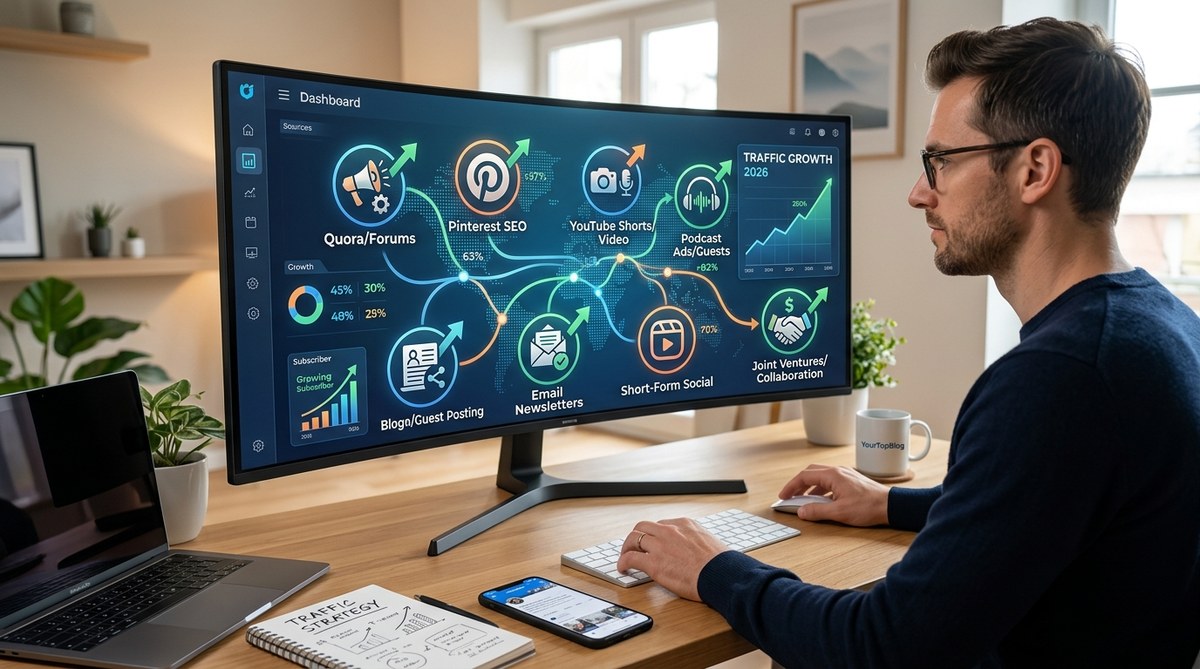
Every blogger I know chases the same shiny objects. They obsess over Google rankings, fight for Pinterest real estate, and post daily on Instagram hoping the algorithm smiles on them. I get it. Those channels work. But here is the truth that most people miss: the biggest traffic wins in 2026 are hiding in places nobody looks.
The most underrated traffic sources in 2026 require less competition and offer higher engagement than mainstream channels. By focusing on email list building, podcasting collaborations, niche community forums, content syndication platforms, Google News optimization, direct outreach, strategic guest posting, and repurposing content into audio, you can build a diversified traffic base that withstands algorithm changes and grows steadily.
Why Most Bloggers Overlook These Hidden Channels
The first reason is simple: everyone tells you to focus on SEO and social media. Those are the loudest advice channels. But when every blogger races for the same keyword, the competition becomes brutal. Meanwhile, sources like podcast guesting or niche forums remain wide open. They take more effort upfront, but they pay off for years.
Another reason is fear. Many bloggers worry that stepping away from Google means losing control. In reality, putting all your eggs in one search basket is riskier. If Google updates its algorithm tomorrow, your traffic drops overnight. Diversifying into underrated sources protects you.
1. Your Email List (Yes, Still Underrated)
People think email is dead. It is not even close. In 2026, your email list remains the only traffic source you fully own. Social platforms can shut down your account. Google can deindex your site. But your inbox subscribers? They stay.
The mistake most bloggers make is only sending emails when they have a new post. Instead, send value-first emails that answer questions, share exclusive tips, or offer free resources. Every time you hit send, you get an instant traffic spike. It is predictable and consistent.
Here is a numbered process to turn your list into a real traffic driver:
- Segment your subscribers by interest (use tags from the moment they join).
- Create a weekly email that includes one original insight not found on your blog.
- Link back to relevant blog posts naturally within that insight.
- Include a soft call to action asking readers to reply or share.
- Track click-through rates per segment and double down on what works.
- Resend the same email to non-openers with a different subject line 48 hours later.
If you want to learn more about building that list, check out our guide on setting up an email list from day one.
2. Podcast Appearances as a Traffic Engine
Podcasts are booming in 2026. But most bloggers only listen to them. They never appear as guests. When you go on a podcast in your niche, you get a warm audience that already trusts the host. A single 30 minute interview can send hundreds of targeted visitors to your site.
The secret is to pitch shows that match your expertise, not your blog size. Many smaller podcasts have incredibly loyal listeners. Offer to share a free resource during the episode. That resource should live on your site, so you capture the traffic.
3. Niche Community Forums (Reddit, Quora, and Private Groups)
Forums get a bad reputation because people spam them. But used correctly, they are goldmines. Reddit and Quora still drive massive referral traffic in 2026. The trick is to be genuinely helpful. Answer questions thoroughly. Do not drop a link until people ask for more.
Private Facebook groups and Slack communities for bloggers also work. Join one or two relevant groups, become a regular contributor, and then share your best content when it truly answers a member’s question. For a detailed strategy on using Reddit safely, see our post on Reddit traffic for bloggers.
4. Content Syndication on Medium and LinkedIn
Publishing your entire blog post on another platform sounds counterintuitive. But syndication done right sends traffic back to your site. Post a shortened version on Medium with a link to the full article. On LinkedIn, write a few paragraphs and add a “continue reading on my blog” button.
Important: use the canonical tag in your syndicated posts so Google knows your original site is the source. This protects your SEO while you gain extra exposure.
5. Google News and Google Discover
These two channels remain underused by most bloggers. Google News is not just for big news sites. If you publish timely content in a niche like technology, finance, or health, you can get listed. Google Discover pushes your content to users based on their interests, not search queries. That means people find you without searching for anything.
To qualify, your site needs to be fast, mobile friendly, and have a clear focus. Publish consistently on topics people care about right now. Then submit your site through the Google News Publisher Center.
6. Direct Outreach and Collaboration
Most bloggers wait for traffic to come to them. They do not go out and ask for it. Direct outreach means emailing other bloggers, podcasters, or journalists and offering something valuable. Maybe you write a guest post for their site. Maybe you offer to co-host a webinar. Maybe you just start a conversation.
This method feels awkward at first. But it builds relationships that send referral traffic for months. A single backlink from a high authority site can also boost your SEO. For more on this, read our guide on guest posting in 2026.
7. Repurposing Content into Audio
Voice search and audio consumption are rising fast. In 2026, many people listen to articles while commuting or cooking. Turn your top blog posts into short audio clips (2 to 5 minutes) and upload them to platforms like Spotify for Podcasters or Amazon Music. Add a call to action at the end that sends listeners to your site.
The effort is low because you are reusing existing content. The traffic is additive and often comes from people who would never read a blog.
8. Strategic Use of YouTube Shorts and TikTok
Not all social media is overrated. Short form video is still huge, but most bloggers use it wrong. Instead of posting random clips, create videos that tease a problem and then send viewers to your blog for the full solution. Use a clear hook in the first three seconds, and include the link in your bio or description.
Do not try to be viral. Focus on being useful. Even 500 targeted views can translate into 50 to 100 visitors to your site every day.
A Practical Table of Techniques and Pitfalls
| Underrated Source | Best Practice | Common Mistake |
|---|---|---|
| Email list | Send value first, then link | Only sending when you publish |
| Podcast appearances | Offer a free resource in the episode | Pitching without a clear offer |
| Niche forums | Answer questions thoroughly before linking | Dropping links without context |
| Content syndication | Use canonical tags and shortened versions | Republishing the entire article verbatim |
| Google News/Discover | Publish timely, focused content regularly | Expecting instant results from old content |
| Direct outreach | Provide value up front before asking | Sending generic templated emails |
| Audio repurposing | Keep clips short and include a CTA | Reading the entire post without edits |
| Short form video | Hook problem, link to full solution | Posting random entertainment clips |
“The best traffic source is the one your competitors ignore. In 2026, that is often the source requiring the most personal effort: conversations, collaborations, and community.”
Casey, veteran blogger and founder of Bootstrap Blogging
A Quick Action Plan to Get Started
You do not need to activate all eight sources at once. Pick two that feel natural. If you already have an email list, start sending weekly value emails. If you enjoy talking, find three podcasts in your niche and pitch yourself. If you love writing, syndicate your next post on Medium.
Track your results for one month. Look at which source sends the most engaged visitors (time on site, pages per session). Then double down on that source while adding one more.
For a broader list, read our article on 15 free traffic sources every blogger should use in 2026.
Dont Let the Mainstream Distract You
The algorithm race is exhausting. Facebook changes its rules. Instagram pushes Reels. Google rolls out updates that tank your rankings. Underrated traffic sources do not suffer from that instability. They rely on relationships, useful content, and platforms that actually want your expertise.
Start small. Pick one source from this list and commit to trying it for 30 days. Write one email, record one audio clip, or answer five questions on Reddit. Then measure what happens. That small effort could become your most reliable traffic channel in 2026 and beyond.
You have everything you need. Now go build something that lasts.