
Your domain name is one of the first SEO decisions you’ll make, and it sticks with you for years. Get it right, and you build a foundation that supports your rankings, brand recall, and trust. Get it wrong, and you’re fighting uphill from launch day.
Choosing a domain name for SEO means balancing keywords, brand identity, and user experience. Focus on short, memorable names with relevant keywords, use trusted extensions like .com, avoid hyphens and numbers, and research domain history before buying. A smart domain choice strengthens your rankings and builds long-term credibility with both search engines and visitors.
Why Your Domain Name Matters for SEO
Search engines read your domain name as a trust signal and relevance clue. A clear, keyword-rich domain tells Google what your site is about before it even crawls your content.
But it’s not just about stuffing keywords into your URL. Modern SEO rewards domains that balance relevance with brand strength. A generic keyword domain might rank faster initially, but a brandable name builds authority over time.
Your domain also affects click-through rates. People are more likely to click a domain that looks professional, trustworthy, and easy to remember. That behavioral signal feeds back into your rankings.
Understanding How Domains Influence Rankings
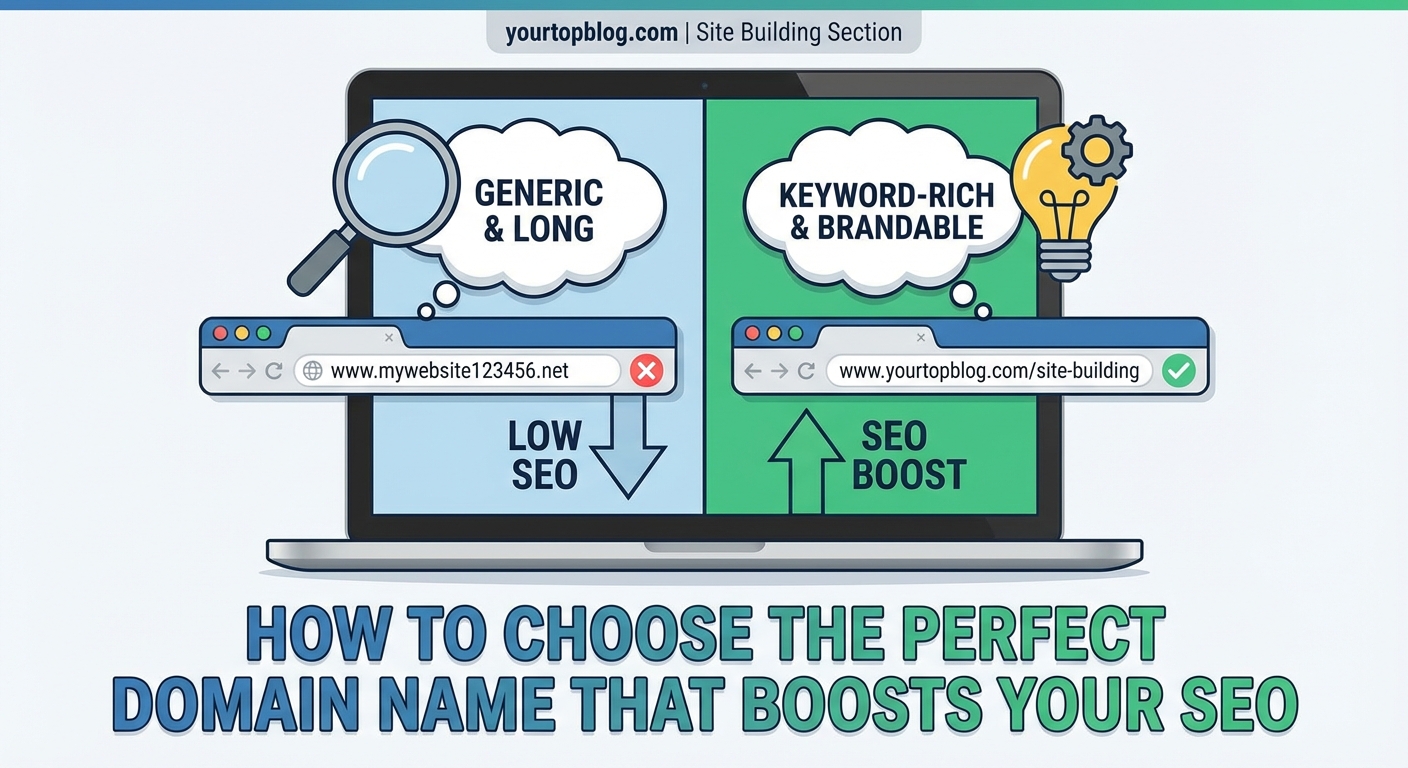
Domains don’t directly control your position on Google, but they shape multiple ranking factors.
Exact match domains (EMDs) used to dominate search results. If you wanted to rank for “best running shoes,” you’d register bestrunningshoes.com and watch the traffic roll in. Google caught on and adjusted its algorithm in 2012 to reduce the advantage of low-quality EMDs.
Today, EMDs still help if your site delivers quality content. The keyword match gives you a small boost, especially for local or niche queries. But a weak site with an EMD won’t outrank a strong brand with a partial match or no match at all.
Domain age plays a minor role. Older domains tend to rank better because they’ve had more time to build backlinks, content, and trust. But a new domain with great content can outpace an old, neglected one within months.
Domain authority (a metric created by Moz, not Google) reflects the strength of your backlink profile and overall site quality. A strong domain name paired with consistent content and link building grows this metric over time.
Best Practices for Choosing a Domain Name for SEO
Let’s break down the most effective strategies for picking a domain that supports your SEO goals.
Use Keywords Strategically
Include your primary keyword if it fits naturally. A domain like “organicteashop.com” immediately signals relevance for organic tea searches.
But don’t force it. If your keyword makes the domain awkward or too long, prioritize brand clarity instead. “Steepwell.com” is easier to remember and share than “bestorganiclooseleafteaonline.com.”
Partial keyword matches work well too. “Steepwell Tea” or “Steepwell Organics” gives you flexibility while keeping SEO value.
Keep It Short and Memorable
Shorter domains are easier to type, remember, and share. Aim for 6 to 14 characters when possible.
Long domains increase typo risk. Every extra character is another chance for someone to misspell your URL and land on a competitor’s site or a parked page.
Memorable domains get typed directly into browsers, which sends a strong trust signal to search engines. Direct traffic shows that people know your brand and seek it out intentionally.
Choose the Right Domain Extension
.com is still the gold standard. It’s trusted, familiar, and expected. Most users default to typing .com even if you tell them otherwise.
Other extensions like .net, .org, and .co work fine if .com isn’t available, but they require more brand education. You’ll spend extra effort reminding people of your extension.
Country-code TLDs like .uk or .ca help with local SEO. Google uses these as geographic signals, so a .ca domain gets a ranking boost in Canada. Use them if you’re targeting a specific country.
New gTLDs like .blog, .shop, or .tech can work for niche branding, but they don’t carry the same trust weight as .com. Use them only if they strengthen your brand identity and you’re willing to invest in awareness.
Avoid Hyphens and Numbers
Hyphens make domains harder to share verbally. When you say “best-running-shoes.com,” people forget the hyphens and type “bestrunningshoes.com” instead.
Numbers create confusion. Is it “4you.com” or “foryou.com”? Is it “top10tips.com” or “toptentips.com”? Ambiguity kills traffic.
Both hyphens and numbers also signal low quality. They’re often associated with spammy or low-effort sites, which hurts trust and click-through rates.
Make It Easy to Spell and Pronounce
If you have to spell your domain out loud every time you share it, it’s too complicated.
Avoid creative spellings like “Flickr” or “Tumblr” unless you have a massive marketing budget. These work for well-funded startups but create friction for small businesses.
Test your domain with friends or family. Say it out loud and ask them to type it. If they get it wrong, simplify.
Research Domain History Before Buying
A domain might be available because it was dropped after being penalized by Google. Buying a penalized domain means inheriting its bad reputation.
Use tools like the Wayback Machine to see what the domain hosted in the past. Look for spammy content, adult material, or sketchy link schemes.
Check the domain’s backlink profile with tools like Ahrefs or Moz. A clean backlink history is a green light. A profile full of spam links is a red flag.
Also search Google for “site:yourdomain.com” to see if the domain is indexed and what pages appear. If it’s not indexed or shows penalized content, walk away.
Think Long-Term and Brand Growth
Your domain should support your business as it evolves. A name like “cheapphones.com” works if you sell budget phones, but it boxes you in if you later want to sell accessories, tablets, or premium models.
Choose a name that allows expansion. “TechHub” or “Gadget Grove” gives you room to grow your product line without rebranding.
Rebranding later is expensive and damages SEO. You lose accumulated domain authority, backlinks, and brand recognition. Pick a domain you can live with for at least five years.
Common Mistakes That Hurt Your SEO
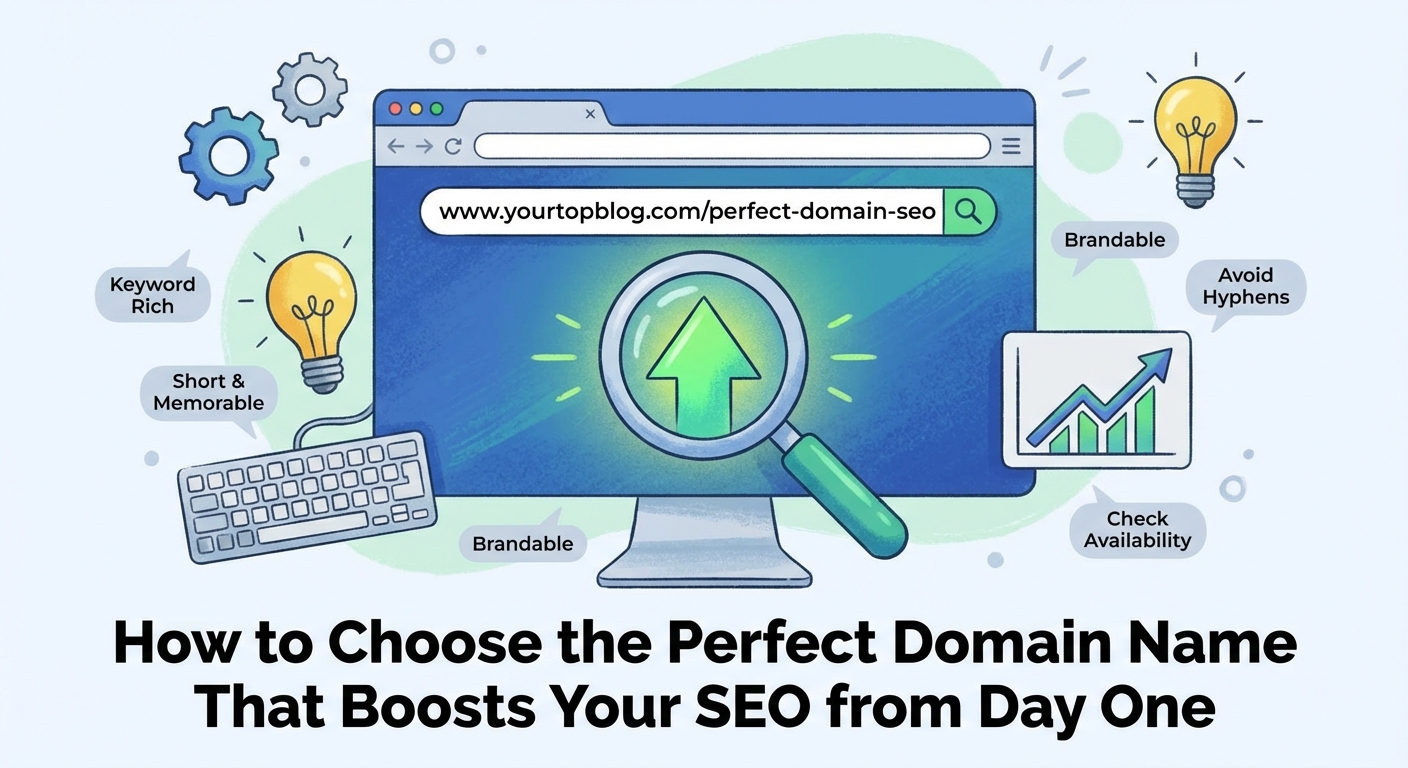
Even experienced site owners make domain mistakes that cost them traffic and rankings. Here are the biggest ones to avoid.
| Mistake | Why It Hurts SEO | Better Alternative |
|---|---|---|
| Keyword stuffing | Looks spammy, reduces trust and click-through rates | Use one primary keyword naturally |
| Using hyphens | Hard to share verbally, associated with low-quality sites | Choose a hyphen-free alternative |
| Picking a .info or .biz extension | Lower trust, less familiar to users | Stick with .com, .net, or .org |
| Ignoring trademark issues | Legal takedowns can kill your domain overnight | Search USPTO and Google before buying |
| Choosing a long domain | Increases typos, harder to remember | Keep it under 15 characters |
| Copying a competitor’s name | Confuses users, potential legal issues, damages brand | Create a unique, distinct name |
Keyword Stuffing Backfires
Domains like “best-cheap-running-shoes-online.com” scream desperation. They’re hard to remember, awkward to share, and signal low quality to both users and search engines.
Google’s algorithm updates specifically target low-quality exact match domains. If your domain is stuffed with keywords but your site lacks value, you’ll rank poorly.
Use one or two keywords maximum, and only if they fit naturally.
Overly Long Domains Create Friction
Every extra character increases the chance of a typo. A 25-character domain is a barrier to entry.
Long domains also get truncated in search results, social shares, and browser tabs. Users see “bestorganiclooseleaf…” and lose context.
Aim for brevity. If you can’t fit your idea into 15 characters, rethink your concept.
Ignoring Trademark and Legal Issues
Buying a domain that infringes on a trademark can result in legal action, forced transfer, or complete loss of the domain.
Before you buy, search the USPTO trademark database and Google your proposed name. Look for existing businesses, especially in your industry.
Even if a trademark isn’t registered, common law rights can still apply. If someone has been using a name in commerce, they may have legal grounds to challenge your domain.
Step-by-Step Process for Choosing Your Domain
Here’s a practical workflow to find and secure the right domain for your site.
-
Brainstorm 10 to 20 name ideas based on your niche, brand values, and target keywords. Mix branded names with keyword-rich options.
-
Check availability using a domain registrar like Namecheap, GoDaddy, or Google Domains. Don’t search on sketchy sites that might register your idea before you do.
-
Run a trademark search for your top three choices. Use the USPTO database and Google to confirm no one else is using the name.
-
Research domain history with the Wayback Machine and backlink tools. Make sure the domain is clean.
-
Test pronunciation and spelling with friends or colleagues. If they struggle, cross it off your list.
-
Secure the .com version if possible. If it’s taken, consider a different name rather than settling for a less trusted extension.
-
Register related variations like common misspellings or the .net version to protect your brand and capture typo traffic.
-
Set up domain privacy to protect your personal information from public WHOIS databases.
Balancing Keywords and Brand Identity
The best domains blend SEO value with brand strength.
A pure keyword domain like “plumbingservices.com” ranks well for generic searches but lacks personality. It’s forgettable and doesn’t differentiate you from competitors.
A pure brand domain like “Pipeworks” is memorable and unique but gives up the keyword boost. You’ll need to work harder to establish topical relevance.
The sweet spot is a hybrid: a brand name that hints at your niche. “Pipeworks Plumbing” or “Flow Plumbing” gives you both.
“Your domain is the first impression you make on both users and search engines. Choose a name that builds trust, signals relevance, and supports long-term growth. A great domain isn’t just an SEO tactic; it’s a brand asset.” — Rand Fishkin, Co-founder of Moz
Tools to Help You Find the Right Domain
Several tools simplify the domain research process.
Domain name generators like Namelix, Lean Domain Search, or Shopify’s Business Name Generator combine keywords with creative suggestions. They’re useful for brainstorming when you’re stuck.
WHOIS lookup tools show who owns a domain, when it was registered, and when it expires. Use this to research domain history and contact owners of domains you want to buy.
Backlink checkers like Ahrefs, Moz, or SEMrush reveal a domain’s link profile. A clean profile means the domain is safe to buy. A spammy profile means it’s been abused.
Trademark search tools like the USPTO database or Trademarkia help you avoid legal issues before you commit to a name.
Protecting Your Domain Investment
Once you’ve chosen and registered your domain, take steps to protect it.
Enable domain privacy to hide your personal contact information from public WHOIS databases. This reduces spam and protects your identity.
Set up auto-renewal so you never accidentally let your domain expire. Losing your domain to expiration is a nightmare scenario that can destroy your SEO and brand overnight.
Register common misspellings and variations. If your domain is “techsavvy.com,” also grab “tecsavvy.com” and “techsavy.com” to capture typo traffic and prevent competitors from using them.
Lock your domain with your registrar to prevent unauthorized transfers. This adds a layer of security against hijacking.
When to Buy an Existing Domain
Sometimes the perfect domain is already taken. You have two options: pick a different name or buy the existing domain.
Buying an existing domain can be expensive, but it comes with benefits. If the domain has a clean backlink profile, established traffic, and strong domain authority, you inherit those assets.
Use marketplaces like Sedo, Flippa, or Afternic to find and negotiate domain purchases. Prices range from a few hundred to several thousand dollars depending on the domain’s value.
Before buying, verify the domain’s history, backlink profile, and traffic. Don’t trust the seller’s claims. Do your own research with third-party tools.
If the domain was penalized or used for spam, the cost isn’t worth it. You’re better off starting fresh with a clean domain.
Your Domain Sets the Stage for Everything Else
Choosing a domain name for SEO isn’t just about rankings. It’s about building a foundation that supports your brand, earns trust, and makes it easy for people to find and remember you.
Focus on clarity, relevance, and long-term growth. Avoid the temptation to stuff keywords or chase trends. A strong domain paired with great content and consistent effort will outperform a weak domain every time.
Take your time with this decision. Test your ideas, research thoroughly, and choose a name you’ll be proud to build on for years to come.