
Food blogging looks glamorous from the outside. Beautiful photos, brand partnerships, and a paycheck for sharing recipes you love.
But here’s what most people don’t tell you: the income range is massive. Some food bloggers make nothing. Others pull in six figures monthly. The difference isn’t luck or talent alone.
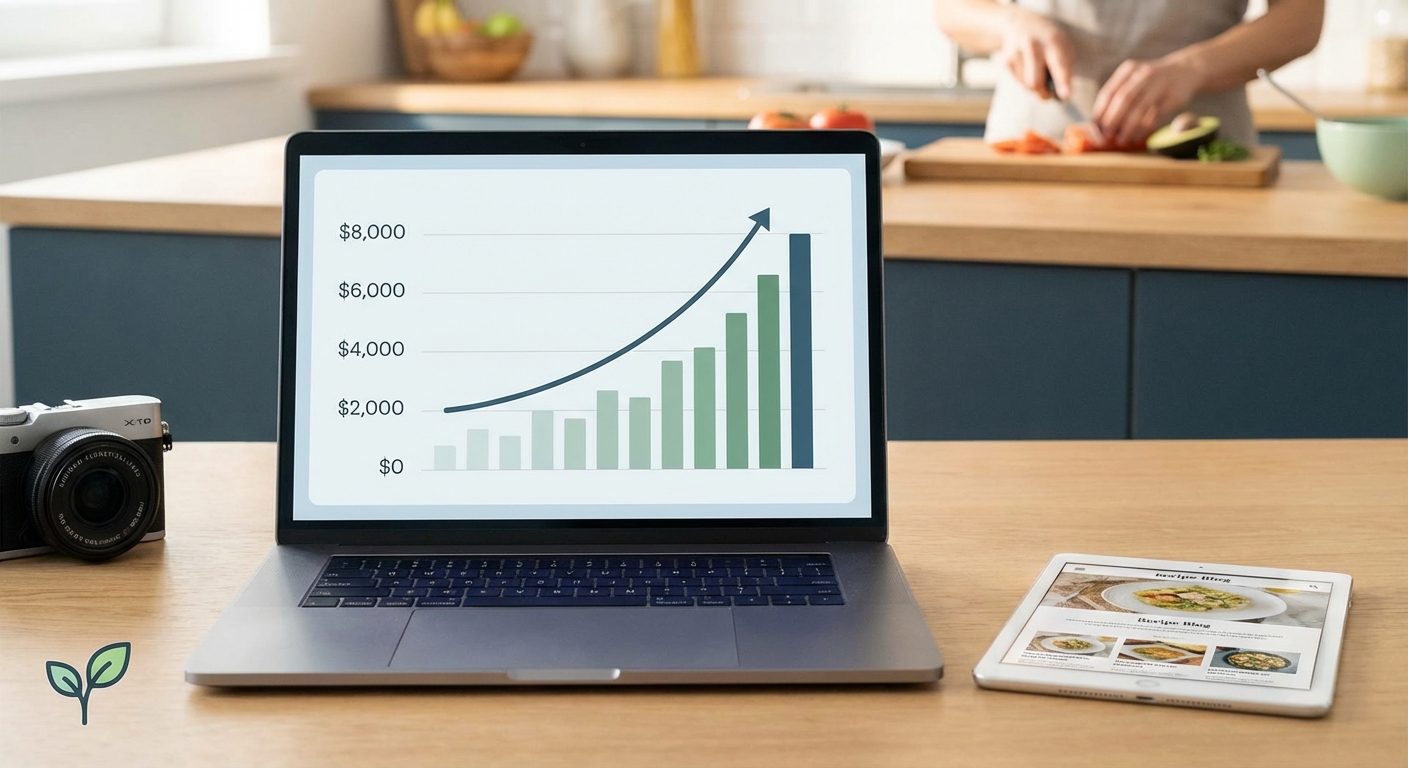
Food blogger earnings vary wildly, from zero to over $100,000 monthly. Most beginners earn nothing for 6-12 months. Mid-tier bloggers with 50,000-200,000 monthly visitors typically make $2,000-$8,000 per month through display ads, affiliates, and sponsored posts. Top earners combine multiple revenue streams and treat their blog like a real business, not a hobby.
The Real Income Breakdown for Food Bloggers
Let’s cut through the highlight reels and look at actual numbers.
Beginner food bloggers (0-6 months) typically earn $0-$100 per month. Most make nothing at all. You’re building content, learning SEO, and figuring out photography. Traffic is minimal. Ad networks won’t accept you yet.
Growth-stage bloggers (6-18 months) see $100-$2,000 monthly. You’ve got 10,000-50,000 page views. You’re accepted into Mediavine or AdThrive. Affiliate commissions start trickling in. Maybe you land your first sponsored post.
Mid-tier bloggers (18+ months) earn $2,000-$8,000 per month. Traffic sits between 50,000-200,000 monthly page views. Display ads form your foundation. You’ve got consistent affiliate income. Brands reach out regularly.
Top earners ($20,000-$100,000+ monthly) treat food blogging like a media company. They have 500,000+ monthly visitors, multiple revenue streams, and often a small team. These are the exceptions, not the rule.
Here’s what matters: income correlates directly with traffic, RPM (revenue per thousand visitors), and diversification. You can’t skip the building phase.
Where Food Blog Money Actually Comes From
Food bloggers don’t just make money from ads. The smartest ones stack multiple income sources.
Display advertising is the bread and butter for most established food bloggers. Networks like Mediavine and AdThrive place ads on your site. You earn money every time someone views a page.
RPMs (revenue per 1,000 page views) for food blogs typically range from $15-$35. If you get 100,000 page views monthly at a $25 RPM, that’s $2,500. Double your traffic, double your income.
But you need 50,000 sessions for Mediavine. AdThrive requires 100,000 page views. Until then, you’re stuck with lower-paying networks or nothing at all.
Affiliate marketing means recommending products and earning commissions on sales. Amazon Associates is popular but pays only 1-3% for kitchen items. Specialized programs pay more.
A stand mixer link might earn you $5. A high-end blender could bring $30. It adds up if you’re getting thousands of clicks monthly.
Sponsored content pays $150-$5,000+ per post, depending on your traffic and engagement. Brands pay you to create recipes featuring their products. You maintain editorial control (if you negotiate well), but you’re required to promote their ingredients or tools.
Digital products include ebooks, meal plans, and online courses. Create once, sell repeatedly. A $27 ebook sold to 100 people monthly is $2,700. No ad network required.
Freelance services like recipe development, food photography, or consulting can bring $500-$5,000 per project. You’re trading time for money, but it pays bills while your blog grows.
Here’s a sample revenue breakdown for a mid-tier food blogger earning $5,000 monthly:
| Revenue Source | Monthly Income | Percentage |
|---|---|---|
| Display Ads | $2,500 | 50% |
| Affiliate Marketing | $750 | 15% |
| Sponsored Posts | $1,250 | 25% |
| Digital Products | $500 | 10% |
Diversification protects you. If ad RPMs drop or an affiliate program changes, you’re not sunk.
Traffic Requirements for Each Income Level
You can’t make serious money without traffic. Period.
For $1,000 monthly from ads alone at a $20 RPM, you need 50,000 page views. That’s roughly 25,000-30,000 sessions, depending on pages per session.
For $5,000 monthly, you need 250,000 page views. Most food bloggers take 18-24 months to hit this consistently.
For $10,000 monthly from ads, you’re looking at 400,000-500,000 page views. This requires 150-300+ published recipes, strong SEO, and consistent publishing.
Traffic sources matter too:
- Pinterest drives 40-70% of traffic for most food bloggers
- Google search provides 20-40% and converts better for ads
- Social media (Instagram, Facebook, TikTok) builds brand but drives less direct traffic
- Email lists bring repeat visitors with higher engagement
“I spent my first year obsessing over Instagram followers. Then I shifted to Pinterest and SEO. My traffic tripled in six months, and so did my income. Focus on what actually drives page views, not vanity metrics.” – Mid-tier food blogger earning $6,500 monthly
You need a content strategy that targets search intent. “Easy weeknight dinners” gets more searches than “my favorite Tuesday meal.” Keyword research isn’t optional.
The Timeline from Zero to Meaningful Income
Most food bloggers quit before they make a dollar. Here’s why: the timeline is longer than you think.
Months 1-3: You’re learning. Publishing recipes, figuring out photography, understanding SEO basics. Income: $0. Traffic: maybe 1,000-5,000 page views monthly.
Months 4-6: Content starts ranking. You’ve got 20-40 recipes published. Pinterest pins gain traction. Traffic: 5,000-15,000 monthly. Income: still probably $0, maybe $50-$200 if you’re aggressive with affiliates.
Months 7-12: Compound growth kicks in. Older posts rank better. Pinterest boards mature. Traffic: 15,000-50,000 monthly. Income: $100-$1,000. You might qualify for Mediavine.
Months 13-18: You’re an established blog now. Consistent publishing pays off. Traffic: 50,000-150,000 monthly. Income: $1,000-$5,000. Brands start reaching out.
Months 19-24: You’re making real money. Traffic: 150,000-300,000+ monthly. Income: $3,000-$10,000+. You’re considering going full-time or already have.
This assumes you’re publishing 2-4 high-quality recipes weekly, optimizing for SEO, and actively promoting on Pinterest. Slower publishing means a slower timeline.
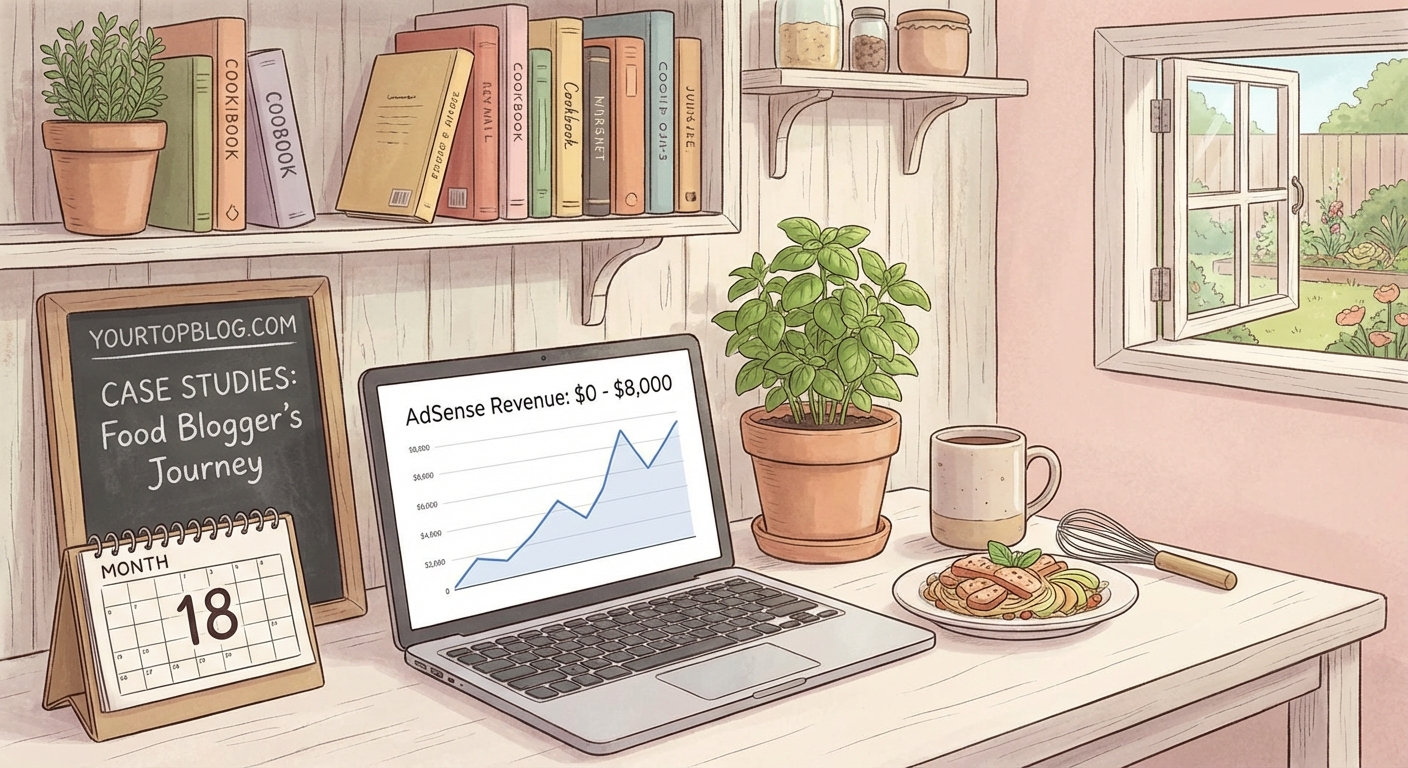
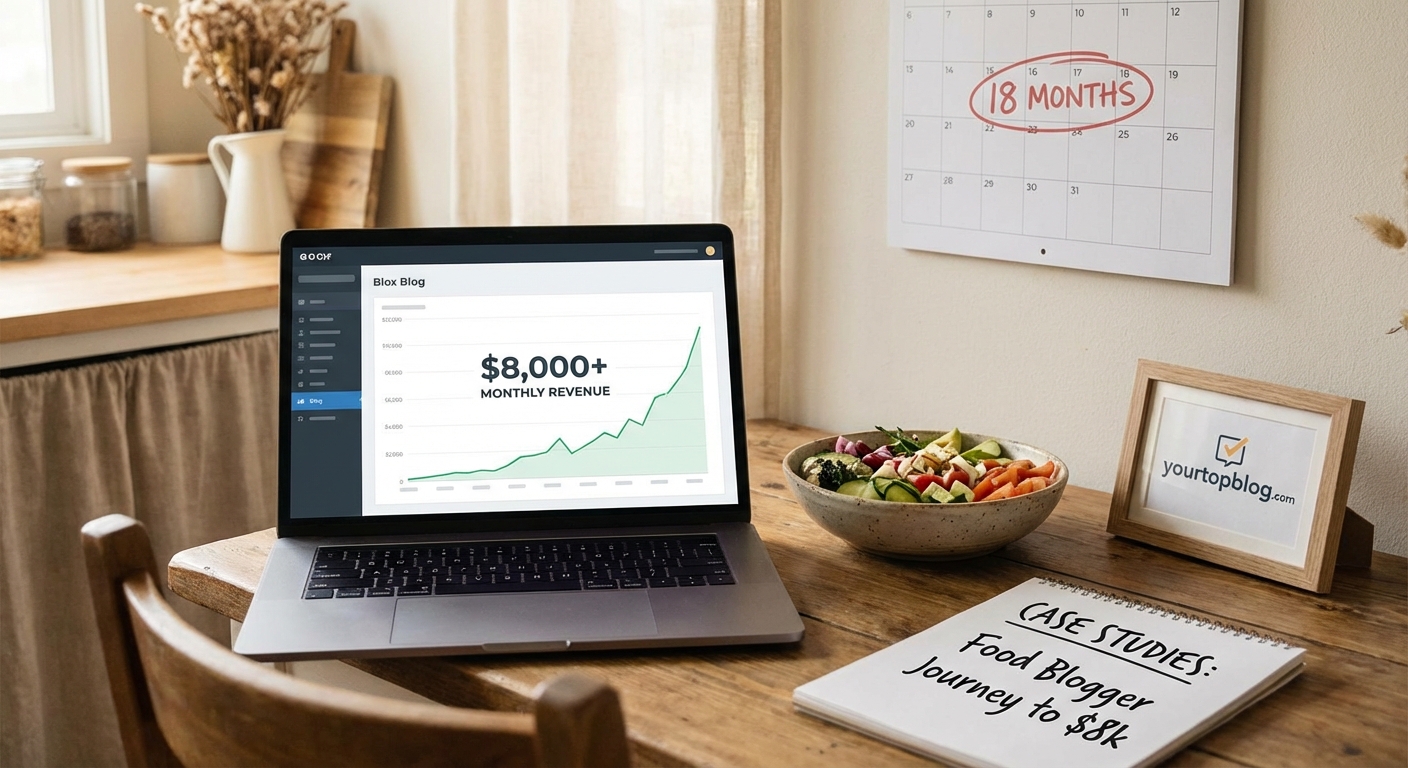
How a food blogger went from 0 to $8,000 monthly AdSense revenue in 18 months shows exactly what this looks like in practice.
What Separates High Earners from Everyone Else
The difference between a $500/month food blogger and a $10,000/month food blogger isn’t just traffic.
High earners treat their blog like a business. They track metrics religiously. They know their RPM, conversion rates, and traffic sources. They test and optimize constantly.
They publish consistently. Not when inspiration strikes. Every week, without fail. Search engines reward consistency. So does Pinterest.
They understand SEO deeply. They’re not just writing recipes. They’re targeting keywords, optimizing images, building internal links, and earning backlinks.
They diversify income early. They don’t wait for ads to max out. They build email lists, create products, and pitch brands proactively.
They invest in their business. Better hosting, professional photography equipment, SEO tools, and sometimes outsourcing. They reinvest earnings to grow faster.
Here’s what they don’t do:
- Rely on a single traffic source
- Ignore email list building
- Publish sporadically
- Chase trends instead of evergreen content
- Treat their blog like a hobby
The mindset shift from “fun side project” to “media business” changes everything.
Common Income Mistakes Food Bloggers Make
Waiting too long to monetize is mistake number one. You don’t need 100,000 visitors to add affiliate links or build an email list. Start day one.
Relying only on ads limits your ceiling. Ad income scales with traffic, but there’s only so much traffic you can realistically get. Products and services scale differently.
Ignoring email marketing leaves money on the table. Your email list is the only audience you truly own. Pinterest could change its algorithm tomorrow. Google could too. Your email list stays.
Publishing low-quality content to hit quotas backfires. One amazing, SEO-optimized recipe outperforms ten mediocre ones. Quality beats quantity every time.
Not tracking numbers means you’re flying blind. If you don’t know which posts drive traffic, which affiliates convert, or what your RPM is, you can’t optimize.
Comparing your month six to someone else’s year three kills motivation. Everyone’s timeline is different. Focus on your own progress.
Real Examples of Food Blogger Earnings
Let’s look at actual income scenarios based on common traffic levels.
Example 1: The beginner (8 months in)
– Traffic: 25,000 monthly page views
– Ad network: Mediavine
– RPM: $22
– Ad income: $550/month
– Affiliate income: $150/month
– Total: $700/month
Example 2: The growth blogger (16 months in)
– Traffic: 120,000 monthly page views
– Ad network: Mediavine
– RPM: $28
– Ad income: $3,360/month
– Affiliate income: $600/month
– Sponsored posts: $800/month (2 posts)
– Total: $4,760/month
Example 3: The established blogger (30 months in)
– Traffic: 400,000 monthly page views
– Ad network: AdThrive
– RPM: $32
– Ad income: $12,800/month
– Affiliate income: $2,100/month
– Sponsored posts: $3,000/month (3-4 posts)
– Digital products: $1,500/month
– Total: $19,400/month
These are realistic, not exceptional. The third example isn’t a celebrity blogger. Just someone who executed consistently for 2.5 years.
The Investment Required to Start
You don’t need $10,000 to start a food blog. But you do need some money.
Here’s a realistic startup budget:
- Domain name: $12-$15/year
- Hosting: $3-$10/month (start with shared hosting)
- WordPress theme: $0-$60 (one-time)
- Basic photography equipment: $0-$500 (many start with smartphones)
- Recipe plugin: $0-$50/year
Total first-year cost: $50-$800, depending on what you already own.
As you grow, expenses increase:
- Better hosting: $30-$100/month
- SEO tools (Keysearch, Ahrefs): $20-$100/month
- Email service provider: $0-$50/month
- Better camera and lenses: $500-$2,000
- Props and backgrounds: $100-$500
- Outsourcing (VA, editor): $200-$2,000/month
Most bloggers reinvest 20-40% of earnings back into growth. It’s a business, not a lottery ticket.
How to Maximize Your Food Blog Income
Start with these proven strategies:
-
Optimize every post for SEO. Target one primary keyword. Use it in your title, URL, headings, and naturally throughout. Add alt text to images. Build internal links.
-
Build your email list from day one. Offer a free meal plan, shopping list template, or recipe ebook. Email subscribers visit more pages and engage more, boosting ad revenue.
-
Create seasonal content ahead of time. Publish Thanksgiving recipes in September. Christmas cookies in October. They’ll rank by the time people search.
-
Focus on high-RPM content. Holiday recipes, special diets (keto, paleo), and expensive ingredient recipes often have higher RPMs because advertisers pay more.
-
Negotiate sponsored post rates. Don’t accept the first offer. If a brand offers $300 and you have 100,000 monthly page views, counter with $800-$1,200.
-
Test different affiliate programs. Amazon is easy but pays poorly. Look for kitchen equipment brands, specialty food companies, and meal kit services with better commissions.
The bloggers making serious money aren’t doing one thing well. They’re doing ten things competently and constantly improving.
Why Some Food Bloggers Never Make Money
Inconsistency kills more blogs than anything else. Publishing three recipes one month and zero the next doesn’t work. Algorithms reward consistency.
Ignoring SEO means you’re invisible. Beautiful photos don’t matter if no one finds your site. Learn keyword research and on-page optimization.
Giving up too early is epidemic. Month six feels discouraging. You’ve published 30 recipes and make $50. But month 18 looks completely different if you keep going.
Not treating it like a business means you won’t make business-level income. Hobbies don’t require strategy, investment, or metrics. Businesses do.
Copying what worked in 2018 doesn’t work in 2025. The food blogging space evolves. What ranked easily five years ago requires more sophistication now.
Making the Math Work for Your Goals
Let’s reverse-engineer your income goal.
Want to make $3,000/month? At a $25 RPM, you need 120,000 page views monthly. Add $500 in affiliates and $500 in sponsored posts, and you only need 80,000 page views.
Want to make $10,000/month? You need roughly 300,000 page views from ads at $30 RPM, plus $1,000-$2,000 from other sources.
Want to go full-time? Determine your minimum income need. Add 30% for taxes and business expenses. That’s your real target.
Then work backward:
- How many page views do you need?
- How many recipes will it take to generate that traffic?
- How long will it take to create and rank that content?
- What traffic growth rate do you need monthly?
The math is simple. The execution is hard. But at least you know what you’re aiming for.
Your First Year Action Plan
Here’s what to focus on month by month:
Months 1-3:
– Publish 2-3 recipes weekly
– Learn basic SEO and keyword research
– Set up Pinterest business account
– Start email list with simple opt-in
– Focus on evergreen recipes that rank
Months 4-6:
– Maintain publishing schedule
– Add affiliate links to existing content
– Create 5-10 Pinterest pins per recipe
– Optimize top-performing posts
– Join Facebook groups and learn from others
Months 7-9:
– Aim for 50+ published recipes
– Apply to Mediavine if you hit 50,000 sessions
– Pitch 2-3 brands for sponsored content
– Create your first digital product
– Analyze which content types perform best
Months 10-12:
– Double down on what’s working
– Refresh and update older posts
– Build more internal links
– Increase email frequency
– Set income goals for year two
This isn’t glamorous. It’s repetitive, sometimes boring work. But it’s the work that pays.
Turning Recipes Into Real Revenue
Food blogging can absolutely generate meaningful income. But it’s not passive, it’s not easy, and it’s not instant.
The bloggers making $5,000, $10,000, or $50,000 monthly put in 12-24 months of consistent work before seeing those numbers. They learned skills, made mistakes, and kept publishing when traffic was tiny.
Your income potential is real. But it requires treating your blog like a business, not a creative outlet. Strategy matters more than talent. Consistency beats inspiration.
Start today. Publish your first recipe. Learn one new SEO technique. Send one email to your tiny list. Small actions compound into big results.
The food bloggers making serious money aren’t special. They just didn’t quit.