

You hit publish on your latest blog post with excitement. You checked it three times. The formatting looks perfect. The images are crisp. You even shared it on social media.
Then crickets.
Weeks pass. Your post sits on page five of Google. Maybe page ten. Your analytics show a handful of visitors, mostly you refreshing the page to see if anything changed. You start wondering if blogging even works anymore or if you missed something fundamental.
Most blogs fail to rank because of seven fixable issues: targeting the wrong keywords, lacking backlinks, having thin content, poor [technical SEO](https://en.wikipedia.org/wiki/Search_engine_optimization), missing search intent, new domain authority, or outdated posts. Each problem has a specific solution that you can implement today to start seeing results within weeks or months depending on your niche competition.
You’re targeting keywords that are too competitive
New bloggers make this mistake constantly. They write about “best laptops” or “how to lose weight” and expect to rank on page one within a month.
The reality? Those keywords have been dominated by massive sites with hundreds of backlinks and years of authority.
When you target keywords with a difficulty score above 40 on tools like Ahrefs or SEMrush, you’re competing against established players. Your brand new blog doesn’t stand a chance yet.
What to do instead:
- Use a keyword research tool to find topics with low competition scores (under 30).
- Look for long tail variations that get 100 to 1,000 searches per month.
- Check the top 10 results for your target keyword and see their domain authority.
- If most ranking sites have a domain rating above 50 and yours is under 20, pick a different keyword.
I learned this lesson after wasting three months writing posts about saturated topics. Once I switched to low competition keywords that actually drive traffic, my posts started ranking within weeks instead of never.
Your content is too thin or generic
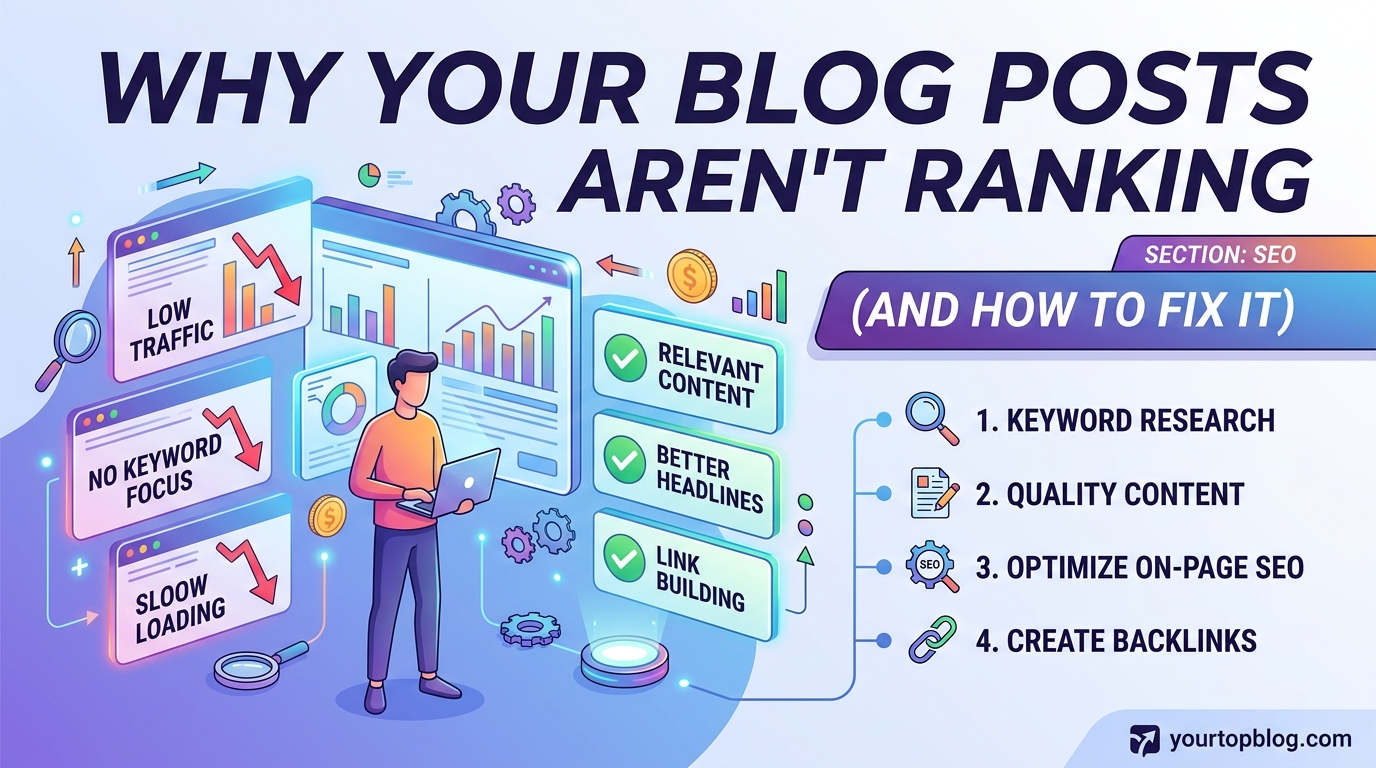
Google wants comprehensive answers. A 500 word post that skims the surface won’t cut it anymore.
If every other article on page one is 2,000 words with detailed examples, screenshots, and step by step instructions, your brief overview gets ignored.
Thin content also includes posts that repeat what everyone else says without adding new insights, personal experience, or unique data.
Here’s a comparison table showing what works versus what doesn’t:
| Thin Content | Ranking Content |
|---|---|
| 400-600 words | 1,500+ words with depth |
| Generic tips from other blogs | Personal examples and case studies |
| No images or screenshots | Visual proof and diagrams |
| Surface level advice | Step by step processes |
| No data or numbers | Specific metrics and results |
How to fix thin content:
Add personal stories from your blogging experience. Include screenshots showing exactly what you did. Back up claims with numbers. Answer follow up questions readers might have. Update posts with fresh examples every six months.
One of my posts went from position 47 to position 8 after I expanded it from 800 words to 2,200 words and added five real examples with screenshots.
You have zero backlinks pointing to your posts
Backlinks remain one of Google’s top ranking factors. When authoritative sites link to your content, it signals trust and relevance.
A post with zero backlinks will almost always lose to a similar post that has even three or four quality links from relevant sites.
Building backlinks takes effort. There’s no magic button. But you can start small and build momentum.
“The single biggest factor in my blog’s growth from 1,000 to 50,000 monthly visitors was consistent link building. I spent one hour per week reaching out to other bloggers in my niche.” – Sarah Chen, lifestyle blogger
Practical link building steps:
- Find bloggers in your niche who have written about similar topics.
- Read their content and leave genuine, thoughtful comments.
- Email them about a specific post you loved and mention your related article.
- Offer to write a guest post for their site with a natural link back to your content.
- Create original data or surveys that other bloggers want to reference.
- Build relationships before asking for anything.
Start with just five outreach emails per week. That’s 20 per month. If even 10% say yes, you’ll have two new backlinks monthly. After a year, that’s 24 quality links.
Some bloggers who successfully grew their traffic share detailed strategies worth studying, like this case of going from zero to 50,000 monthly visitors.
Your site has technical SEO problems
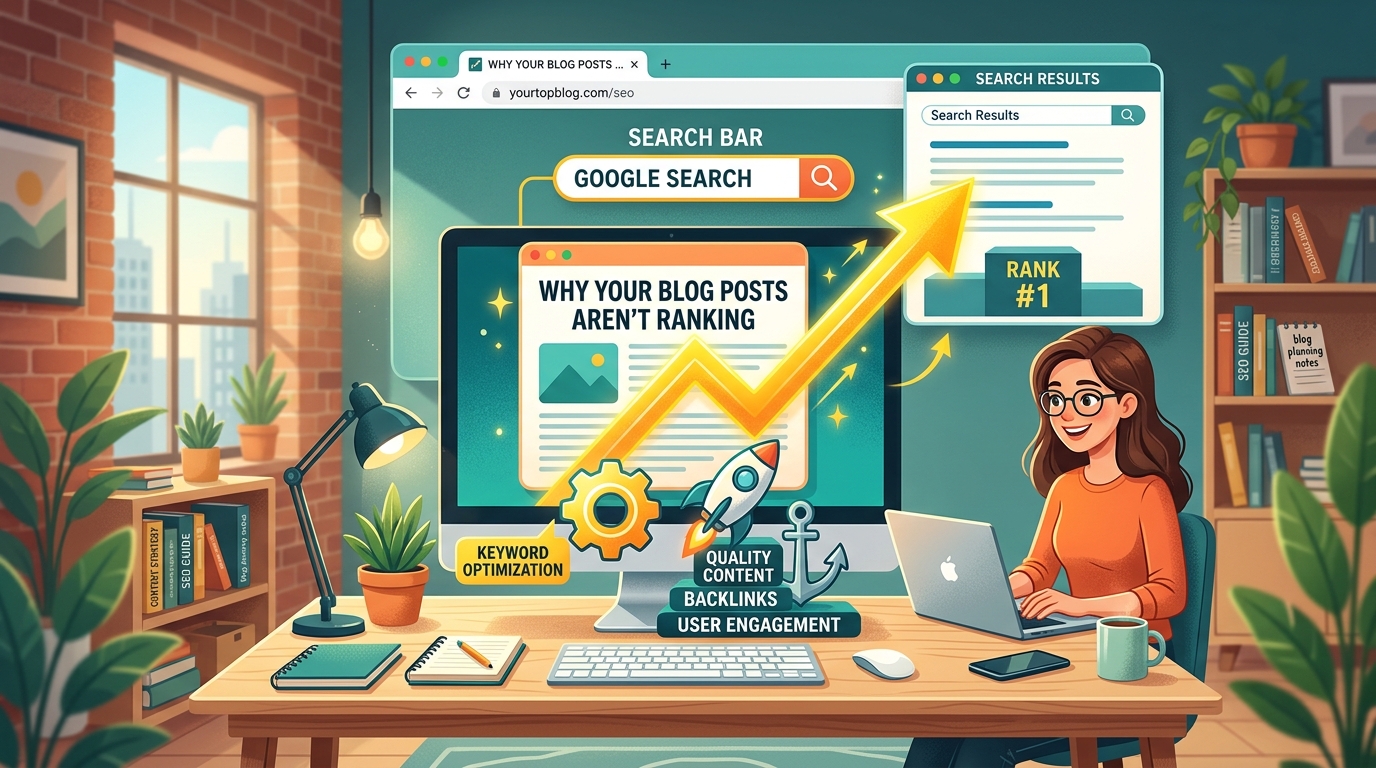
Sometimes the issue isn’t your content at all. It’s how search engines access and read your site.
Common technical problems include:
- Slow page speed (over 3 seconds to load)
- Not mobile friendly or responsive
- Broken internal links
- Missing or duplicate meta descriptions
- No XML sitemap submitted to Google Search Console
- Robots.txt file blocking important pages
- Poor site structure with orphaned posts
Google wants to deliver fast, accessible content to users. If your site fails on technical basics, your rankings suffer no matter how good your writing is.
Technical fixes you can implement today:
Use Google PageSpeed Insights to test your load time. Compress images before uploading them. Install a caching plugin if you’re on WordPress. Make sure your theme is mobile responsive by testing on your phone.
Check Google Search Console for crawl errors. Fix any broken links using a plugin like Broken Link Checker. Create an XML sitemap with Yoast SEO or RankMath and submit it to Search Console.
I once spent two months wondering why my posts weren’t indexing. Turns out my robots.txt file was accidentally blocking Google from crawling my entire blog. One fix and my posts started appearing in search results within days.
You’re not matching search intent
This is subtle but critical. Search intent means understanding what the person typing that keyword actually wants to find.
Someone searching “best running shoes” wants product recommendations with prices and links. Someone searching “how to tie running shoes” wants a tutorial with images or video.
If you write a tutorial when people want a product list, Google won’t rank you well even if your content is excellent.
The four main types of search intent:
- Informational: The user wants to learn something (how to, what is, why does)
- Navigational: The user wants to find a specific website or page
- Commercial: The user is researching before buying (best, top, review, vs)
- Transactional: The user is ready to buy (buy, coupon, discount, near me)
Match your content format to what’s already ranking. If the top 10 results are all listicles, write a listicle. If they’re all in depth guides, write an in depth guide.
I had a post about “WordPress plugins” that wasn’t ranking. The top results were all listicles of “best WordPress plugins.” I restructured mine as a numbered list and it jumped from position 62 to position 14 within three weeks.
Your domain is too new and lacks authority
This one stings because there’s no instant fix. Google trusts older domains with consistent publishing history more than brand new sites.
If your blog is under six months old, you’re in the sandbox period. Google is watching to see if you’re a legitimate publisher or a spam site that will disappear.
New domains typically need:
- 3 to 6 months before seeing any meaningful traffic
- 6 to 12 months to start ranking for moderately competitive keywords
- 12+ months to compete for tougher terms
What you can do while building authority:
Publish consistently. Two quality posts per week beats ten mediocre posts. Focus on building topical authority by covering one niche deeply rather than jumping between unrelated topics.
Get your first backlinks from lower authority sites in your niche. Those are easier to earn and still help. Make sure your domain name supports your SEO strategy from the beginning.
Stay patient. Keep publishing. The bloggers earning serious money now, like this food blogger making $8,000 monthly from AdSense, all went through this waiting period.
Your posts are outdated and need refreshing
Google favors fresh, current content for most topics. A post from 2019 about social media marketing will lose to a 2024 post even if the older one has more backlinks.
If you published great content a year ago and never touched it again, it’s slowly dropping in rankings as competitors publish newer versions.
Signs your content needs updating:
- Published over 12 months ago
- Contains outdated statistics or examples
- References tools or features that changed
- Screenshots show old interfaces
- Ranking position has dropped 10+ spots
How to refresh old posts effectively:
Update the publish date only after making real changes. Add new sections covering recent developments. Replace old screenshots with current ones. Update statistics with fresh data. Add new internal links to recent posts.
I refresh my top 20 posts every six months. This takes about 30 minutes per post. After updating a post about email marketing, it went from position 18 to position 6 and traffic to that post doubled.
Some bloggers worry about monetization before fixing ranking issues. But you need traffic before revenue matters. Once you rank consistently, you can optimize for income through strategies like avoiding common AdSense mistakes or adding affiliate programs that actually pay.
Start fixing one issue at a time
You don’t need to tackle all seven problems today. That’s overwhelming and leads to quitting.
Pick the one issue that’s most likely holding you back. If you’re targeting super competitive keywords, start there. If your posts are 500 words and competitors write 2,000, expand your content first.
Make one improvement per week. In two months, you’ll have fixed eight problems. In six months, you’ll have transformed your entire blog.
Track your progress in a simple spreadsheet. Note which posts you updated, what changes you made, and watch the ranking positions over time. Celebrate small wins like moving from position 47 to position 23.
Remember that SEO is a long game. The bloggers crushing it now spent months or years building their authority. You’re not behind. You’re just getting started. Every post you publish, every backlink you earn, every technical fix you implement moves you closer to the traffic and income you want from your blog.
Start today with one small fix. Your future self will thank you.