

Starting a blog feels exciting until you check your analytics and see single-digit daily visitors. You publish posts, hit the share button, and wait for traffic that never comes. Growing from zero to 50,000 monthly visitors isn’t magic, but it does require a specific roadmap and consistent execution over several months.
Growing your blog from 0 to 50k visitors takes focused keyword research, consistent publishing, strategic content updates, and promotion through multiple channels. Most bloggers reach this milestone in six to twelve months by targeting low-competition keywords, building backlinks, and optimizing existing posts. Success requires patience, data analysis, and adapting your strategy based on what your audience actually reads.
Start with a Clear Traffic Growth Timeline
You need realistic expectations before you start.
Reaching 50,000 monthly visitors typically takes six to twelve months for bloggers who publish consistently and follow proven SEO strategies. Some niches move faster than others. Tech and finance blogs often grow slower because competition is fierce. Hobby niches like gardening or pet care can hit traffic milestones faster if you target the right keywords.
Break your goal into monthly checkpoints:
- Month 1 to 2: 100 to 500 visitors
- Month 3 to 4: 1,000 to 3,000 visitors
- Month 5 to 6: 5,000 to 10,000 visitors
- Month 7 to 9: 15,000 to 30,000 visitors
- Month 10 to 12: 40,000 to 50,000+ visitors
These numbers assume you publish at least eight to twelve high-quality posts per month and promote them actively. If you publish less frequently, extend your timeline accordingly.
Track your progress weekly. Use Google Analytics to monitor organic search traffic, not total pageviews. Social media spikes look impressive but rarely convert into loyal readers or email subscribers.
Find Keywords Your Competitors Are Ignoring
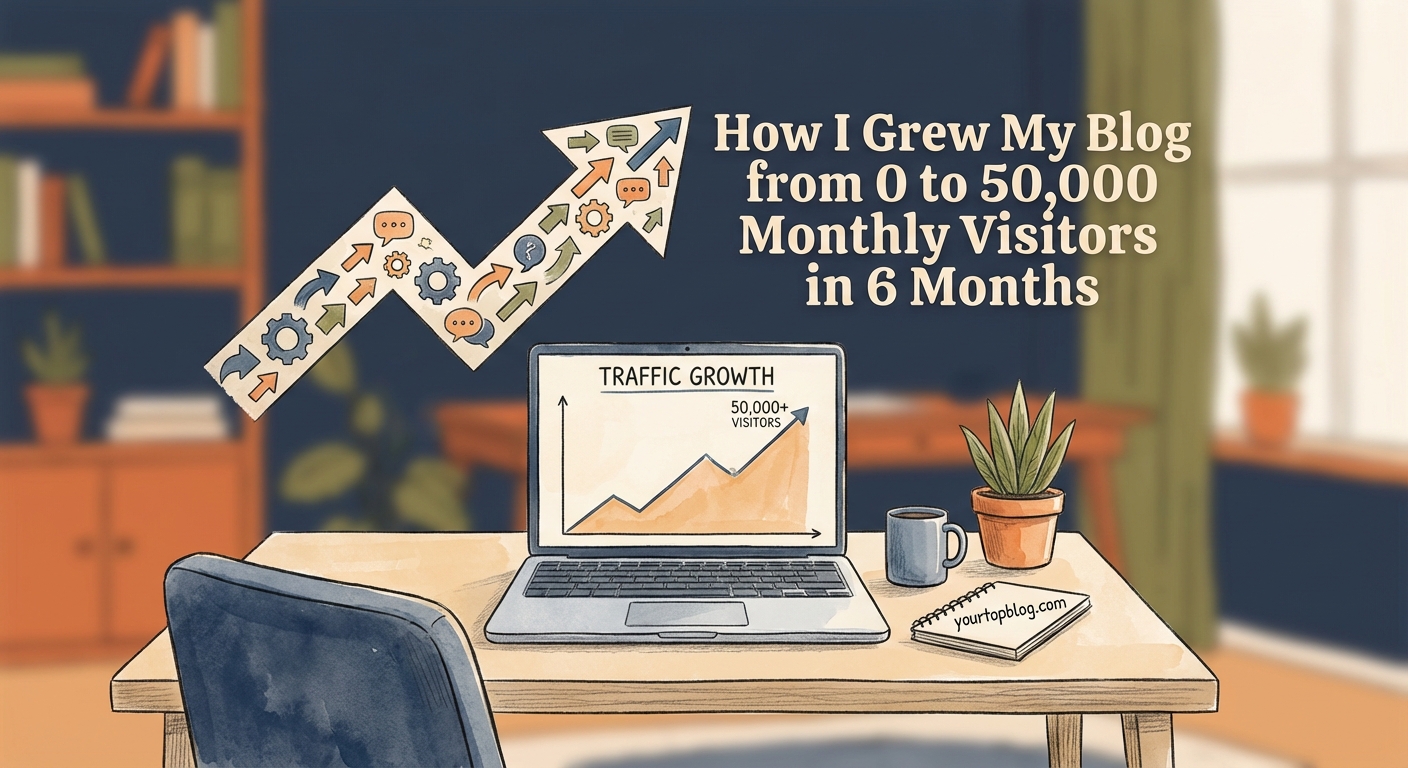
Keyword research determines whether you get traffic or waste time writing posts nobody finds.
Most beginner bloggers target keywords that are too competitive. Phrases like “how to lose weight” or “best laptops” already have thousands of established sites ranking on page one. You won’t outrank them in your first year.
Target long-tail keywords with these characteristics:
- Search volume between 100 and 1,000 monthly searches
- Keyword difficulty score below 30 (use tools like Ahrefs or Ubersuggest)
- Commercial or informational intent that matches your content
- Related questions that appear in Google’s “People also ask” section
Create a spreadsheet with at least 50 keyword opportunities before you write a single post. Organize them by search volume, difficulty, and relevance to your niche.
Here’s a comparison table showing keyword types and their potential:
| Keyword Type | Monthly Searches | Difficulty | Time to Rank | Traffic Potential |
|---|---|---|---|---|
| Broad terms | 10,000+ | 70+ | 12+ months | High (if ranked) |
| Medium-tail | 1,000 to 5,000 | 40 to 60 | 6 to 9 months | Moderate |
| Long-tail | 100 to 1,000 | 10 to 30 | 2 to 4 months | Consistent |
| Question-based | 50 to 500 | 5 to 20 | 1 to 3 months | Targeted |
Focus on long-tail and question-based keywords during your first six months. They bring consistent traffic faster and help you build topical authority in your niche.
Publish Content That Matches Search Intent Perfectly
Writing great content isn’t enough. Your posts must match what searchers actually want when they type a query into Google.
Search intent falls into four categories:
- Informational: The searcher wants to learn something (example: “how does composting work”)
- Navigational: The searcher wants to find a specific website (example: “WordPress login”)
- Commercial: The searcher is researching before buying (example: “best running shoes for beginners”)
- Transactional: The searcher is ready to purchase (example: “buy Nike running shoes size 10”)
Most of your early content should target informational and commercial intent keywords. These bring traffic from people who are learning and researching, which builds trust and positions you as an authority.
Before writing any post, Google your target keyword and analyze the top five results. Notice the format they use:
- Are they listicles, how-to guides, or comparison posts?
- How long are they (word count matters less than comprehensiveness)?
- What subtopics do they cover?
- What questions do they answer?
Your post should cover everything the top results cover, plus add something new. That could be personal experience, updated data, better examples, or a clearer structure.
“The posts that rank aren’t always the best written. They’re the posts that best satisfy what the searcher wanted to know. Match intent first, then worry about your writing style.” — Successful blogger who reached 100k monthly visitors in year two
Build Your Publishing System for Consistency
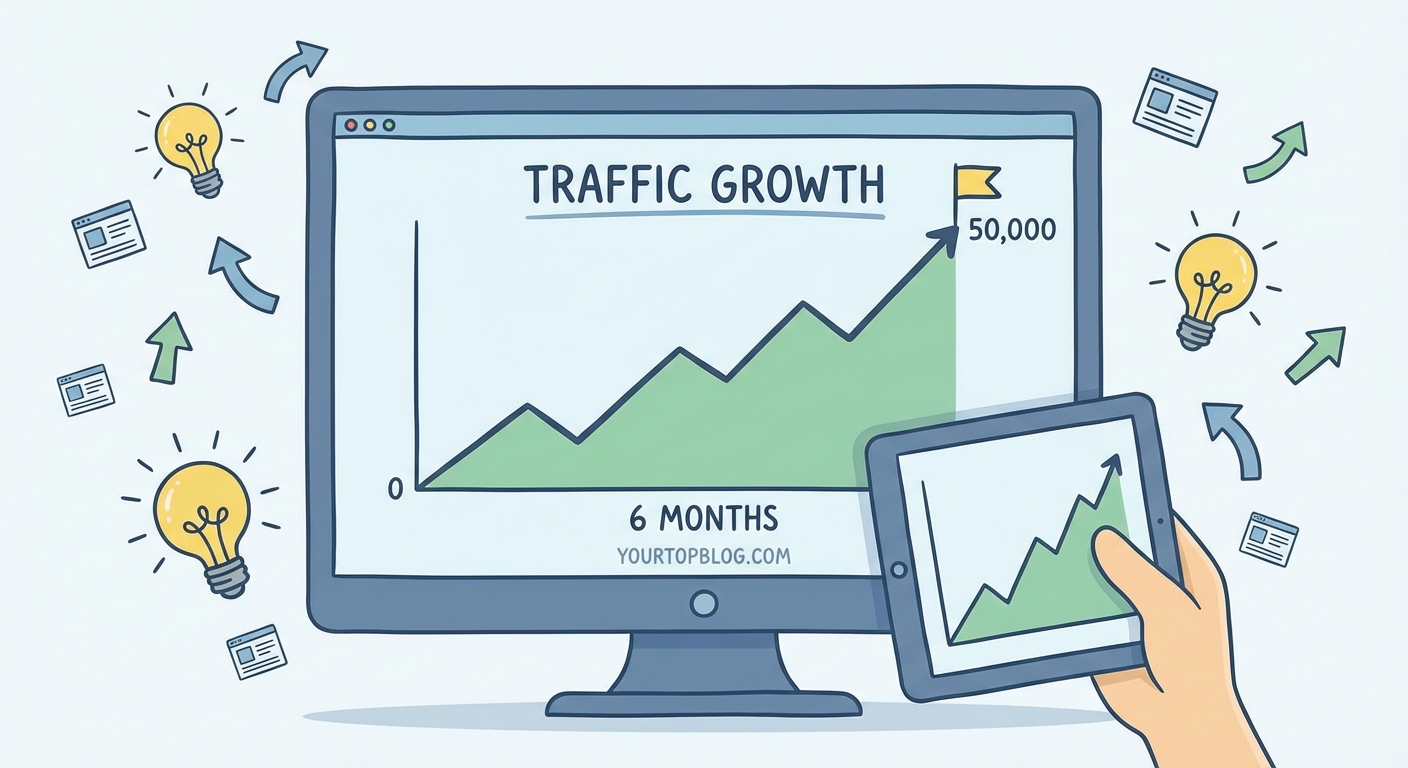
Inconsistent publishing kills blog growth faster than anything else.
You need a system that lets you publish regularly without burning out. Here’s a realistic publishing schedule for solo bloggers:
- Week 1: Research and outline four posts using your keyword spreadsheet
- Week 2: Write two complete drafts (1,500 to 2,500 words each)
- Week 3: Write two more drafts and edit the first two posts
- Week 4: Edit the remaining posts, add images, optimize for SEO, and schedule publication
This schedule produces eight posts per month without requiring you to write every single day. Batch similar tasks together. Research all your keywords in one session. Write all your drafts in dedicated writing blocks.
Use a content calendar to plan three months ahead. Include:
- Target keyword for each post
- Search intent (informational, commercial, etc.)
- Planned word count
- Internal links to include
- Promotion channels (Pinterest, email, etc.)
When you have a system, you stop wasting mental energy deciding what to write next. You just follow your calendar and execute.
Optimize Every Post for On-Page SEO
On-page SEO tells Google what your post is about and whether it deserves to rank.
Every post you publish should include these elements:
- Target keyword in the title (preferably near the beginning)
- Target keyword in the URL slug
- Target keyword in the first 100 words
- At least two subheadings that include related keywords or variations
- Alt text for every image that describes the image and includes keywords when natural
- Internal links to three to five related posts on your blog
- External links to two to three authoritative sources
- Meta description that includes your target keyword and encourages clicks
Don’t stuff keywords unnaturally. Write for humans first, then optimize for search engines. If your keyword is “best indoor plants for beginners,” you can naturally use variations like “easy houseplants” or “low-maintenance indoor plants” throughout your post.
Image optimization matters more than most bloggers realize. Large image files slow your site down, which hurts your rankings. Compress every image before uploading. Tools like TinyPNG or ShortPixel reduce file sizes without losing visual quality.
Add descriptive file names before uploading. Instead of “IMG_1234.jpg,” use “pothos-plant-in-white-pot.jpg.” This small detail helps your images appear in Google Image Search, which drives additional traffic.
Get Your First 100 Backlinks Without Begging
Backlinks remain one of the strongest ranking factors. Sites with more quality backlinks typically rank higher than sites with fewer links.
You won’t get backlinks by writing great content and hoping people notice. You need an outreach strategy.
Here are five methods that work for new bloggers:
- Resource page outreach: Find pages that list helpful resources in your niche and suggest your post as an addition
- Broken link building: Find broken links on relevant sites, then offer your post as a replacement
- Guest posting: Write posts for established blogs in your niche with a link back to your site
- HARO (Help A Reporter Out): Answer journalist queries and get featured in news articles with a backlink
- Competitor backlink analysis: See who links to your competitors and reach out to those same sites
Start with resource page outreach because it’s the easiest for beginners. Search Google for phrases like:
- “your niche + resources”
- “your niche + helpful links”
- “your niche + recommended reading”
Email the site owner with a short, personalized message explaining why your post would benefit their readers. Keep your email under 100 words. Don’t be pushy.
Aim for five to ten new backlinks per month during your first six months. Quality matters more than quantity. One link from an established site in your niche is worth more than twenty links from random directories.
Update Old Posts to Multiply Their Traffic
Most bloggers publish a post and never touch it again. That’s a mistake.
Updating old posts can double or triple their traffic without writing anything new. Google favors fresh, current content. Posts that get regular updates often climb in rankings even if they were stuck on page three for months.
Every three months, review your analytics and identify posts that:
- Get some traffic but rank on page two or three for their target keyword
- Have high impressions but low click-through rates in Google Search Console
- Cover topics where information changes frequently (tools, statistics, best practices)
Update these posts by:
- Adding new sections that cover recent developments or questions
- Updating statistics, examples, and screenshots
- Improving the introduction to better match current search intent
- Adding internal links to newer related posts
- Refreshing the publish date (only after making substantial changes)
One blogger increased traffic on a single post from 200 to 2,000 monthly visitors by adding three new sections and updating outdated screenshots. The update took two hours. That’s a better return on time than writing a brand new post.
Promote Each Post Through Multiple Channels
Organic search should be your primary traffic source, but promotion accelerates growth.
Create a promotion checklist for every post you publish:
- Share on Pinterest with at least three different pins using different images and descriptions
- Send to your email list (if you have subscribers)
- Share in relevant Facebook groups (without spamming)
- Answer related questions on Reddit or Quora with a link to your post
- Repurpose the content into a Twitter thread or LinkedIn post
Pinterest drives significant traffic for certain niches (food, home decor, parenting, travel, DIY). If your niche fits, invest time creating multiple pin designs for each post. Use Canva templates and schedule pins with Tailwind.
Don’t ignore email from day one. Add an email signup form to every post. Even if you only get five subscribers per week, that’s 260 subscribers in your first year. These subscribers give you a direct line to engaged readers who actually care about your content.
Repurposing content saves time and reaches people who prefer different formats. Turn a blog post into:
- A Twitter thread with key points
- A LinkedIn article with a different angle
- A YouTube video walking through the main steps
- An Instagram carousel with visual highlights
You’re not duplicating content. You’re adapting it for different platforms and audiences.
Track the Right Metrics and Adjust Your Strategy
You can’t improve what you don’t measure.
Check these metrics weekly:
- Organic search traffic (Google Analytics)
- Top performing posts by traffic (Google Analytics)
- Average position for target keywords (Google Search Console)
- Click-through rate from search results (Google Search Console)
- Pages per session and average session duration (Google Analytics)
Monthly, review which posts are growing and which are stagnant. If a post ranks on page two for its target keyword, it’s worth updating. If a post ranks on page five after six months, the keyword might be too competitive or your content doesn’t match search intent well enough.
Pay attention to your top five posts. These drive most of your traffic. Add internal links from these high-traffic posts to newer posts you want to boost. Update them regularly to maintain their rankings.
Notice patterns in what performs well. If your how-to posts get more traffic than your opinion pieces, write more how-to content. If posts with comparison tables rank faster, add tables to more posts. Let data guide your content decisions.
Common Mistakes That Keep Blogs Stuck at Low Traffic
Avoid these errors that slow growth:
- Targeting keywords that are too competitive: You can’t rank for “best laptop” in your first year, no matter how good your post is
- Publishing inconsistently: Three posts one month and zero the next month confuses Google and readers
- Ignoring mobile optimization: More than 60% of searches happen on mobile devices
- Skipping internal linking: Internal links help Google understand your site structure and keep readers on your site longer
- Writing for yourself instead of your audience: Your personal stories matter only if they help readers solve problems
- Giving up too soon: Most blogs see minimal traffic for the first three to four months
Here’s a table showing the impact of common mistakes:
| Mistake | Impact on Growth | How to Fix |
|---|---|---|
| Irregular publishing | Slows indexing, reduces authority | Create content calendar, batch work |
| Poor keyword research | Wastes time on unwinnable keywords | Use keyword tools, check competition |
| No internal linking | Lower pageviews, weaker site structure | Link to 3-5 related posts in each article |
| Ignoring analytics | Can’t identify what works | Review data weekly, adjust strategy monthly |
| Thin content (under 800 words) | Doesn’t satisfy search intent | Write comprehensive posts (1,500+ words) |
Your First 50,000 Visitors Start with Your Next Post
Growing your blog from zero to 50,000 monthly visitors is absolutely achievable if you commit to the process. You don’t need expensive tools, a huge social media following, or years of experience. You need solid keyword research, consistent publishing, strategic optimization, and patience to let your content compound over time.
Start with your next post. Choose a low-competition keyword, write comprehensive content that matches search intent, optimize it properly, and promote it through multiple channels. Then do it again next week. And the week after that. Traffic growth isn’t linear, but it is predictable when you follow proven strategies and give your content time to rank.