
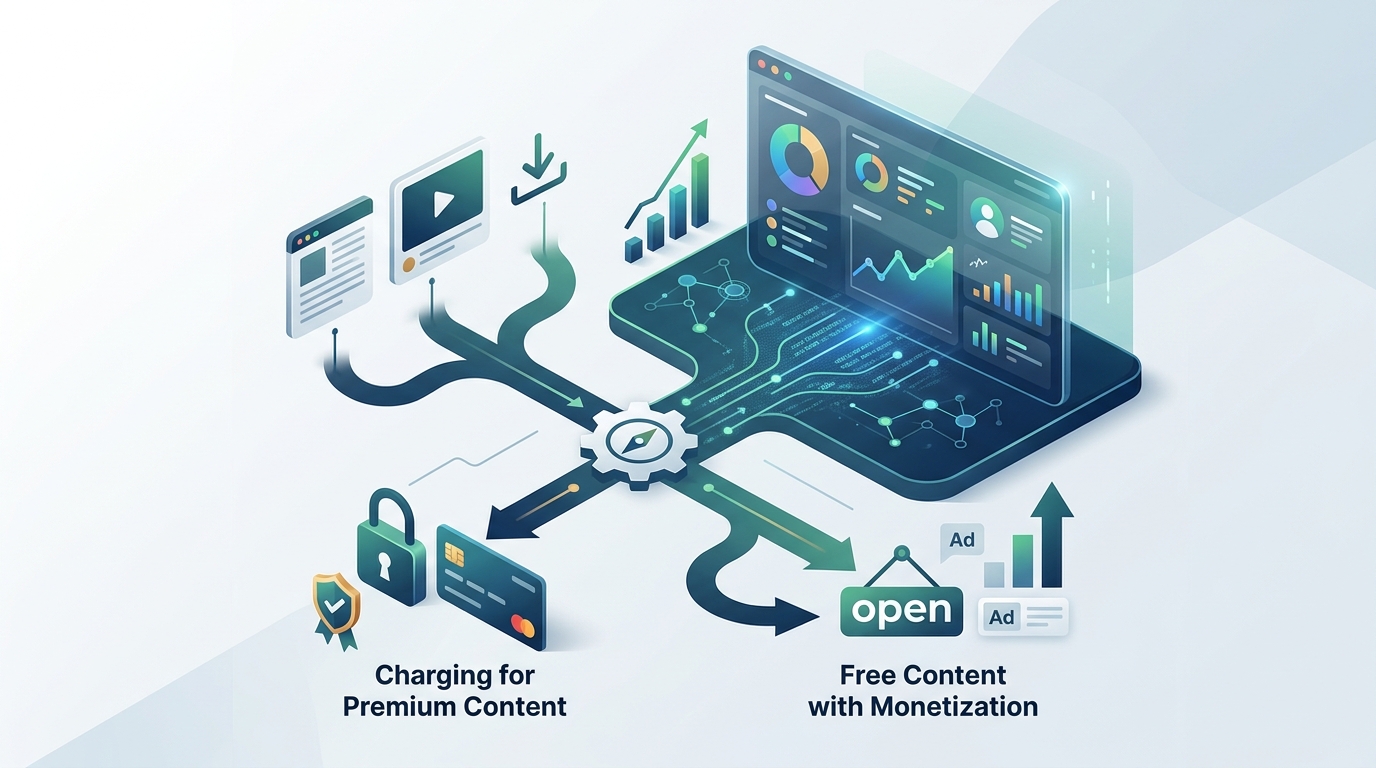
You’ve built an audience. You create valuable content. Now you’re wondering if it’s time to put some of it behind a paywall.
The decision to charge for premium content isn’t just about revenue. It’s about understanding your audience, your market position, and what happens to your growth when you lock content away. Some creators triple their income with premium offerings. Others watch their traffic collapse and never recover.
Charging for premium content works best when you have 10,000+ engaged followers, proven expertise, and content that solves expensive problems. Free content builds audience and SEO, while premium content generates direct revenue. Most successful creators use a hybrid model where free content feeds premium offerings, not replaces them entirely.
Understanding the real cost of going premium
Putting content behind a paywall changes everything about how your business operates.
You lose organic traffic. Google can’t index paywalled content effectively. Your SEO rankings drop. New visitors can’t discover your best work through search. The traffic sources you’ve built stop delivering results.
You also lose social sharing. People don’t share content they can’t access. Your viral potential drops to near zero. Word of mouth becomes limited to paying members only.
But you gain something powerful. Direct revenue. Predictable income. Higher value per visitor. And an audience that’s genuinely committed to your work.
The math is simple but brutal. If you have 50,000 monthly visitors generating $500 from ads, you need just 25 premium subscribers at $20/month to match that income. But can you convert 0.05% of your traffic? That’s the real question.
Five signals that premium content will work for you
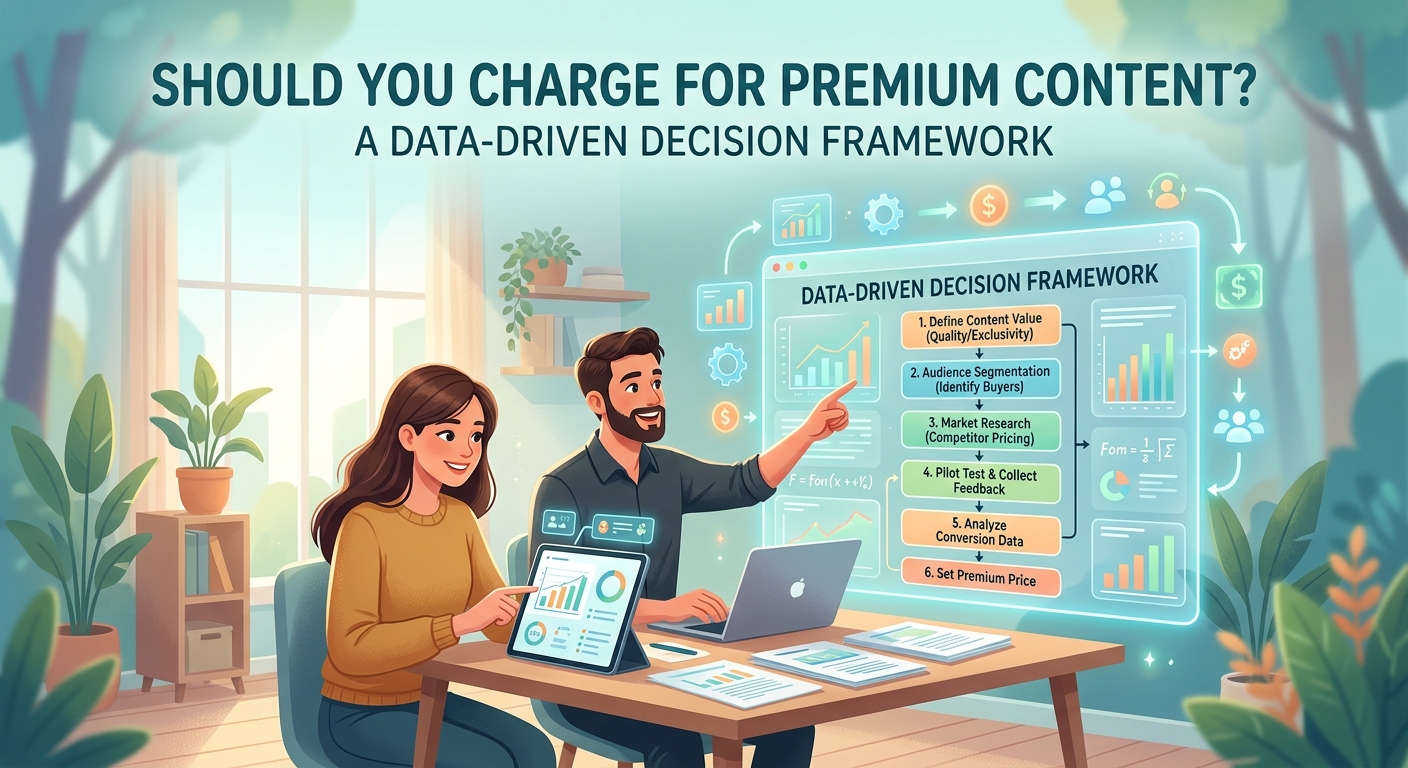
Not every creator should charge for content. Here are the clearest indicators that premium offerings make sense for your business.
1. You have an engaged email list of at least 5,000 people
Email subscribers already trust you. They’ve given you permission to reach them directly. If your open rates exceed 25% and people reply to your messages, you have the foundation for premium content.
2. Your content solves expensive problems
Business strategy, investing, health optimization, career advancement. These topics command premium prices because the value is clear and measurable. Entertainment and general interest content rarely converts to paid.
3. You’ve validated demand through free offerings
Your most popular free content gets shared constantly. People email asking for more depth. They request consulting or coaching. These are buying signals.
4. You can produce exclusive content consistently
Premium subscribers expect regular value. Can you create one substantial piece weekly? Can you maintain quality while also producing free content? Many creators burn out trying to serve both audiences.
5. Your competitors charge successfully
Look at similar creators in your niche. Are they running successful membership programs? What do they charge? What do they offer? If nobody in your space charges for content, there’s probably a reason.
The hybrid model that actually works
Most successful creators don’t choose between free and premium. They use both strategically.
Your free content serves three purposes. It builds SEO authority. It demonstrates expertise. It feeds your email list. This content should be genuinely valuable, not just teasers.
Your premium content goes deeper. It includes implementation details, templates, personal feedback, community access, or time-sensitive information. It’s not just “more” content. It’s fundamentally different.
Here’s a proven structure:
- Publish 3-4 free articles weekly that target specific keywords and solve real problems
- Offer one premium deep-dive monthly that shows exactly how to implement strategies
- Include community access where members can ask questions and share results
- Add monthly coaching calls or Q&A sessions for premium members only
The free content attracts thousands of visitors. A small percentage joins your email list. An even smaller percentage converts to premium. But the funnel works because each stage serves a clear purpose.
Pricing strategies that match your audience
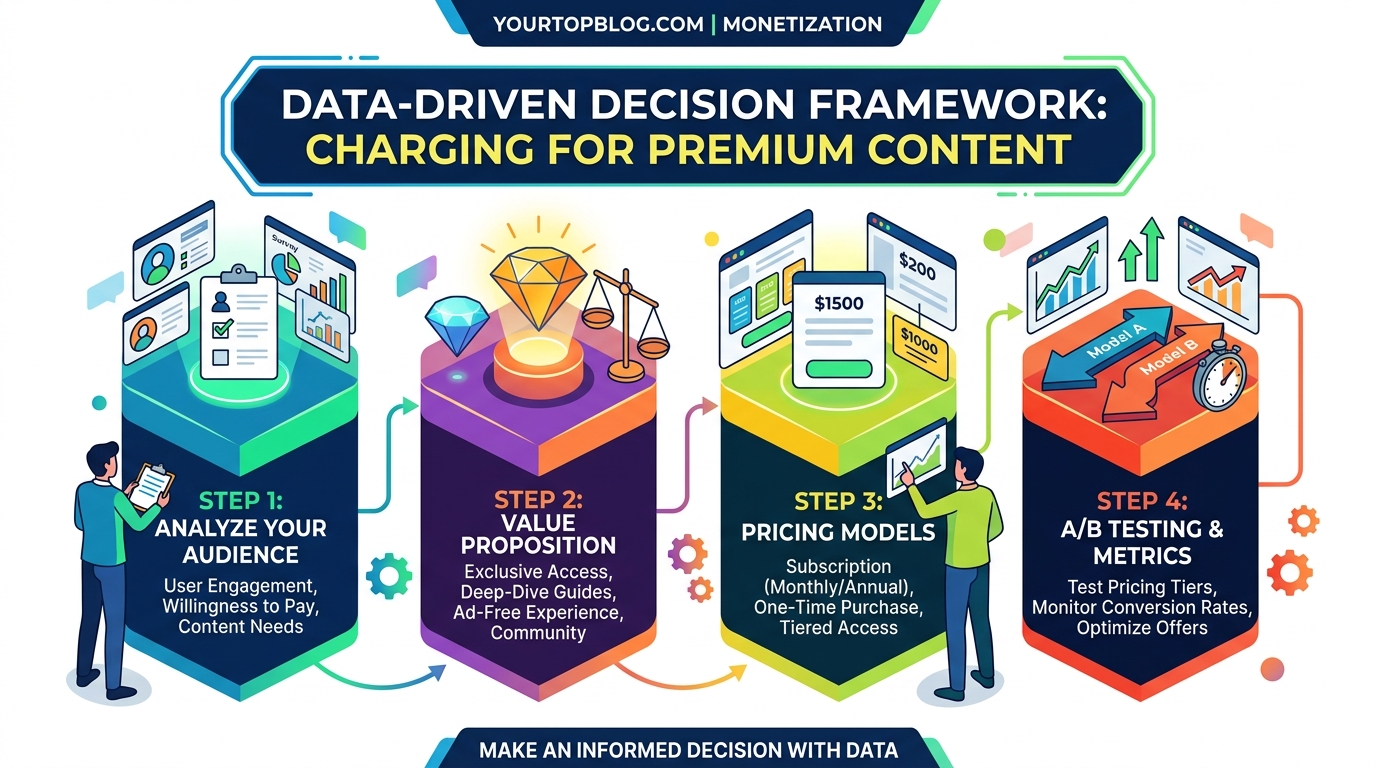
Price determines who can access your content and how they perceive its value.
| Price Point | Best For | Typical Offer | Conversion Rate |
|---|---|---|---|
| $5-15/month | Large audience, entry-level value | Ad-free access, basic extras | 1-3% of email list |
| $20-50/month | Established authority, actionable content | Templates, tutorials, community | 0.5-1% of email list |
| $100-300/month | Expert positioning, business outcomes | Direct access, implementation help | 0.1-0.3% of email list |
| $1000+/year | Premium positioning, transformation | Everything plus personal support | 0.05-0.1% of email list |
Start lower than you think necessary. You can always raise prices for new members while grandfathering existing subscribers. Dropping prices signals desperation and devalues your content.
Annual billing improves cash flow and reduces churn. Offer 2-3 months free when people pay yearly. Most premium creators see 30-40% of subscribers choose annual plans.
Common mistakes that kill premium content businesses
These errors destroy otherwise solid premium offerings.
Making free content worse to push premium
Your free content must remain excellent. If you start holding back basic information or creating incomplete tutorials, your audience notices. They leave. Your traffic drops. Your email list stops growing. Now you’re trying to sell premium content to a shrinking audience.
Charging for content that should be free
Basic how-to guides, industry news, beginner tutorials. This content belongs in the free tier. Premium content should offer implementation details, advanced strategies, or personal support. Not just longer versions of free content.
Inconsistent publishing schedule
Premium subscribers expect reliability. If you promise weekly content and deliver sporadically, they cancel. Set a schedule you can maintain even during busy months.
No community or interaction
People pay for access to you and to other serious practitioners. A static content library rarely justifies ongoing payments. Add forums, chat groups, or regular calls where members can interact.
Ignoring the free audience
Some creators go premium and stop nurturing their free audience entirely. They stop publishing free content. They abandon SEO. They forget that free content is how premium subscribers discover them. Your free content is marketing for your premium offering.
Building the infrastructure before you launch
Premium content requires different tools than free publishing.
You need a membership platform. Options include MemberPress, Patreon, Substack, or custom solutions. Each has tradeoffs between control, cost, and features.
You need payment processing. Stripe and PayPal are standard. Expect to pay 2.9% plus 30 cents per transaction. Factor these costs into your pricing.
You need email automation. Premium subscribers require different messaging than free subscribers. You’ll send renewal reminders, exclusive announcements, and member-only content notifications.
You need analytics beyond pageviews. Track subscriber lifetime value, churn rate, conversion rate from free to paid, and revenue per subscriber. These metrics tell you if your premium offering actually works.
Set up everything before you announce. Test the payment flow. Make sure content is properly gated. Verify that emails send correctly. Launch day will be chaotic enough without technical problems.
The 90-day validation test
Don’t commit fully to premium content until you validate demand.
Create a simple landing page describing your premium offering. Include the price and what’s included. Share it with your email list. See how many people sign up.
If you get 50+ subscribers in the first week, you have real demand. If you get 5-10, you might have pricing or positioning problems. If you get zero, your audience isn’t ready to pay.
Run this test before creating months of premium content. Before building complex infrastructure. Before announcing publicly. It’s a low-risk way to validate your idea.
During the test, talk to everyone who subscribes. Ask why they joined. What problems do they need solved? What format do they prefer? Use this feedback to shape your actual premium offering.
Also talk to people who didn’t subscribe. What held them back? Was it price, unclear value, or lack of interest? Their answers reveal what you need to fix.
Alternative revenue models worth considering
Charging for content isn’t the only way to monetize expertise.
Affiliate partnerships let you keep content free while earning commissions on products you recommend. If you have traffic but limited time, high-converting affiliate programs can generate substantial income without creating premium content.
Sponsored content pays you to create specific articles or videos. Brands pay $500-5,000+ per piece depending on your audience size and engagement. Your content stays free to readers.
Consulting and services often generate more revenue than content subscriptions. If you charge $200/hour for consulting, you only need 10 hours monthly to match a $2,000/month membership program.
Digital products like courses, templates, or tools have higher margins than subscriptions. Create once, sell repeatedly. No ongoing content creation required.
Display advertising through networks like AdSense provides passive income from free content. If you’re avoiding common AdSense mistakes, this can be surprisingly profitable at scale.
Many creators combine multiple revenue streams. Free content monetized through ads and affiliates. Premium content for dedicated fans. Consulting for high-value clients. Diversifying income sources reduces risk and maximizes revenue.
What premium subscribers actually want
Understanding subscriber expectations prevents churn and negative reviews.
Subscribers want actionable information they can implement immediately. Not theory. Not inspiration. Specific steps that produce results.
They want consistency. If you promise weekly content, deliver weekly content. Same day, same time, same quality. Reliability builds trust.
They want exclusivity. Something they can’t get elsewhere. This might be your personal insights, early access to content, or a community of peers.
They want interaction. Access to you through Q&A sessions, comments, or direct messaging. Pure content libraries have high churn rates. Communities have much better retention.
The most successful premium content offerings aren’t just “more content.” They’re a different experience entirely. They provide implementation support, community connection, and direct access that free content can’t replicate.
They also want to feel smart about their purchase. Give them wins. Show them results. Share success stories from other members. Help them justify the ongoing expense.
Measuring success beyond subscriber count
Raw subscriber numbers don’t tell the complete story.
Monthly recurring revenue (MRR) is your total predictable monthly income from subscriptions. This number should grow consistently if your offering works.
Churn rate measures what percentage of subscribers cancel each month. Under 5% is excellent. Over 10% means you have content or value problems.
Lifetime value (LTV) shows how much revenue the average subscriber generates before canceling. Multiply average subscription price by average months subscribed. If LTV is less than 12 months of subscription fees, you have retention issues.
Conversion rate from free to paid shows how effectively your free content sells premium access. Track this from email subscribers, not total website visitors. Expect 0.5-2% conversion rates.
Content engagement within your premium area reveals what subscribers actually value. Which content gets consumed? Which gets ignored? Use this data to create more of what works.
Set target metrics before launching. If you don’t hit them within 90 days, adjust your offering or reconsider the premium model entirely.
Making the decision with confidence
Should you charge for premium content? Here’s the framework.
If you have under 5,000 engaged email subscribers, focus on growing your free audience first. Premium content needs a substantial base to convert from.
If your content solves expensive business problems and you can demonstrate clear ROI, premium pricing makes sense. Your subscribers will recover the cost through implementation.
If you’re already generating solid revenue through other methods like growing your traffic and monetizing it effectively, premium content might distract from what’s working.
If you’re burning out creating free content without adequate compensation, premium offerings can make your work sustainable. Just don’t sacrifice the free content that builds your audience.
Test before committing. Validate demand. Start small. Scale what works. And remember that free and premium content aren’t opposites. They’re complementary parts of a complete content business.
The creators who succeed with premium content don’t abandon their free audience. They serve both groups strategically, using free content to demonstrate value and premium content to deliver transformation.