
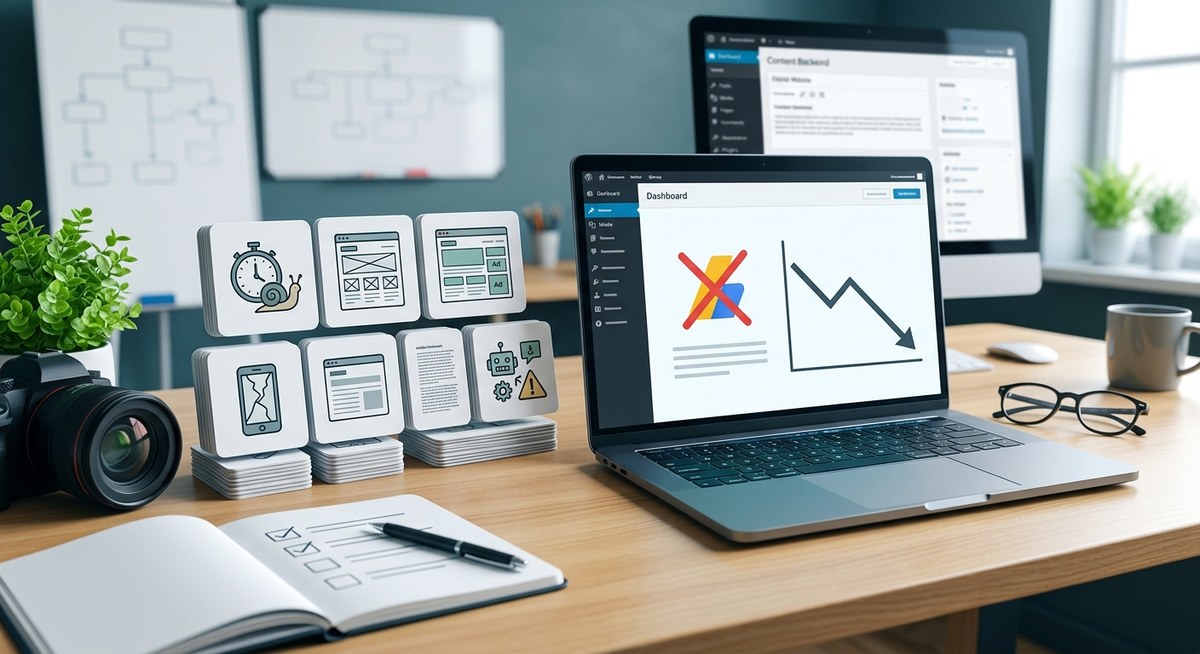
You spent weeks building your website. You picked a theme, wrote a handful of posts, and finally got that AdSense approval email. Then you checked your earnings after a month and felt crushed. A few dollars. Maybe less than a dollar. This story plays out more often than you would think. The truth is, many beginners make critical mistakes during the building phase that cap their earnings before they ever have a chance to grow. The good news? You can fix all of them.
Building a website for AdSense requires more than just adding ads to pages. Many beginners make critical mistakes during the setup phase that permanently cap their earnings potential. This guide covers seven common errors including poor hosting choices, neglecting mobile design, cluttered layouts, AdSense policy violations, weak content creation, slow page load times, and ignoring SEO fundamentals. Fix these issues early and you will set yourself up for sustainable, long term revenue growth.
Mistake 1: Choosing the Wrong Platform and Hosting
Your website foundation matters more than you think. A cheap shared hosting plan might save you fifteen dollars a month, but it can cost you hundreds in lost AdSense revenue. Google considers site speed and uptime when serving ads. If your host is slow, your ads will be slow too.
Many beginners also pick the wrong site builder. Some platforms limit how you can place ads or restrict access to your code. If you cannot insert your AdSense code exactly where you want it, you lose control over your earnings.
Here is what to look for in a hosting provider:
- At least 99.9% uptime guarantee
- Server locations near your target audience
- Built in caching and CDN support
- Customer support that answers within minutes
If you are still deciding on a platform, read our guide on choosing between WordPress, Wix, or custom code. WordPress gives you the most flexibility for ad placement.
Mistake 2: Designing Without Mobile Users in Mind
More than 60% of web traffic comes from phones and tablets. Google knows this. That is why they prioritize mobile friendly sites in search results and in ad delivery. If your site looks broken on a small screen, your AdSense earnings will suffer.
I see this mistake all the time. A beginner picks a desktop focused theme and never checks how it renders on a phone. Text is too small. Buttons overlap. Ads push content off the screen. Visitors leave within seconds.
To avoid this, always test your site on an actual phone before adding ads. Use Google’s mobile friendly test tool. Pay attention to how ad units resize on smaller screens. For a deeper look, check our guide on mobile first website design and why your site must look perfect on smartphones.
Mistake 3: Adding Too Many Ads Before You Have Content
New site owners often get excited and place ads everywhere. Above the header. In the sidebar. Between every paragraph. In the footer. This approach backfires in two ways.
First, Google’s policy limits the number of ads per page. If you exceed those limits, your account could get flagged. Second, a page loaded with ads drives visitors away. People came for information, not a billboard.
A better approach is to start with two or three well placed ad units and add more as your content grows. Focus on creating value first. Once you have ten to fifteen solid posts, start testing additional placements.
Mistake 4: Placing Ads Where Google Says You Cannot
AdSense has strict rules about ad placement. Violate them and you risk a permanent ban. The most common violations include:
- Ads near navigation buttons or download links
- Ads disguised as content
- Ads above the fold that mimic the look of your site
- Ads on pages with no original content
- Ads on pages with adult, violent, or hateful material
Google uses automated crawlers to scan for these violations. A human review team also checks flagged sites. If you get caught, your account can be disabled with no appeal.
The safest strategy is to place ads in natural breaks within your content. Use responsive ad units that adapt to different screen sizes. And never, ever trick a visitor into clicking an ad by mistake.
Mistake 5: Writing Content That Advertisers Avoid
Not all content is created equal in the eyes of AdSense advertisers. Google’s ad network shows higher paying ads on pages with quality, original content. Thin pages, scraped content, and AI generated fluff attract low paying ads or no ads at all.
Think of it this way. A premium brand will not pay top dollar to appear on a page filled with generic advice and stock photos. They want to be associated with authoritative, well researched content.
To attract high paying ads, focus on these three things:
- Write original content that answers real questions.
- Use your own images or properly licensed photos.
- Keep your page focused on a single topic.
If you need help getting started with monetization friendly content, read our guide on how to get approved for Google AdSense in 2026 even as a new blogger. It covers the content standards you need to meet.
Mistake 6: Ignoring Page Speed During the Building Phase
Page speed directly impacts your AdSense earnings. A one second delay in load time can reduce your page views by 11% and your customer satisfaction by 16%. Google also uses speed as a ranking factor.
Many beginners overlook speed during the design phase. They install heavy themes, add too many plugins, and upload oversized images. By the time the site goes live, it loads in five or six seconds. That is too slow.
Here is a simple process to keep your site fast from day one:
- Choose a lightweight theme designed for speed.
- Compress all images before uploading them.
- Limit your plugins to only what you need.
- Enable caching through your hosting provider.
- Use a CDN to serve content faster to global visitors.
For a full breakdown of load time targets and testing methods, visit our guide on how fast your website should load to keep visitors and rank well.
Mistake 7: Skipping SEO During the Design Phase
You cannot earn AdSense revenue without traffic. And you cannot get traffic without search engine optimization. Many beginners build their site and then think about SEO later. That is a costly mistake.
SEO starts with your site structure. Your URLs should be clean and descriptive. Your navigation should be logical. Your pages should be linked together in a way that helps both users and search engines.
Here is a table that shows the difference between SEO ready and SEO poor setups:
| Element | SEO Ready Approach | SEO Poor Approach |
|---|---|---|
| URL structure | /best-running-shoes/ | /page123/?id=7 |
| Page titles | 55 character unique titles | Same title on every page |
| Heading tags | One H2 per section, clear hierarchy | No headings or random styling |
| Internal links | Links to related posts throughout | No internal links at all |
| Meta descriptions | 155 character custom descriptions | Blank or auto generated |
If you want a step by step system for getting this right, check out our complete on page SEO checklist for bloggers in 2026. It covers every tag, setting, and structure element you need.
“The sites that earn the most from AdSense are not the ones with the most ads. They are the ones with the best foundation. If you fix your site structure, speed, and content before you ever paste your first ad code, you will earn more in your first month than most sites earn in their first year.” — Experienced AdSense publisher with over $200K in lifetime earnings.
Your Next Steps for Building an AdSense Site That Actually Earns
Let me summarize the seven mistakes into a straight action plan you can follow this week.
- Audit your hosting and switch if your load time is over three seconds.
- Test every page on a real phone and fix layout issues.
- Remove all ads except two or three well placed units.
- Review AdSense policy pages and move any ads that violate rules.
- Rewrite any thin or low quality posts to add real value.
- Compress images and enable caching to speed up your site.
- Add internal links and clean up your URL structure for SEO.
Each of these steps takes less than an hour. Together, they can double or triple your AdSense earnings within 60 days.
You do not need to be a technical expert to fix these mistakes. You just need to know what to look for. Now you do. Go through your site this weekend and make the changes. Your future earnings will thank you.