
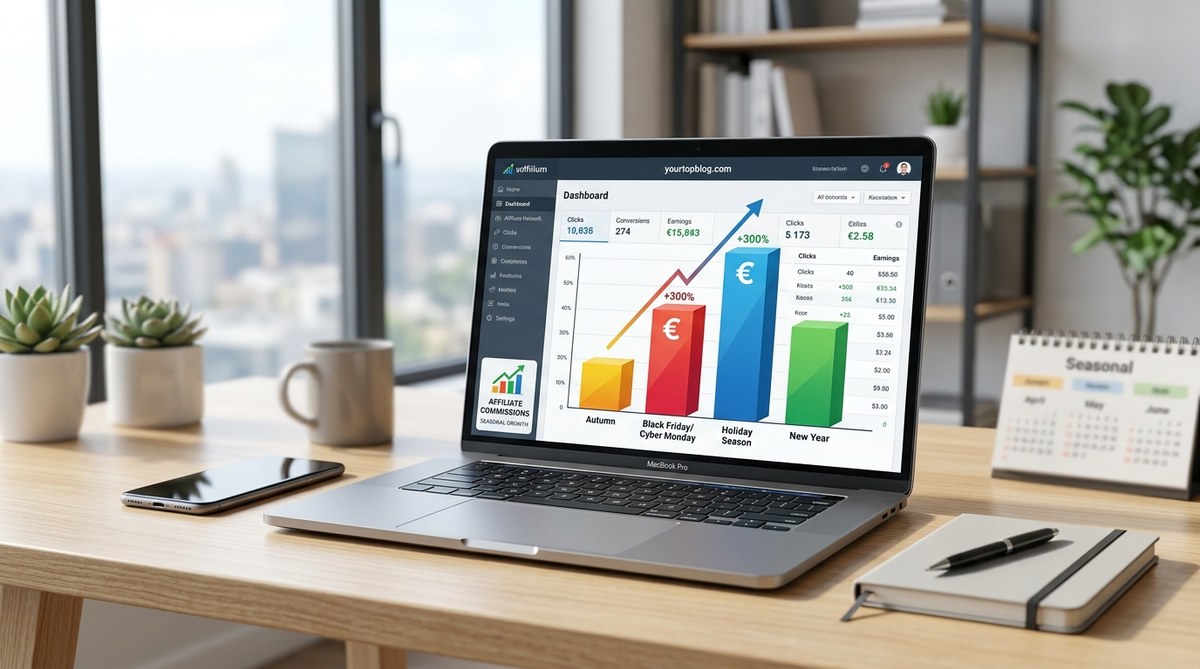
You are already putting in the work. You write content, you pick products, and you share your affiliate links. But something still feels off. Some months bring steady commissions, while others feel like a ghost town. The difference is often timing.
Most affiliate marketers promote the same products year round. They miss the biggest money-making window of all: the natural surge in buyer intent that happens during specific seasons, holidays, and events.
Seasonal trends affiliate marketing is not about guessing what might work. It is about aligning your promotions with moments when people are already hunting for solutions. When someone searches for “best winter jackets for kids” in October, they are not browsing. They are ready to buy. Your job is to be the person they trust to make that choice.
If you want to see real growth in your commissions, you need to stop treating your content calendar like a flat line. You need to ride the waves.
Seasonal trends affiliate marketing is about publishing content before demand spikes, not during the rush. By planning 60 to 90 days ahead, targeting specific buyer intent keywords, and creating roundups, gift guides, and comparison posts, you can 3x your commissions without more traffic. Track what works each cycle and double down on winning formats. Timing beats effort when you know where to look.
Why Seasonal Promotions Create Such Big Wins
Think about your own buying habits. Do you shop for Halloween costumes in March? Probably not. Do you look for tax software in September? Unlikely. Buyer behavior follows the calendar, and that pattern is incredibly reliable.
For affiliates, this predictability is pure gold. Instead of hoping that a generic product review will rank and convert someday, you can target keywords that have a guaranteed traffic spike every single year.
Here is what makes seasonal trends affiliate marketing so powerful:
- Higher buyer intent. People searching for seasonal products are often in the final stage of their buying journey. They need something now.
- Less competition from evergreen content. Many affiliates avoid seasonal content because it feels temporary. That means less competition for you.
- Repeatable cycles. Once you create a seasonal post, you can update and republish it year after year. The traffic compounds.
- Better email engagement. Subscribers love seasonal recommendations. Open rates tend to rise during holidays and seasonal transitions.
I have seen sites earn more in November and December than in the previous six months combined. That is not luck. That is planning.
How to Spot the Right Seasonal Trends for Your Niche
Not every season matters for every niche. A gardening blog will see spikes in spring and early summer. A finance blog may see surges around tax season and the new year. A parenting blog will see demand around back to school and the holiday gift season.
The key is knowing where to look.
-
Use Google Trends to find annual patterns. Type in a broad term for your niche, then scroll down to see if there is a repeating yearly curve. If you see a consistent spike in the same month, you have a seasonal trend to target.
-
Check your own site analytics. Go to Google Search Console and look at the performance report from the previous year. Filter by queries. Which terms started climbing in September or October? Those are your seasonal gold mines.
-
Watch affiliate network reports. Most networks like Amazon Associates, ShareASale, and CJ Affiliate provide reporting on top converting products by month. Look for products that only appear in the top sellers list during certain months.
-
Follow industry publications and trend reports. Sites like Trend Hunter, Pinterest Trends, and even Google Shopping insights can show you what is gaining momentum in your niche.
-
Survey your email list. Ask your subscribers what they are planning for the upcoming season. Their answers will give you real product ideas that you know will sell.
Once you have a list of potential trends, rank them by search volume, affiliate commission rate, and relevance to your audience. Focus on the ones that align with products you can genuinely recommend.
Content Formats That Convert During Seasonal Spikes
The format of your content matters just as much as the timing. Some post types perform significantly better during seasonal windows.
-
Gift guides. These are the bread and butter of seasonal affiliate content. Organize by price point, recipient type, or problem solved. “Gifts under $50 for coffee lovers” will beat a generic “best coffee makers” post during the holiday season.
-
Seasonal roundups. Think “best winter running gear” or “top summer travel accessories.” These posts target people who need to buy for an upcoming activity.
-
Comparison posts. “Snow blower A vs snow blower B” gets searched heavily in November and December. People want certainty before they spend money on seasonal gear.
-
Checklist or resource posts. “What to pack for a spring road trip” or “back to school supply checklist” can include affiliate links naturally without feeling salesy.
-
Before and after stories. Share how a product solved a seasonal problem. “How this space heater saved my home office during the polar vortex” works because it is relatable and timely.
-
Video or tutorial content. If you create YouTube videos, seasonal how to content can bring in traffic for years. “How to winterize your car” will get views every autumn.
The Biggest Mistakes Affiliates Make with Seasonal Content
Even experienced marketers slip up when it comes to seasonal planning. Here are the most common errors and how to avoid them.
| Mistake | Why It Hurts | How to Fix It |
|---|---|---|
| Publishing too late | Content needs time to rank in Google. If you publish in December, you miss the November traffic wave. | Start writing 60 to 90 days before the season begins. |
| Promoting irrelevant products | Just because it is seasonal does not mean it fits your audience. A vegan blog promoting turkey roasters will feel off. | Only promote products that align with your niche and reader expectations. |
| Forgetting to update old posts | Seasonal content from 2023 looks stale in 2026. Broken links and outdated prices destroy trust. | Review and refresh your seasonal posts at least 30 days before the season starts. |
| Ignoring mobile traffic | Most seasonal browsing happens on phones, especially for gift shopping. Slow or ugly mobile pages kill conversions. | Test your seasonal posts on a real smartphone. Improve load speed and font sizes. |
| Overloading with links | Too many affiliate links in one post can feel spammy and lower click through rates. | Use 3 to 5 well placed links per post. Focus on context, not quantity. |
| No email promotion | If you do not tell your subscribers about your seasonal content, you leave money on the table. | Send at least one dedicated email per seasonal post. Segment by interest if possible. |
“The affiliate marketers who make the most money from seasonal trends are not the ones with the biggest email lists or the most traffic. They are the ones who show up first. Being early beats being better almost every time.”
Anonymous affiliate manager with 8 years of network data
A 4 Step Plan to Triple Your Commissions This Season
You do not need a complicated system. You need a repeatable process.
-
Pick one season to start. Do not try to do everything at once. If we are heading into fall, focus on back to school or early holiday prep. Pick one and go all in.
-
Research and outline 60 days before the season. Use Google Trends to confirm the trend. Pick three to five keywords that have clear search intent. Outline your posts around those terms.
-
Publish 45 days before the peak. This gives Google time to index your content and start ranking it before the rush. If you publish during the peak, you will compete with established pages.
-
Promote across channels. Share your post on social media, in your email newsletter, and in relevant Facebook groups or forums. Pin the post to the top of your Pinterest board for that season.
After the season ends, review your analytics. Look at which posts brought the most traffic and conversions. Keep those topics in your content bank for next year, and improve the ones that underperformed.
Why You Should Build a Seasonal Content Library
One of the smartest moves you can make is to treat seasonal content as a long term asset. A well written gift guide from 2024 can be updated in 2025 and again in 2026. Each year, it will bring in more traffic than the year before, because it accumulates backlinks and authority over time.
I know an affiliate in the outdoor niche who wrote a single “best camping gear for summer” post in 2022. He updates it every May with new products and prices. That one post now brings in over $1,500 per year in commissions, completely passively.
Seasonal trends affiliate marketing is not about chasing every trend. It is about building a library of timeless seasonal resources that grow stronger with each passing year.
If you want to build a sustainable affiliate business that does not collapse when one product stops selling, seasonal content is one of the best foundations you can lay.
Your Turn to Start Riding the Seasonal Wave
You already have the skills to write content and recommend products. Now you just need to add the timing element.
Start by looking at the calendar for the next 90 days. What season or holiday is approaching? What products naturally fit that moment? Pick one trend, write one post, and promote it like it is your only post.
The results may surprise you.
When you build the habit of aligning your content with seasonal demand, you stop hoping for sales and start predicting them. That is the difference between a hobby and a real online business.
If you want to learn more about building a diversified monetization strategy that includes seasonal content, check out our guide on how to stack multiple revenue models without overwhelming your readers. And if you need help picking the right products to promote, our post on 7 high-converting affiliate programs that actually pay bloggers in 2026 is a great next read.
The calendar is not your enemy. It is your biggest asset. Use it wisely, and watch your commissions grow.