
Choosing the right affiliate program can make or break your blogging income. Some platforms promise high commissions but reject most applications. Others approve everyone but pay pennies per sale. The difference between picking the wrong program and the right one can mean the gap between $50 per month and $5,000 per month from the same traffic.
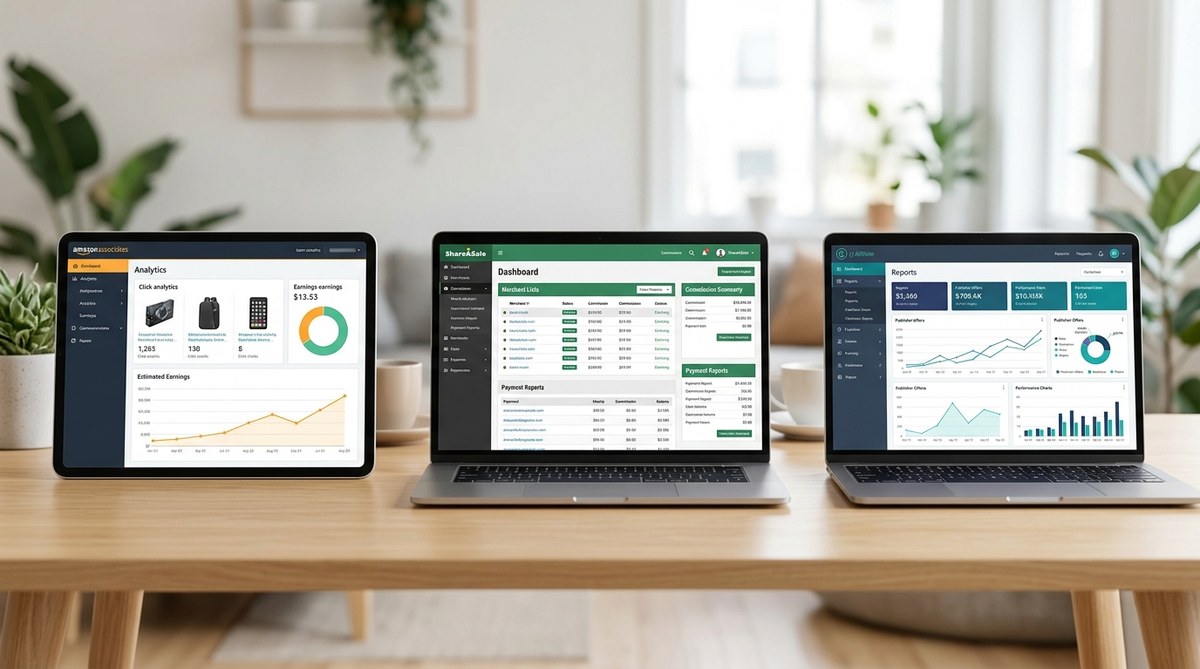
The best affiliate programs balance high commissions with reasonable approval requirements and reliable payments. Amazon Associates offers easy approval but low rates (1% to 10%). ShareASale and CJ Affiliate provide better commissions (10% to 50%) but require established traffic. Niche programs often pay the most (30% to 75%) but limit your product selection. Most successful bloggers use three to five programs simultaneously to maximize earnings.
What makes an affiliate program worth joining
Not all affiliate programs deserve your time. The best ones share specific characteristics that directly impact your earnings.
Commission structure matters more than approval difficulty. A program that pays 50% recurring commissions on a $100 product earns you more than one paying 3% on a $1,000 product. Do the math before applying.
Cookie duration determines how long you get credit after someone clicks your link. Amazon gives you 24 hours. Some software programs give you 90 days or lifetime cookies. Longer windows mean more credited sales.
Payment reliability separates professional networks from sketchy operations. The best programs pay on time, every time, with clear reporting dashboards. They also have reasonable payment thresholds. Waiting until you earn $500 to get paid slows your cash flow unnecessarily.
Product quality affects your reputation. Promoting garbage products might earn commissions short term but destroys reader trust. The best affiliate programs offer products you would recommend even without earning a commission.
High paying affiliate programs by category
Different niches support different commission structures. Here’s what actually pays well in 2026.
Software and digital tools
Software as a service (SaaS) programs typically offer the highest commissions. Many pay 20% to 40% recurring monthly commissions.
ConvertKit pays 30% recurring commissions on email marketing subscriptions. If you refer someone paying $29 per month, you earn $8.70 every single month they stay subscribed. Ten referrals create $87 in monthly passive income.
Semrush offers up to 40% recurring commissions on SEO tools. Their plans range from $119.95 to $449.95 monthly. A single enterprise referral can generate $180 per month in commissions.
Shopify provides up to $150 per referral for their ecommerce platform. They also offer a 200% bounty for Shopify Plus referrals.
Physical products and retail
Physical product commissions run lower because margins are tighter. Amazon Associates remains the most accessible option.
Amazon pays 1% to 10% depending on product category. Luxury beauty earns 10%. Grocery and physical books earn just 1%. Most categories fall between 3% and 5%. The program approves almost anyone with a website, making it perfect for beginners learning how to write affiliate product reviews that convert without sounding salesy.
Target Affiliates pays 1% to 8% through Impact Radius. Their cookie lasts just 7 days, but their brand recognition helps conversions.
Walmart pays 1% to 4% with a 3 day cookie. Lower than Amazon but useful for price comparison content.
Financial services and credit cards
Finance affiliates often pay the highest one time commissions. Credit card referrals can earn $50 to $200 each.
Credit Karma pays $15 to $25 per approved credit report signup. No purchase required from the user.
Personal Capital offers $100 per qualified signup for their wealth management tools. Users must link accounts worth at least $100,000.
Robinhood paid up to $75 per signup during promotional periods. Rates fluctuate based on their growth goals.
Online courses and education
Education products support high commissions because they have low delivery costs and high perceived value.
Coursera pays 10% to 45% on course enrollments. Their enterprise programs offer higher commission tiers.
Udemy offers 15% to 50% commissions depending on how the customer finds the course. Direct link clicks earn higher rates than organic search traffic.
Skillshare pays $7 per free trial signup. Not huge, but their conversion rate tends to be higher than paid course platforms.
How to choose programs that match your audience
Your audience determines which programs will actually generate income. A tech blog promoting makeup tutorials won’t convert. Match programs to reader intent.
Start by analyzing what your readers already buy. Check your most popular posts. What problems are readers trying to solve? What products naturally fit those solutions?
Survey your email list if you have one. Ask directly what tools they use and what they’re considering buying. Their answers reveal exactly which affiliate programs to prioritize.
Look at your competitors’ affiliate links. View their page source code or use a browser extension to identify their programs. If three successful competitors all promote the same program, that’s a strong signal.
Test multiple programs in the same niche. Run split tests with different affiliate links in similar content. Track which programs convert better with your specific audience. Double down on winners and drop losers after 90 days.
Consider your content format. Review sites work well with Amazon and physical products. Tutorial blogs convert better with software and tools. Comparison content suits high ticket items with longer research cycles.
Step by step process for joining affiliate programs
Getting approved requires more than just filling out an application. Follow this sequence to maximize acceptance rates.
-
Build foundational content first. Create at least 15 to 20 published posts before applying to selective programs. Networks want proof you publish consistently.
-
Add required legal pages. Include a privacy policy, terms of service, and about page. Many programs reject sites missing these elements.
-
Install professional design elements. Free themes with default settings signal amateur operations. Invest $50 in a premium theme or customize your free theme substantially.
-
Set up proper disclosure. Add clear affiliate disclosures to your site. Programs like CJ Affiliate specifically check for FTC compliant disclosures before approving applications. Learn more about legal requirements every blogger must know.
-
Apply to networks before individual programs. Join ShareASale, CJ Affiliate, Impact, and Awin first. Once approved for the network, you can apply to individual merchants within each platform.
-
Write your application carefully. Explain your traffic sources, audience demographics, and content strategy. Generic applications get rejected. Specific, detailed applications get approved.
Common mistakes that kill your affiliate earnings
Most bloggers make the same errors that cap their income below $100 per month. Avoid these specific problems.
Promoting too many programs dilutes your message. Readers get overwhelmed when every paragraph contains a different affiliate link. Pick three to five core programs and mention them consistently.
Hiding affiliate links in tiny text or footer areas tanks click through rates. Place links naturally within content where readers actually look.
Ignoring email marketing leaves money on the table. Email subscribers convert 5x to 10x better than cold traffic. Build your list and promote affiliate products through newsletters using proven email funnel tactics.
Failing to disclose affiliate relationships violates FTC guidelines and destroys trust. Always disclose clearly and prominently.
Never testing different approaches means you never optimize. Test different link placements, call to action phrases, and product combinations. Track everything and iterate monthly.
Giving up too early prevents you from seeing results. Affiliate income typically takes 6 to 12 months to build momentum. Most bloggers quit at month 3 or 4, right before their content starts ranking and converting.
Comparing approval requirements across platforms
Different programs have vastly different barriers to entry. Here’s what each major network actually requires.
| Program | Traffic Requirement | Content Requirement | Approval Speed | Best For |
|---|---|---|---|---|
| Amazon Associates | None officially | 3+ posts, updated recently | 24 hours | Beginners testing affiliate marketing |
| ShareASale | 300+ monthly visitors | 10+ posts, professional design | 2 to 5 days | Intermediate bloggers with consistent traffic |
| CJ Affiliate | 500+ monthly visitors | 15+ posts, niche focus | 5 to 10 days | Established sites with clear audience |
| Impact | 1,000+ monthly visitors | 20+ posts, media kit helpful | 7 to 14 days | Growing blogs ready for premium brands |
| Awin | Varies by merchant | Professional site required | 3 to 7 days | International bloggers and UK focused sites |
These requirements aren’t always enforced strictly. A well designed site with 200 engaged visitors might get approved over a site with 2,000 bot visitors. Quality signals matter more than raw numbers.
Payment terms and thresholds you need to know
Getting approved means nothing if you can’t actually access your earnings. Payment terms vary dramatically.
Amazon Associates pays 60 days after the end of the month you earned commissions. If you earn $100 in January, you receive payment in late March. They require $10 minimum for direct deposit or $100 for checks.
ShareASale pays monthly, 20 days after month end. Their minimum threshold is $50, which is reasonable for most bloggers.
CJ Affiliate pays monthly with a $50 minimum. Some individual merchants set higher thresholds, occasionally up to $100.
Impact varies by merchant. Most pay monthly with $10 to $50 minimums. A few pay net 60 or net 90, which delays your cash flow significantly.
Rakuten Advertising pays monthly with a $50 threshold. They offer direct deposit, check, or Payoneer for international affiliates.
Payment reliability matters more than commission rates. A program paying 40% that never pays you earns less than a program paying 10% that deposits money on schedule every month.
How to scale from $100 to $1,000 monthly
Moving from beginner earnings to serious income requires strategic changes. These specific tactics accelerate growth.
Focus on high ticket items once you have traffic. Promoting a $500 software subscription at 30% commission earns $150 per sale. You need far fewer conversions than promoting $20 products at 5% commission.
Create comparison content that ranks well. “Product A vs Product B” posts attract high intent buyers and support multiple affiliate links naturally. This content type converts 3x better than generic reviews.
Build resource pages that consolidate recommendations. A “Best Tools for Food Bloggers” page can include 10 to 15 affiliate products in one place. Update it quarterly to maintain rankings.
Leverage seasonal trends for traffic spikes. Black Friday, back to school, and New Year resolution content drives massive temporary traffic. Prepare this content 60 days early to capture rankings before the rush.
Repurpose your top performing content into different formats. Turn a popular blog post into a YouTube video, Pinterest infographic, and email series. Each format reaches different audience segments and drives additional affiliate clicks.
Tracking performance across multiple programs
You can’t optimize what you don’t measure. Set up proper tracking before promoting anything.
Use UTM parameters on every affiliate link. Add source, medium, and campaign tags to identify which content and traffic sources generate sales. Most affiliate networks strip UTM parameters from their links, so use a link management tool like Pretty Links or ThirstyAffiliates.
Create a simple spreadsheet to track monthly performance by program. Record clicks, conversions, earnings, and conversion rate for each network. Update it monthly and look for trends.
Set up Google Analytics goals for affiliate link clicks. This shows you which pages drive the most affiliate engagement, even before you see actual sales data.
Monitor your top performing content monthly. Identify which posts generate 80% of your affiliate income. Double down on creating similar content and updating those top performers.
Test different call to action phrases. “Check price on Amazon” might convert differently than “See current deals” or “View on Amazon.” Run these tests for 30 days minimum before declaring a winner.
Alternative revenue streams to stack with affiliates
The most successful bloggers never rely on affiliate income alone. Diversification protects you from program changes and commission cuts.
Display advertising through Google AdSense provides baseline income from all your traffic, not just buyers. While AdSense mistakes can cost you thousands, combining it with affiliates increases total revenue per visitor.
Digital products like ebooks, courses, or templates generate higher margins than affiliate commissions. You keep 95% to 100% of revenue instead of 10% to 50%.
Sponsored content opportunities appear once you reach 10,000+ monthly visitors. Brands pay $100 to $1,000+ per sponsored post depending on your niche and engagement.
Consulting or coaching services monetize your expertise directly. If you’re knowledgeable enough to recommend products, you’re knowledgeable enough to sell advice.
Email courses and paid newsletters create recurring revenue. Substack, Patreon, and ConvertKit all support paid subscription models.
The key is stacking multiple revenue models without overwhelming readers. Start with affiliates and display ads, then add one new stream every 6 months.
Programs that work best for new bloggers
If you’re just starting out, certain programs offer better learning opportunities than others.
Amazon Associates remains the best starting point despite low commissions. The approval process is simple, the product selection is unlimited, and you learn affiliate basics without major barriers.
ShareASale provides access to thousands of merchants after one network approval. You can test different niches and products without applying to each program individually.
Bluehost and other hosting affiliates pay $65 to $130 per signup. If you write about blogging or website building, these high ticket commissions can generate meaningful income from minimal traffic.
Etsy affiliates work well for craft, home decor, and gift content. They pay 4% per sale with a 30 day cookie, and their marketplace offers unique products not available elsewhere.
Fiverr pays $15 to $150 per first time buyer. If your audience includes freelancers or small business owners, this program converts well.
Start with two or three programs maximum. Master them completely before expanding. Most beginners fail because they spread effort across 15 programs and never optimize any of them.
Red flags that signal bad affiliate programs
Some programs aren’t worth your time no matter how good they look initially. Watch for these warning signs.
Unclear commission structures or payment terms indicate amateur operations. Professional programs publish detailed terms and conditions publicly.
No dedicated affiliate manager or support system means you’re on your own when problems arise. Good programs assign managers once you reach certain thresholds.
Frequent commission rate changes without notice show the company doesn’t value affiliates. Reliable programs announce changes 30 to 90 days in advance.
Poor tracking or missing conversions suggest technical problems. Test any program with a small purchase yourself to verify tracking works correctly.
Payment delays beyond stated terms are unacceptable. If a program says net 30 but consistently pays net 60, find alternatives.
Restrictive promotional rules that ban email marketing, paid ads, or specific content types limit your growth potential. Read the full terms before investing time.
Building an affiliate strategy that lasts
Short term tactics generate temporary income. Long term strategies build sustainable businesses.
Focus on evergreen content that stays relevant for years. Product reviews for specific models become outdated. Category guides and comparison frameworks remain useful indefinitely.
Build relationships with affiliate managers at your top programs. They can offer exclusive deals, higher commission rates, and early access to new products for loyal affiliates.
Diversify across product categories and price points. Economic downturns affect luxury purchases more than necessities. Having both in your portfolio stabilizes income.
Create content clusters around your best performing affiliate products. If one review post converts well, create supporting content that links to it and expands on related topics.
Update your top earning content quarterly. Refresh screenshots, update prices, add new products, and improve optimization. This maintains rankings and improves conversion rates over time.
Document what works in your specific niche. Your audience is unique. What works for other bloggers might not work for you. Track your own data and build your strategy around your results, not someone else’s case study.
Making your first affiliate sale happen faster
Theory means nothing until you generate actual commissions. These tactics compress the timeline from setup to first sale.
Write product focused content immediately. Don’t wait until you have 50 posts to add affiliate links. Your 5th post can include relevant product recommendations if they genuinely help readers.
Target low competition keywords with buyer intent. “Best budget standing desk under $300” attracts more buyers than “what is a standing desk.” Use keyword research tactics to find these opportunities.
Promote your affiliate content through Pinterest and Facebook groups. Waiting for Google rankings takes months. Social traffic can generate sales within days if you target the right communities.
Offer genuine value beyond just product links. Answer the reader’s question completely, then recommend products as solutions. Educational content converts better than promotional content.
Follow up with email subscribers who click affiliate links but don’t buy. Send them additional information, answer common objections, or share limited time deals.
Test different traffic sources to find what works fastest. Pinterest might generate sales in week one while SEO takes six months. Diversify your traffic strategy to accelerate results.
Why most affiliate bloggers earn less than minimum wage
The harsh reality is most affiliate marketers make almost nothing. Understanding why helps you avoid their mistakes.
They quit before compounding kicks in. Affiliate income grows exponentially, not linearly. Month one might earn $5. Month twelve might earn $500. Month twenty four might earn $5,000. Most quit at month three when they’re earning $15.
They copy competitors without understanding strategy. Seeing a successful blogger promote a product doesn’t mean that product will work for your audience. Test and validate everything yourself.
They ignore traffic quality in favor of traffic quantity. 100 engaged readers interested in your niche convert better than 10,000 random visitors from viral social posts.
They promote products they’ve never used. Readers detect fake enthusiasm instantly. Only recommend products you genuinely believe help solve real problems.
They neglect the fundamentals of good content. Affiliate links don’t compensate for poor writing, bad formatting, or unhelpful information. Master content creation first, then add monetization.
They fail to build an email list. Relying entirely on search traffic means algorithm changes can destroy your income overnight. Email subscribers provide stability and higher conversion rates.
Your path forward starts with one program
Choosing the best affiliate programs doesn’t require joining dozens of networks immediately. Start with one or two that align with your existing content and audience.
Apply to Amazon Associates if you’re a complete beginner. Get comfortable with affiliate basics before tackling more complex programs. Write three solid product reviews and track your results for 90 days.
Add ShareASale or CJ Affiliate once you have consistent traffic above 500 monthly visitors. These networks open doors to thousands of merchants and better commission rates.
Test niche specific programs in your third or fourth month. If you write about photography, join B&H Photo’s affiliate program. If you cover web hosting, apply to hosting affiliate programs directly.
Track everything obsessively. Know which programs generate clicks, which generate sales, and which generate profit. Optimize based on data, not assumptions.
The bloggers earning $3,000, $5,000, or $10,000 monthly from affiliates all started exactly where you are now. They picked programs strategically, created helpful content consistently, and stuck with it long enough to see results. Your first commission might take 30 days or 90 days, but it will come if you focus on serving your readers first and promoting products second.