
You spend time crafting blog posts. You optimize for SEO. You share on social media. But the traffic spike fades within hours. That is the problem most content creators face. You get a visitor once, maybe twice, and then they vanish. The solution is not more content. It is a system that pulls people back to your site on their own. That system is email.
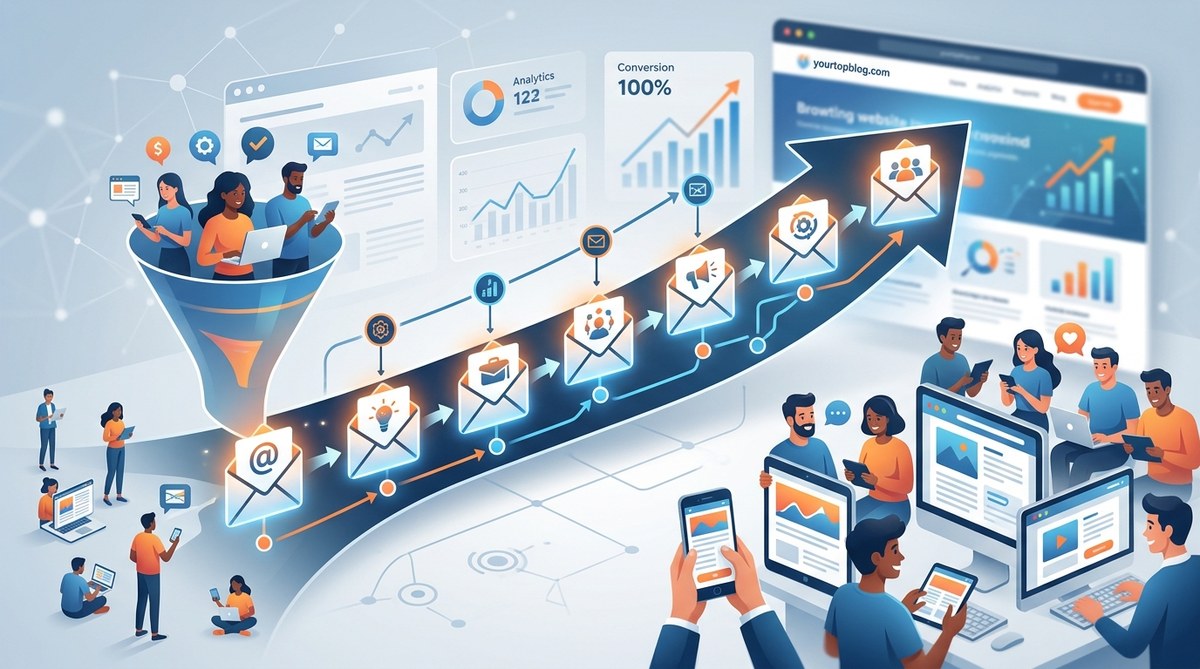
Email sequences to increase website traffic work best when they match reader intent. Use a welcome sequence to set expectations, a content roundup to showcase depth, a deep dive to preview long articles, a series to build anticipation, a comment trigger to re-engage, a traffic driver for new posts, and a re-engagement sequence to win back lost subscribers. Each sequence has one goal: bring them back to your site.
Why Email Beats Social Media for Repeat Traffic
Social platforms control your reach. They decide who sees your posts. And they change the rules often. Email is different. When someone gives you their address, they grant you direct access. No algorithm stands between you and their inbox.
But here is the catch. You cannot just send a link and expect clicks. Your emails must feel valuable. They must tease what is on your site in a way that makes the reader want to open the link. That is where sequences come in.
A sequence is not a one-off blast. It is a series of emails that guide the subscriber toward a habit. The habit is checking your site daily.
The 7 Email Sequences to Increase Website Traffic
These sequences work for bloggers, SaaS companies, and content marketers. Each one serves a different stage of the reader relationship.
1. The Welcome Sequence That Sets the Hook
Welcome emails get the highest open rates. In 2026, the average welcome email sees open rates above 80 percent. Do not waste that.
Send your new subscriber a series of three emails over five days.
- Email one: Thank them and deliver the lead magnet they signed up for. No links to your site yet. Just value.
- Email two: Share your best article from the last month. Explain why you wrote it and what they will learn. Link to it.
- Email three: Ask a question. “What is your biggest challenge with [topic]?” Then link to a post that addresses that challenge.
The goal is not to sell anything. It is to show that your site has answers to their questions.
2. The Weekly Content Roundup
People subscribe because they want to stay informed. A weekly roundup email is the simplest way to send them back to your site.
Structure it like this:
- One short introduction line.
- Three article links with a two sentence summary for each.
- One “from the archives” link to an older post that is still relevant.
Roundups work because they feel like a service. The reader gets a curated list. You get a traffic boost every week.
3. The Deep Dive Preview
Long form content performs better in search. But getting someone to read a 3,000 word post is hard. A deep dive preview email solves that.
Write a short email that teases the main argument of your post. Then link to the full article. The key is to give away the first insight for free inside the email. The reader needs to feel that the rest is even better.
For example, if your post is about how to find low competition keywords, share one technique in the email. Then say “I share three more methods in the full post.” That click becomes almost guaranteed.
4. The Multi Part Series
A series builds anticipation. If you have a topic that can be broken into three or four parts, turn it into an email sequence.
Here is the pattern:
- Email one: Introduction to the problem. Link to part one on your site.
- Email two: The middle of the story. Link to part two.
- Email three: The resolution. Link to part three.
Each email should recap the previous part briefly. This keeps the reader engaged across multiple days. And it brings them back to your site for each installment.
5. The Comment and Engagement Trigger
Most people read without engaging. That is fine. But when someone does engage, you have a chance to deepen the relationship.
Set up a trigger in your email system. When a subscriber leaves a comment on your blog, send them a follow up email within 24 hours.
The email should reference their comment. Thank them for it. Then link to a related post that expands on the topic they cared about.
This works because the reader already showed interest. You are giving them more of what they want.
6. The New Post Traffic Driver
Every time you publish, your email list should know. But do not just send a “new post” notification. That gets ignored.
Instead, frame the new post as a solution to a problem the subscriber already has.
Subject line example: “You asked about [topic]. Here is what I found.”
Body: “Last week someone asked me about [question]. I researched it and wrote a full breakdown. Here is the link.”
This approach makes the email feel personal. It is not a broadcast. It is a reply to a conversation.
7. The Re engagement Sequence
Some subscribers stop opening. That is normal. But you can win some of them back.
Send a three email re engagement sequence to people who have not opened in 60 days.
- Email one: “Do you still want these emails?” Give them a link to stay subscribed.
- Email two: Share your most popular post of the year. “You might have missed this one.”
- Email three: Offer an incentive. A free download, a discount on a course, or access to a private resource.
If they still do not open, remove them from your list. A smaller active list is better than a large dead one.
How to Structure Your Email Sequence for Maximum Clicks
Not all sequences are created equal. The ones that drive the most traffic follow a specific pattern.
| Element | What to Do | Common Mistake |
|---|---|---|
| Subject line | Ask a question or state a benefit | Using clickbait or all caps |
| Preview text | Add a second hook that extends the subject | Leaving it blank or repeating the subject |
| Body length | Keep it under 150 words | Writing a full article inside the email |
| Call to action | One clear link with a reason to click | Multiple links that confuse the reader |
| Timing | Send between 8 AM and 11 AM EST | Sending late at night or on weekends without testing |
Test one variable at a time. Change the subject line first. Then test the call to action. Small changes can lift click rates by 30 percent or more.
The One Metric That Predicts Repeat Traffic
You might look at open rates or click rates. Those matter. But the metric that predicts whether someone will become a daily visitor is the “time since last visit” pattern.
Track how many days pass between a subscriber’s visits to your site. If they visit once and never return, your email sequence is not pulling them back. If they visit three times in a week, you have built a habit.
Use your analytics tool to create a segment of subscribers who visited your site in the last 7 days. Send them a different email than the rest of your list. Reward their loyalty with exclusive content or early access to new posts.
“The most effective email sequences do not sell. They remind. They remind the reader that your site has the answers they need. Consistency beats cleverness every time.”
Experienced content marketer, speaking at a 2025 industry conference
Common Mistakes That Kill Traffic from Email
Even a good sequence can fail if you make these errors.
- Linking to the homepage instead of a specific post. Always link to the exact page you want them to read.
- Sending too often. More than three emails per week causes unsubscribes. Stick to one or two.
- Not segmenting your list. Send different sequences to new subscribers and long time readers.
- Forgetting mobile. Over 60 percent of emails are opened on phones. Use a single column layout and large buttons.
- No clear next step. Every email should end with one thing you want the reader to do.
How to Build These Sequences Step by Step
You do not need a complicated tool. Most email platforms like ConvertKit, Mailchimp, or ActiveCampaign support automation.
- Create a tag or segment for new subscribers.
- Build your welcome sequence as a three email flow.
- Set up a weekly roundup as a recurring campaign.
- Add a trigger for new post notifications.
- Create a re engagement flow for inactive subscribers.
- Test each sequence for 30 days before making changes.
- Track the number of site visits per subscriber over time.
If you are just starting, focus on the welcome sequence and the new post driver first. Those two will give you the fastest results.
Putting the Sequences Together for a Full Funnel
Each sequence has a job. When you combine them, they create a system that turns a casual reader into someone who checks your site every day.
The welcome sequence introduces your best work. The roundup keeps them updated. The deep dive preview pulls them into longer content. The series builds anticipation. The comment trigger rewards engagement. The new post driver announces fresh material. And the re engagement sequence catches those who drift away.
This is not theory. It is the same structure used by sites that generate millions of pageviews per month from email alone. If you want to see how this applies to building an affiliate marketing email funnel, read our guide on building an affiliate marketing email funnel that generates passive income.
Your Next Move
Pick one sequence from this list. Build it this week. Not all seven at once. Just one.
I recommend starting with the new post traffic driver. It is the simplest. Every time you publish, write a short email that frames the post as an answer to a question. Send it. Watch the traffic come in.
Once that feels natural, add the weekly roundup. Then the welcome sequence. Layer them one at a time.
Email is not a one time fix. It is a muscle. The more you use it, the stronger your traffic becomes. And the less you rely on social media algorithms to reach your audience.
Start today. Your future daily visitors are waiting in your inbox.