
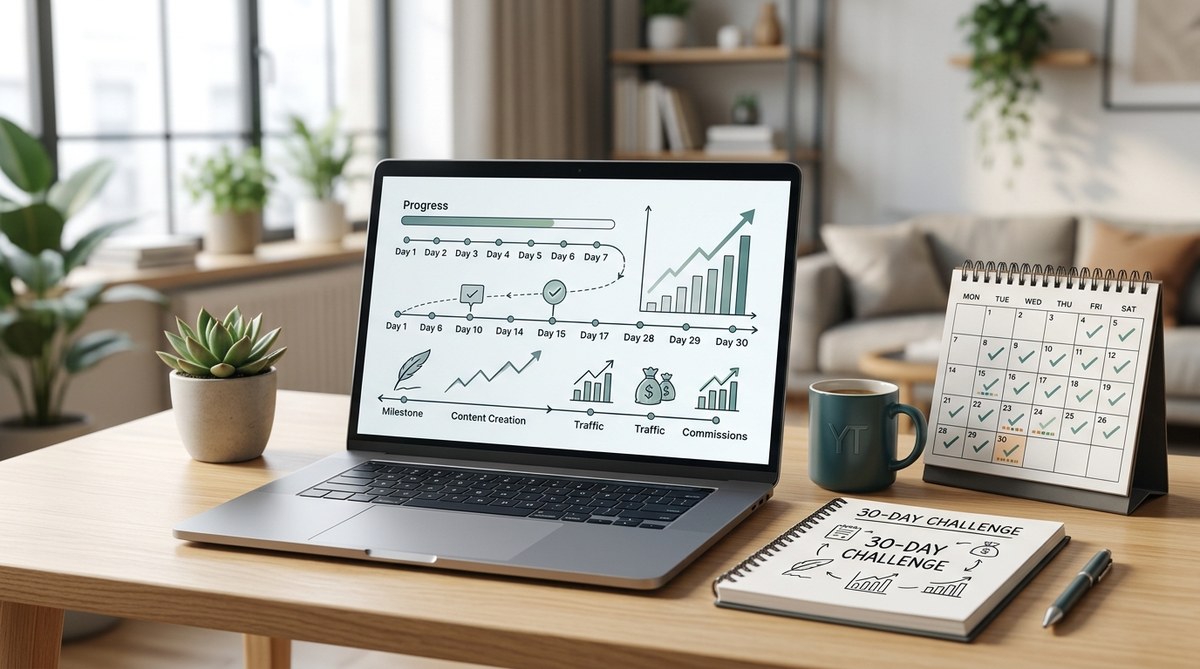
Starting a blog and turning it into a revenue-generating asset can seem overwhelming at first. You might wonder how to get started, build momentum, and see results fast. The good news is that with a focused plan, you can make significant progress in just 30 days. This guide will walk you through a practical 30-day affiliate marketing challenge tailored for new bloggers. It’s designed to help you develop skills, establish routines, and start earning from your site within a short period.
This 30-day challenge offers a clear, step-by-step approach for new bloggers to learn affiliate marketing, build a monetized website, and generate income. By focusing on consistent action and strategic learning, you can progress rapidly and lay a solid foundation for long-term success.
Setting The Stage For Your 30-Day Journey
Before diving into daily tasks, it’s important to set realistic expectations. The goal isn’t to become an expert overnight but to establish habits that will propel your blogging business forward. Each day of this challenge builds on the previous days, gradually increasing your knowledge and income potential. Commit to completing each task, stay adaptable, and celebrate small wins along the way.
How To Approach The 30-Day Affiliate Marketing Challenge
The challenge is structured around three core principles:
- Consistency: Dedicate time daily to tasks. Even 30 minutes each day adds up.
- Learning: Absorb new skills and tweak your strategies as you go.
- Implementation: Apply what you learn immediately. Practice makes perfect.
Follow these three steps to maximize your results:
- Start with foundational tasks like setting up your website and choosing the right niche.
- Focus on content creation, SEO, and building your audience.
- Learn affiliate marketing strategies, join programs, and optimize conversions.
Now, let’s map out your daily plan.
The 30-Day Action Plan
Week 1: Building Your Foundation
- Day 1: Pick your niche and target audience. Choose a topic you’re passionate about and that has monetization potential. For inspiration, check out niches like health, tech, or hobbies.
- Day 2: Register your domain and set up hosting. Use reliable providers like Bluehost or SiteGround for speed and support.
- Day 3: Install WordPress and choose a clean, responsive theme. Keep the design simple to focus on content.
- Day 4: Set up essential plugins such as SEO tools, caching, and security.
- Day 5: Create your core pages: About, Contact, and Privacy Policy.
- Day 6: Set up Google Analytics and Search Console to track your traffic.
- Day 7: Write a compelling initial blog post. Focus on providing value and establishing your voice.
Week 2: Content and SEO Foundations
- Day 8: Conduct keyword research using free tools like Ubersuggest or Google Keyword Planner. Target low-competition keywords.
- Day 9: Plan your first five content topics based on your keyword research.
- Day 10: Write and publish your second blog post. Incorporate target keywords naturally.
- Day 11: Optimize your existing posts for SEO using on-page techniques like proper headings, internal linking, and optimized images.
- Day 12: Share your posts on social media and relevant online communities.
- Day 13: Start building an email list. Offer a freebie related to your niche to encourage signups.
- Day 14: Engage with your audience through comments and social media to build relationships.
Week 3: Diving Into Affiliate Marketing
- Day 15: Join popular affiliate programs in your niche, such as Amazon Associates or niche-specific programs.
- Day 16: Find products or services to promote that align with your content and audience interests.
- Day 17: Write an honest product review or comparison article, weaving your affiliate links naturally.
- Day 18: Create a dedicated resources page listing recommended tools and products.
- Day 19: Learn about conversion techniques like call-to-action buttons, banners, and strategic placements.
- Day 20: Embed affiliate links in your blog posts and test their placement for better CTR.
- Day 21: Track your affiliate clicks and conversions, adjusting your approach as needed.
Week 4: Scaling and Optimizing
- Day 22: Analyze your traffic data to identify high-performing content.
- Day 23: Repurpose your best content into different formats such as videos or social snippets.
- Day 24: Build backlinks by reaching out for guest posting or sharing your content.
- Day 25: Experiment with different call-to-actions and affiliate placements.
- Day 26: Continue growing your email list with targeted lead magnets.
- Day 27: Add new blog posts targeting long-tail keywords for niche authority.
- Day 28: Review your progress and set goals for the next 30 days.
- Day 29: Explore additional monetization strategies like display ads or sponsored posts.
- Day 30: Celebrate your progress and plan your next steps to keep momentum.
Techniques To Accelerate Your Progress
| Technique | What It Is | Common Mistake |
|---|---|---|
| Keyword clustering | Group related keywords to target multiple topics | Targeting highly competitive keywords too early |
| Internal linking | Connect your posts to boost SEO and keep visitors engaged | Overstuffing links or linking to irrelevant pages |
| Content repurposing | Turn blog posts into videos, social posts, or PDFs | Creating content in silos without promotion |
| Email marketing | Use automation to nurture your list | Sending infrequent or generic emails |
| Affiliate link placement | Position links where readers are most likely to click | Overloading posts with links or hidden placements |
“The secret to a successful affiliate marketing journey is not just about the tactics but about consistency and continuous learning. Small, daily actions compound into significant results over time.” – Expert marketer
Common Pitfalls To Watch Out For
- Ignoring SEO basics: Without proper optimization, your content may not reach your audience.
- Promoting too many products: Focus on a few relevant offers to avoid overwhelming your readers.
- Neglecting audience engagement: Building relationships encourages trust and higher conversions.
- Not tracking your results: Use analytics to understand what works and refine your approach.
- Giving up too early: Building income takes time. Stay committed and adapt as needed.
Resources To Boost Your Learning
- 7 AdSense mistakes that are costing you thousands
- How to get approved for Google AdSense in 2026
- High-converting affiliate programs in 2026
- Building an affiliate marketing email funnel
Staying Motivated After The Challenge
Completing a 30-day challenge is just the beginning. Use this momentum to refine your strategies, expand your content, and diversify your income streams. Regularly revisit your goals, stay updated with industry trends, and continue to learn new tactics. Remember, success in affiliate marketing often comes from persistence and adaptability.
Your Next Steps on This Path
This challenge equips you with a practical roadmap to start making progress. The key is to stay consistent, keep learning, and implement what you discover. Over time, your blog will develop authority, your audience will grow, and your income will increase. Keep your sights on your long-term goals and enjoy the process of building your online business.
Keep Moving Forward with Confidence
Starting can feel daunting, but breaking it into daily actionable steps makes it manageable. Use this 30-day plan as your blueprint. Celebrate each milestone, learn from setbacks, and keep pushing forward. Your blogging journey is a marathon, not a sprint. With dedication, you’ll lay the groundwork for a sustainable income and a thriving online presence.
Remember: Every great blog started with a single post. Your 30-day challenge is your first step toward turning your passion into profit. Take consistent action today, and watch your efforts compound into real results. Happy blogging!