

Most bloggers quit within the first year. Not because they lack talent or ideas, but because they repeat the same avoidable mistakes that doom their sites from day one.
I’ve watched hundreds of blogs launch with excitement and fade into abandoned URLs. The pattern is always the same. Bloggers pour months into content that nobody reads, chase traffic strategies that stopped working years ago, and wonder why their earnings stay at zero.
The good news? Blog failure is predictable. That means it’s preventable.
Blogs fail due to eleven core mistakes: choosing oversaturated niches, publishing inconsistently, ignoring SEO fundamentals, relying on single traffic sources, skipping email list building, poor monetization strategies, treating blogging as a hobby, neglecting analytics, copying competitors without differentiation, giving up too early, and refusing to adapt. Understanding these patterns and implementing strategic fixes transforms struggling blogs into profitable assets.
Choosing Niches That Are Already Oversaturated
New bloggers gravitate toward popular topics like personal finance, fitness, or travel. These niches seem profitable because successful blogs already exist there.
That’s exactly why they’re terrible choices for beginners.
Established sites in these spaces have domain authority you can’t compete with. They’ve published thousands of articles. They own the top search rankings. Your new blog won’t rank on page one for “best credit cards” or “how to lose weight fast.”
Instead, you need to find angles within broader topics that haven’t been exhausted. A personal finance blog targeting military families relocating overseas. A fitness blog for people recovering from specific injuries. A travel blog focused on accessible tourism for wheelchair users.
The difference between a broad niche and a focused angle determines whether you’ll spend two years writing into the void or six months building real traffic.
Publishing Without Any Consistent Schedule
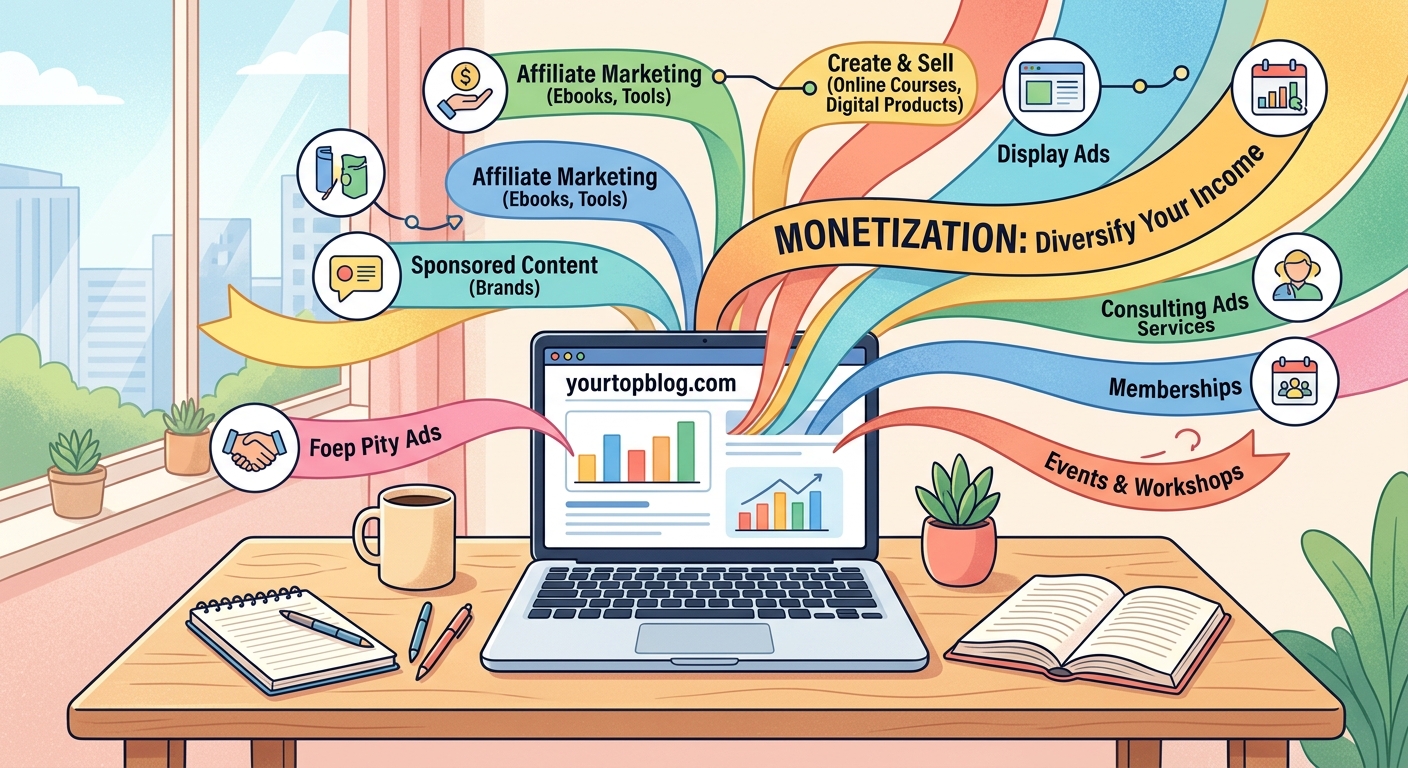
Blogs need momentum. Search engines reward sites that publish regularly. Readers return to blogs they can count on.
Most failed blogs have erratic posting schedules. Three articles in one week, then nothing for a month. Five posts in January, two in February, zero in March.
This pattern kills growth faster than almost anything else.
You don’t need to publish daily. You need to be consistent. Two articles per week, every week, beats ten articles one month and none the next.
Set a publishing schedule you can actually maintain:
- Choose a realistic frequency based on your available time
- Block writing sessions on your calendar like important meetings
- Build a content buffer of at least four completed articles before launching
- Batch your writing to create multiple posts in single sessions
- Use editorial calendars to plan topics months ahead
Consistency compounds. Six months of regular publishing builds authority that sporadic bursts never achieve.
Ignoring Basic SEO From the Beginning
SEO isn’t optional. It’s how readers find your content.
Blogs fail when creators write whatever feels interesting without researching what people actually search for. They skip keyword research, ignore search intent, and wonder why Google sends them zero traffic.
You need to understand how to find low competition keywords that actually drive traffic before writing a single article. Every post should target a specific search query that real people type into Google.
Basic SEO mistakes that kill blogs:
- Writing great content for topics nobody searches for
- Targeting keywords with impossible competition levels
- Skipping title tag optimization
- Ignoring meta descriptions completely
- Never building internal links between posts
- Publishing without any header structure
- Forgetting image alt text
Learning why your blog posts aren’t ranking and how to fix it saves months of wasted effort. Start with the complete on-page SEO checklist for bloggers in 2024 and implement every item before hitting publish.
Depending on a Single Traffic Source
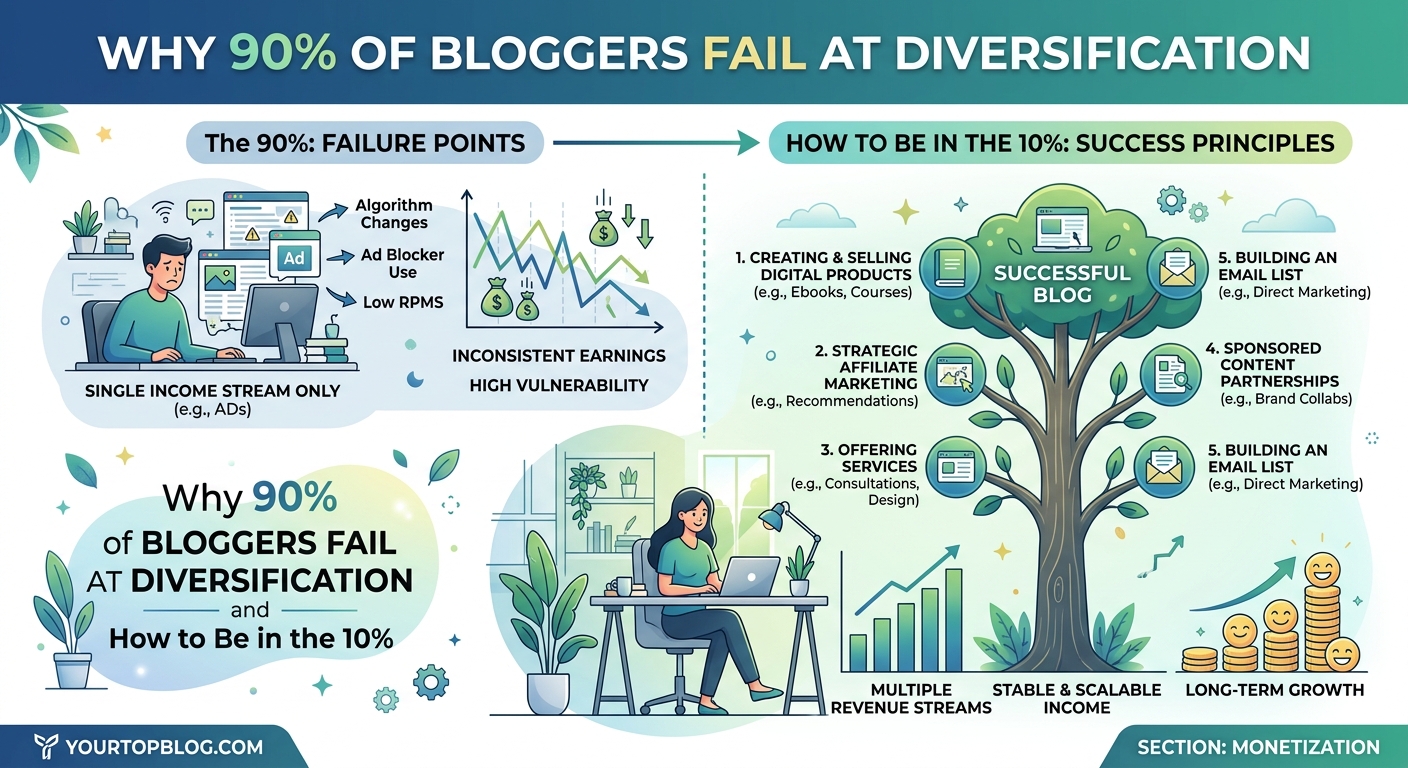
Blogs that rely entirely on Google organic search are one algorithm update away from catastrophe. I’ve seen sites lose 80% of their traffic overnight when Google changed ranking factors.
Successful blogs build multiple traffic channels:
- Organic search from Google and Bing
- Email subscribers who visit when you send newsletters
- Social media followers who click through from platforms
- Direct traffic from people who bookmark your site
- Referral traffic from other websites linking to you
Building an email list that drives repeat traffic protects you from search engine volatility. Even if rankings drop, you still have an audience.
Many bloggers also ignore 15 free traffic sources every blogger should use in 2024 because they seem like extra work. That “extra work” is the difference between a resilient blog and one that disappears when Google sneezes.
Skipping Email List Building Entirely
Email is the asset you own. Social media followers belong to the platform. Search traffic depends on Google’s mood. Email subscribers are yours.
Most failed blogs never collect a single email address. They publish hundreds of articles without any way to reach readers directly.
This is insane.
Every visitor who leaves without subscribing is a missed opportunity. You spent time and money getting them to your site. Then you let them disappear forever.
Start building your list from day one. Put opt-in forms in your sidebar, at the end of posts, and in pop-ups. Offer a content upgrade that solves a specific problem in exchange for email addresses.
A blog with 5,000 monthly visitors and 200 email subscribers will earn more than a blog with 20,000 visitors and zero subscribers. The email list converts. Random traffic just bounces.
Monetizing Too Late or in the Wrong Ways
Bloggers often wait until they have “enough traffic” to monetize. They publish for a year, build an audience, then try to figure out how to make money.
By then, they’re burned out and quit before seeing a dollar.
Start monetizing from the beginning, even if earnings are small. Understanding how to stack multiple revenue models without overwhelming your readers helps you build income as traffic grows.
Common monetization mistakes:
| Mistake | Why It Fails | Better Approach |
|---|---|---|
| Only using AdSense | Low RPMs, needs massive traffic | Combine ads with affiliates and products |
| Promoting irrelevant affiliates | Readers don’t trust recommendations | Only promote products you actually use |
| Waiting for 50K visitors to monetize | Burnout kills the blog first | Start with affiliate links immediately |
| Ignoring passive income streams every blogger should add beyond AdSense | Leaves money on the table | Diversify income from day one |
| Never tracking what converts | Can’t optimize what you don’t measure | Use analytics to double down on winners |
Avoid 7 AdSense mistakes that are costing you thousands every month if you choose display ads. Better yet, combine ads with 7 high-converting affiliate programs that actually pay bloggers in 2024 for diversified income.
Treating Blogging Like a Hobby Instead of a Business
Hobbies are fun. Businesses make money.
Failed bloggers approach their sites like casual hobbies. They write when inspired. They skip analytics. They don’t track expenses or revenue. They never create systems or processes.
Successful bloggers treat their sites like businesses from day one:
- They set revenue goals and track progress monthly
- They analyze which content drives traffic and conversions
- They reinvest earnings into tools, hosting, and content
- They build standard operating procedures for repetitive tasks
- They make decisions based on data, not feelings
This doesn’t mean blogging stops being enjoyable. It means you take it seriously enough to succeed.
You don’t need to quit your job or invest thousands of dollars. You need to approach blogging with the same professionalism you’d bring to any business venture.
Never Checking Analytics or Adjusting Strategy
Most failed blogs never look at Google Analytics. Creators publish content, hope for the best, and wonder why nothing works.
You can’t improve what you don’t measure.
Analytics tell you:
- Which articles get the most traffic
- Where readers come from
- How long people stay on your site
- Which pages make people leave immediately
- What content leads to conversions
This data is gold. It shows you exactly what’s working and what’s wasting your time.
Successful bloggers check analytics weekly. They identify top performers and create more content on those topics. They find underperforming posts and improve them. They track why your blog traffic isn’t growing and how to fix it using real numbers instead of guesses.
Set up conversion tracking for every monetization method. Know which articles drive email signups, which ones generate affiliate sales, and which ones just eat bandwidth without returning value.
Copying Competitors Without Adding Unique Value
Beginners often find successful blogs in their niche and try to replicate them. They write similar articles, use the same affiliate programs, and copy the same content structure.
This guarantees failure.
Readers don’t need another version of content that already exists. They need perspectives, experiences, and insights they can’t get elsewhere.
Your unique value might be:
- Personal case studies from building your own projects
- Data from experiments you’ve run
- A different audience angle nobody else serves
- Deeper research than competitors provide
- Better explanations of complex topics
- Tools or resources you’ve created yourself
Generic content ranks poorly and converts worse. Differentiation is what makes readers choose your blog over the 50 others in your niche.
Giving Up Before the Compound Effect Kicks In
Most blogs fail because creators quit too early. They expect results in three months. When traffic stays low and earnings hit zero, they abandon the project.
Blogging success is not linear. It’s exponential.
The first six months feel like screaming into the void. You publish great content and get 20 visitors per day. Month seven might jump to 100. Month twelve could hit 1,000. Month eighteen might bring 10,000.
“The biggest mistake new bloggers make is quitting right before their content starts ranking. Google needs time to trust your site. Most blogs that would have succeeded get abandoned at month eight or nine, right before the hockey stick growth curve begins.”
Real examples prove the timeline:
- How I grew my blog from 0 to 50,000 monthly visitors in 6 months shows what’s possible with focused effort
- How a food blogger went from $0 to $8,000 monthly AdSense revenue in 18 months demonstrates the typical growth curve
- Turning a hobby tech blog into a $120,000 annual income stream required two years of consistent work
Commit to at least 12 months before evaluating whether your blog will succeed. Anything less doesn’t give your content time to rank and compound.
Refusing to Adapt When Strategies Stop Working
The blogging landscape changes constantly. Strategies that worked in 2020 might fail in 2024. Platforms rise and fall. Algorithm updates reshape search results. Monetization methods evolve.
Bloggers who refuse to adapt get left behind.
I’ve watched creators cling to outdated tactics:
- Building private blog networks after Google started penalizing them
- Focusing entirely on Facebook when organic reach died
- Ignoring video content while YouTube exploded
- Skipping mobile optimization when mobile traffic became dominant
- Refusing to learn new SEO techniques after major updates
Successful bloggers stay current. They test new platforms. They adjust to algorithm changes. They adopt emerging technologies.
This doesn’t mean chasing every trend. It means staying informed about industry shifts and adapting your strategy when data shows your current approach isn’t working.
Read industry blogs. Join blogging communities. Test new tactics on a small scale before going all in. Be willing to kill strategies that stopped producing results, even if they worked great last year.
Technical Foundation Issues That Sabotage Growth
Beyond strategy mistakes, technical problems kill blogs before they start:
- Choosing poor hosting that causes slow load times and downtime
- Picking the wrong platform for your goals
- Selecting domain names that hurt SEO from day one
- Skipping essential WordPress plugins every new monetized blog needs installed
- Ignoring mobile responsiveness
- Having broken links throughout the site
- Using massive image files that slow page speed
- Forgetting to install SSL certificates
- Never setting up proper redirects
These technical issues create terrible user experiences. Visitors leave. Search engines rank you lower. Conversions drop.
Get the foundation right from the beginning. Invest in quality hosting. Choose a responsive theme. Optimize images before uploading. Test your site on mobile devices.
Technical excellence isn’t glamorous, but it’s the difference between a blog that loads in two seconds and one that takes eight. That six-second difference determines whether visitors stay or bounce.
Building a Blog That Lasts
Understanding why blogs fail gives you a massive advantage. You can avoid the mistakes that kill 90% of new sites.
Success comes from combining multiple factors: choosing a focused niche, publishing consistently, implementing solid SEO, building diverse traffic sources, growing an email list, monetizing strategically, treating blogging as a business, tracking analytics, creating unique value, committing long enough for compound growth, adapting to changes, and building on a strong technical foundation.
None of these elements alone guarantees success. Together, they create a resilient blog that survives algorithm updates, platform changes, and market shifts.
Start with one area where you’re weakest. Fix that before moving to the next. Progress compounds just like traffic and income. Small improvements in multiple areas create exponential results over time.
Your blog doesn’t have to fail. The patterns are clear. The solutions are proven. The only question is whether you’ll implement them before giving up.