

You’ve hit 50,000 monthly sessions and your AdSense earnings still feel painfully low. You’re ready for something better. Mediavine keeps popping up in blogging groups, but you’re not sure if the switch is worth the effort or if those income screenshots are real.
Mediavine typically earns bloggers 3 to 5 times more than AdSense on the same traffic, but requires 50,000 sessions monthly and hands over full ad control. AdSense has no traffic minimum and lets you maintain complete creative control. Your choice depends on current traffic, niche, and whether you’re willing to trade autonomy for revenue. Most bloggers see RPMs jump from $5 to $8 with AdSense to $15 to $30 with Mediavine.
What Makes Mediavine and AdSense Different
AdSense is Google’s self-serve ad platform. You sign up, add code to your site, and ads appear. You control placement, colors, and sizes. Google handles the rest.
Mediavine is a full-service ad management company. They take over your entire ad strategy. You give them access to your site, and they optimize everything. You get a dedicated dashboard and support team.
The revenue model differs too. AdSense pays per click and impression through an auction system you can’t see. Mediavine uses header bidding, where multiple ad networks compete in real time for your inventory. This competition drives up prices.
Here’s the practical difference. With AdSense, you might earn $3 when 1,000 people view a page. With Mediavine, that same 1,000 views could earn $20 or more. The gap widens in profitable niches like finance, health, and home improvement.
Traffic Requirements You Need to Meet
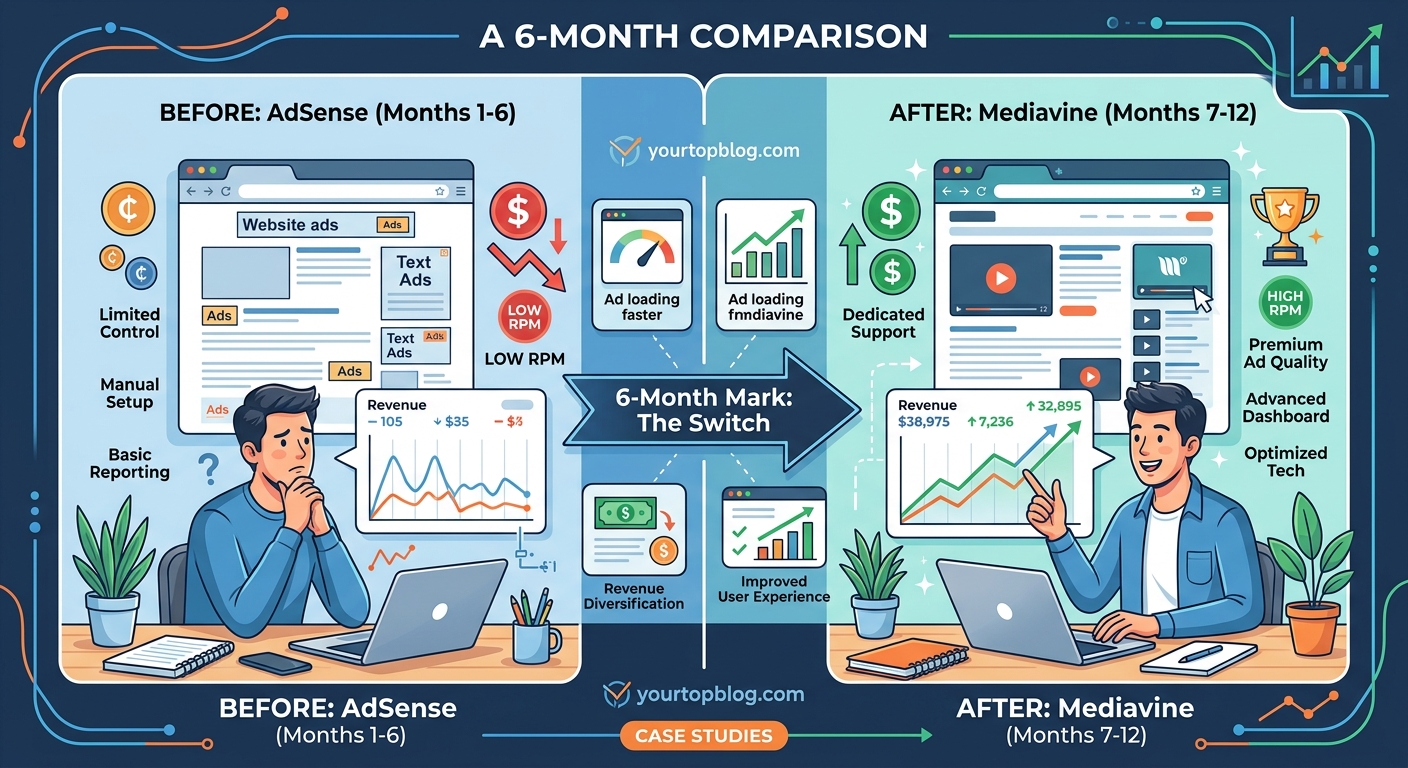
AdSense accepts anyone. You can apply with zero traffic, though approval requires quality content and compliance with their policies. Many bloggers get approved within days of launching, as explained in this guide on how to get approved for Google AdSense in 2024 even as a new blogger.
Mediavine requires 50,000 sessions in the last 30 days. Not pageviews. Sessions. One person visiting five pages counts as one session. This threshold keeps rising as premium networks become more selective.
You need to prove this traffic through Google Analytics before applying. Screenshots won’t work. Mediavine connects directly to your Analytics account during the application process.
Most bloggers hit this milestone between 12 and 24 months of consistent publishing. Food, parenting, and lifestyle blogs often get there faster due to Pinterest traffic. Tech and business blogs take longer but earn higher RPMs once accepted.
Revenue Comparison Across Different Niches
| Niche | AdSense RPM | Mediavine RPM | Revenue Multiplier |
|---|---|---|---|
| Food & Recipe | $4 to $7 | $12 to $18 | 3x |
| Parenting | $3 to $6 | $10 to $15 | 3.3x |
| Finance | $8 to $15 | $25 to $40 | 3.1x |
| Travel | $5 to $9 | $15 to $25 | 3x |
| Home & DIY | $6 to $10 | $18 to $28 | 3x |
| Tech & Software | $7 to $12 | $20 to $35 | 2.9x |
These numbers come from real blogger income reports and my own network of content creators. Your actual earnings will vary based on traffic quality, seasonality, and user engagement.
Geography matters more than most bloggers realize. US traffic earns 5 to 10 times more than traffic from developing countries. A food blog with 80% US visitors will crush one with 80% traffic from India, even with identical session counts.
Time on site affects earnings too. Mediavine rewards engagement. If readers spend four minutes on your posts instead of 45 seconds, your RPMs climb. AdSense cares less about this metric.
How the Application Process Works
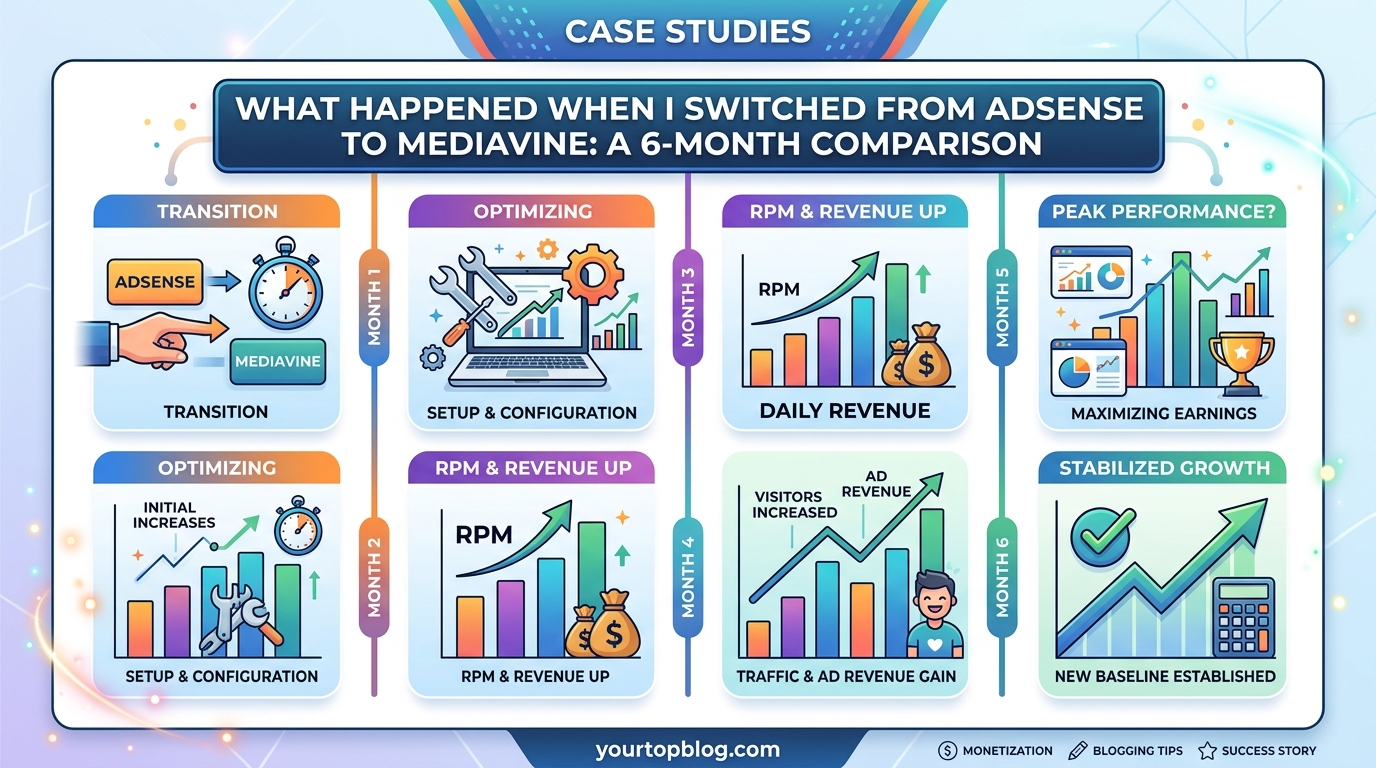
Getting started with AdSense takes about 15 minutes. You create an account, add a snippet of code to your site, and wait for approval. Google reviews your content for policy violations. Most sites get approved within 48 hours unless they violate content guidelines.
Mediavine’s process is more involved:
- Submit your application with Google Analytics connected
- Wait 2 to 4 weeks for initial review
- Receive approval or feedback on what needs improvement
- Schedule an onboarding call with your account manager
- Grant site access for ad implementation
- Wait 7 to 10 days for full ad deployment
- Monitor performance through your dashboard
The waiting period frustrates bloggers who want instant results. But this vetting process ensures quality publishers and protects advertiser relationships.
Mediavine rejects sites with thin content, copyright violations, or suspicious traffic patterns. They also turn away sites that don’t meet their quality standards, even with sufficient traffic. Having professional design and original photography helps your application stand out.
What You Control and What You Don’t
AdSense gives you complete creative control. You decide where ads appear, how many to show, and which formats to use. You can block specific advertisers or categories. You maintain full ownership of your ad strategy.
This freedom comes with responsibility. Most bloggers place ads poorly, leaving money on the table. Common mistakes include AdSense errors that cost thousands every month, like using too few ad units or placing them where readers never look.
Mediavine takes over completely. They decide:
- Ad placement and density
- Ad formats and sizes
- Which advertisers to work with
- How to optimize for revenue
- Video player implementation
- Mobile ad strategy
You can request changes, but they make the final call. This bothers control-focused bloggers who want to micromanage every detail.
The tradeoff is expertise. Mediavine’s team optimizes ads full time. They run tests you’d never think of. They have relationships with premium advertisers. They know what works.
Most bloggers who switch report feeling relieved. The mental load of ad optimization disappears. You focus on content while professionals handle monetization.
Site Speed and User Experience Impact
AdSense ads load relatively fast because Google optimizes aggressively. You control how many ads appear, so you can keep your site light. Most bloggers use 3 to 5 ad units per page.
Mediavine loads more ads and uses video players. Your site will slow down. How much depends on your hosting, theme, and existing optimization.
Expect your page load time to increase by 1 to 3 seconds after implementing Mediavine. This sounds terrible, but the revenue gain usually outweighs the speed loss.
“I was terrified about site speed when I switched to Mediavine. My load time went from 2.1 seconds to 3.8 seconds. But my earnings tripled, and my traffic actually increased because I could invest more in content.” – Sarah, food blogger
Mediavine provides optimization support. They’ll review your site and suggest improvements. Their Trellis theme is built specifically for ad-heavy sites and loads faster than most alternatives.
Google’s Core Web Vitals matter for SEO. If Mediavine tanks your scores, your rankings could suffer. Monitor Search Console closely in the first 60 days after switching. Most sites see minimal impact, but outliers exist.
You can request ad density adjustments if speed becomes critical. Mediavine will reduce ads slightly, though your earnings will drop proportionally.
Payment Terms and Minimum Thresholds
AdSense pays monthly once you hit $100 in earnings. If you earn $87 in January, that amount rolls over to February. You get paid about 21 days after month end.
Payment methods include direct deposit, wire transfer, and checks. Direct deposit is fastest and free.
Mediavine pays net 65. You earn money in January, and it arrives in early April. This delay frustrates new publishers who need cash flow.
The minimum threshold is $25, much lower than AdSense. But the payment delay matters more than the threshold for most bloggers.
Mediavine pays via direct deposit or PayPal. International bloggers appreciate PayPal as an option since wire transfers can be expensive.
Both platforms provide detailed reporting. AdSense shows clicks, impressions, and CPC. Mediavine shows RPM, sessions, and revenue by device type and geography.
Additional Revenue Opportunities
AdSense is just ads. You earn from clicks and impressions. Nothing more.
Mediavine offers additional revenue streams:
- Video content monetization separate from display ads
- Exclusive sponsored content opportunities
- Access to premium advertiser campaigns
- Seasonal promotions that boost RPMs
- Recipe card monetization for food bloggers
These extras add 10% to 20% to your base earnings. Not life changing, but meaningful over a year.
Mediavine also runs a marketplace connecting bloggers with brands for sponsored posts. You keep 100% of what you negotiate. They just facilitate the connection.
Both platforms allow you to run other monetization methods. You can use affiliate links, sell products, or offer services. Neither restricts your ability to diversify income streams beyond display ads.
Some bloggers worry that heavy ad presence hurts affiliate conversions. Testing shows minimal impact if your content is strong. Readers who want to buy will buy regardless of ad density.
Support and Resources Available
AdSense support is mostly automated. You submit tickets through a help center and wait for responses. Complex issues take days to resolve. Phone support exists only for high earners.
The AdSense help forum is active, and other publishers often provide better answers than official support. YouTube tutorials fill knowledge gaps.
Mediavine assigns you a dedicated account manager. You can email them directly with questions. Response times average 24 to 48 hours.
They also provide:
- A private Facebook group for publishers
- Monthly webinars on optimization strategies
- Detailed video tutorials in your dashboard
- Annual conferences for networking
- A blog with case studies and tips
The community aspect matters. You’re surrounded by successful bloggers who share what’s working. This peer learning accelerates your growth.
Mediavine’s team proactively reaches out if they notice issues. Your RPMs dropped 15% last week? They’ll investigate and explain why. AdSense never does this.
When to Make the Switch
Most bloggers should start with AdSense and switch to Mediavine once eligible. Starting with AdSense lets you:
- Learn ad placement basics
- Build traffic without pressure
- Understand your audience behavior
- Test different content types
- Establish baseline earnings
Once you consistently hit 50,000 sessions for three months, apply to Mediavine. Don’t wait. Every month you delay costs you money.
Some bloggers never switch. Reasons include:
- They value site speed over revenue
- Their niche earns well with AdSense already
- They dislike giving up control
- They run a portfolio of small sites below the threshold
If you’re earning $15+ RPMs with AdSense through careful optimization, Mediavine might only improve that to $20 to $22. The gain shrinks as your AdSense performance improves.
Consider your growth trajectory too. If you’re at 45,000 sessions and growing 10% monthly, wait until you’re safely above the threshold before applying. Mediavine can remove you if your traffic drops below requirements.
Common Mistakes When Comparing the Two
Bloggers often compare their current AdSense earnings to someone else’s Mediavine earnings. This comparison is useless. Different niches, traffic sources, and engagement levels make the numbers incomparable.
Another mistake is focusing only on RPM. Total revenue matters more. Would you rather have a $25 RPM on 50,000 sessions or a $15 RPM on 200,000 sessions? The second option earns more money.
Some bloggers switch to Mediavine too early by inflating traffic with low-quality sources. Mediavine catches this during review. Even if you slip through, advertisers notice and your RPMs suffer.
Failing to optimize before switching is wasteful too. If your site loads in 8 seconds before Mediavine, it’ll be unusable after. Fix technical issues first. A guide like the complete on-page SEO checklist for bloggers covers essential optimizations.
Don’t forget about taxes. Higher earnings mean higher tax bills. Set aside 25% to 30% of your Mediavine income for taxes if you’re in the US. This percentage varies by country and tax situation.
Alternative Ad Networks Worth Considering
Mediavine isn’t the only premium network. AdThrive requires 100,000 sessions and typically earns slightly more than Mediavine. Their approval process is stricter.
Ezoic sits between AdSense and Mediavine. They accept sites with 10,000 sessions and use AI to optimize ad placements. Earnings fall between AdSense and Mediavine, usually 2x to 3x better than AdSense alone.
Monumetric accepts sites with 10,000 sessions but charges a setup fee for smaller sites. Their RPMs match Ezoic in most niches.
Raptive (formerly AdThrive) and Mediavine dominate the premium tier. Most bloggers choose based on which accepts them first or which their blogging friends recommend.
Some niches have specialized networks. Finance bloggers might earn more with MonetizeMore. Tech sites sometimes do better with Carbon Ads. Research options specific to your niche before committing.
You can also stack multiple revenue models without overwhelming readers by combining display ads with affiliate marketing, digital products, and services.
Real Numbers From Bloggers Who Switched
A parenting blogger with 75,000 monthly sessions earned $420 per month with AdSense. Her first full month with Mediavine brought in $1,680. Same traffic, same content, four times the revenue.
A food blogger at 120,000 sessions was making $850 monthly with AdSense. After switching to Mediavine, she averaged $3,200 per month. Her traffic actually dropped 10% due to a Google update, but earnings still tripled.
A personal finance blogger earned $1,200 monthly from AdSense at 90,000 sessions. Mediavine pushed that to $4,100 monthly. His niche commands premium ad rates.
Not every story is golden. A craft blogger with 60,000 sessions earned $380 with AdSense and $890 with Mediavine. Still better, but only 2.3x improvement. Her traffic was 40% international, which lowered RPMs.
A tech review site at 55,000 sessions made $670 with AdSense and $1,450 with Mediavine. The 2.2x increase disappointed him based on other bloggers’ reports. His traffic came mostly from organic search with low engagement, which hurt performance.
These examples show the range. Most bloggers see 3x to 4x improvement, but outliers exist in both directions.
Making Your Decision Based on Current Traffic
Under 10,000 sessions monthly? Stick with AdSense. Focus on growing your blog traffic before worrying about premium networks.
Between 10,000 and 50,000 sessions? Consider Ezoic or Monumetric as a stepping stone. They’ll boost earnings while you work toward Mediavine’s threshold.
Above 50,000 sessions? Apply to Mediavine immediately unless you have specific reasons to stay with AdSense.
Above 100,000 sessions? Apply to both Mediavine and AdThrive. See which accepts you and compare offers.
Your traffic source matters too. Pinterest traffic often has lower engagement and earns less per session. If 80% of your traffic bounces after viewing one recipe, your RPMs will suffer regardless of network.
Google organic traffic typically earns the most because readers are actively searching for information. They stay longer and engage more. Email and social traffic fall somewhere in between.
What Happens If Your Traffic Drops
AdSense doesn’t care if your traffic drops. You keep earning on whatever traffic you have. No minimum to maintain.
Mediavine requires you to maintain 50,000 sessions. If you drop below for one month, they’ll usually give you a warning. Two to three months below threshold and they’ll remove you.
Getting removed isn’t permanent. You can reapply once your traffic recovers. But you’ll go through the whole application process again.
This policy creates stress during Google updates or seasonal traffic fluctuations. A travel blogger might drop to 40,000 sessions in January after a December spike. Mediavine understands seasonality and usually works with you.
The risk pushes some bloggers to keep AdSense even after qualifying for Mediavine. They’d rather have stable, lower earnings than risk losing premium access.
Most bloggers who maintain consistent publishing schedules don’t face this issue. Traffic naturally grows over time if you’re following solid SEO practices covered in resources like why your blog posts aren’t ranking and how to fix it.
The Hidden Costs Nobody Talks About
Mediavine is free to join, but switching has indirect costs. Your site will need better hosting to handle increased ad load. Expect to upgrade from shared hosting to a VPS or managed WordPress host.
This upgrade costs $30 to $100 monthly depending on your provider. The increased earnings cover this easily, but it’s still an expense to budget for.
You might need design changes. Mediavine’s ads work best with certain layouts. Your current theme might need adjustments or replacement. Theme costs range from free to $200 for premium options.
Time is another cost. The first month with Mediavine requires monitoring, testing, and adjusting. You’ll spend hours learning the dashboard and understanding reports.
Some bloggers hire help to handle technical implementation. A developer might charge $200 to $500 for a smooth Mediavine setup, especially if your site has custom code.
AdSense has minimal hidden costs. You can run it on the cheapest hosting with a free theme. The simplicity is part of its appeal for beginners.
Building Toward Premium Ad Networks
If you’re still building traffic, focus on creating content that attracts valuable visitors. High-value topics include:
- Financial planning and investing
- Home improvement and renovation
- Health and medical information
- Technology reviews and tutorials
- Legal advice and services
These niches command higher ad rates because advertisers pay more to reach these audiences.
Build your traffic through sustainable methods. Organic search provides the most valuable visitors. Finding low-competition keywords that actually drive traffic helps you rank faster and build momentum.
Pinterest works well for visual niches. Food, crafts, parenting, and home decor blogs can scale traffic through Pinterest strategies that actually work for bloggers.
Email lists provide stable traffic independent of algorithms. Building an email list that drives repeat traffic protects you from platform changes and helps maintain Mediavine’s threshold.
Avoid traffic tactics that hurt long-term earnings. Clickbait headlines bring visitors who bounce immediately. Bot traffic gets you banned. Paid traffic rarely converts well enough to justify the cost.
Your Next Steps Based on Where You Are
Already at 50,000+ sessions? Apply to Mediavine today. The application takes 10 minutes. You’ll know within a month if you’re accepted.
Between 25,000 and 50,000 sessions? Set a goal to hit the threshold within 90 days. Publish more content, improve SEO, and promote existing posts. Track your progress weekly in Google Analytics.
Under 25,000 sessions? Focus entirely on traffic growth. Ad network optimization is premature. Build your audience first. Consider learning from case studies like how a food blogger went from $0 to $8,000 monthly AdSense revenue to see what’s possible.
Not sure about your traffic quality? Check your Google Analytics. Look at average session duration and pages per session. Above 2 minutes and 2 pages means you’re in good shape. Below that, work on creating more engaging content.
Review your current AdSense setup too. Make sure you’re not leaving easy money on the table with poor ad placement or blocked categories.
Why This Choice Matters More Than You Think
Your ad network decision affects more than monthly income. It shapes your entire business model and growth strategy.
Mediavine’s higher earnings let you reinvest in content. Hire writers, buy better tools, or upgrade your site design. This investment accelerates growth and helps you reach the next income milestone faster, whether that’s $10,000 per month or beyond.
The revenue stability matters too. AdSense earnings fluctuate wildly based on clicks. Mediavine’s impression-based model provides more predictable income. You can budget and plan with confidence.
Your relationship with readers changes based on ad density. Heavy ads might annoy some visitors. But most readers accept ads as the cost of free content. The key is providing enough value that ads feel like a fair trade.
Both networks can work. AdSense serves beginners perfectly. Mediavine rewards established bloggers. Your job is choosing the right tool for your current stage and having a plan to level up when ready.
The bloggers earning serious income didn’t get there by accident. They made strategic decisions about monetization, traffic, and content. Choosing between Mediavine and AdSense is one of those decisions. Make it based on data, not hope or fear.