

You just added your first affiliate link to a blog post. The product is great, the commission is solid, and you’re excited to earn your first payout. But then a friend asks if you disclosed the link properly. Suddenly, you’re second-guessing everything. Do you really need a disclaimer? What happens if you skip it?
Yes, you must disclose affiliate links. The FTC requires clear, upfront disclosure whenever you earn a commission from a recommendation. This applies to blogs, social media, videos, and emails. Proper disclosure protects your audience, builds trust, and keeps you legally compliant. Non-disclosure can result in fines, legal action, and permanent damage to your reputation and income.
Why Affiliate Disclosure Is Legally Required
The Federal Trade Commission (FTC) enforces truth-in-advertising laws. These rules exist to protect consumers from hidden financial relationships that might bias recommendations.
Here’s the core principle: if you earn money from a link, your audience deserves to know.
The FTC views undisclosed affiliate links as deceptive advertising. Your readers assume you’re sharing honest opinions. If you’re getting paid without telling them, that’s a problem.
This isn’t just an American rule. Many countries have similar regulations. The UK has the Advertising Standards Authority. Canada has the Competition Bureau. Australia enforces consumer protection laws through the ACCC.
If you have an international audience, you need to follow disclosure rules that apply to your readers, not just your location.
What Counts as a Material Connection
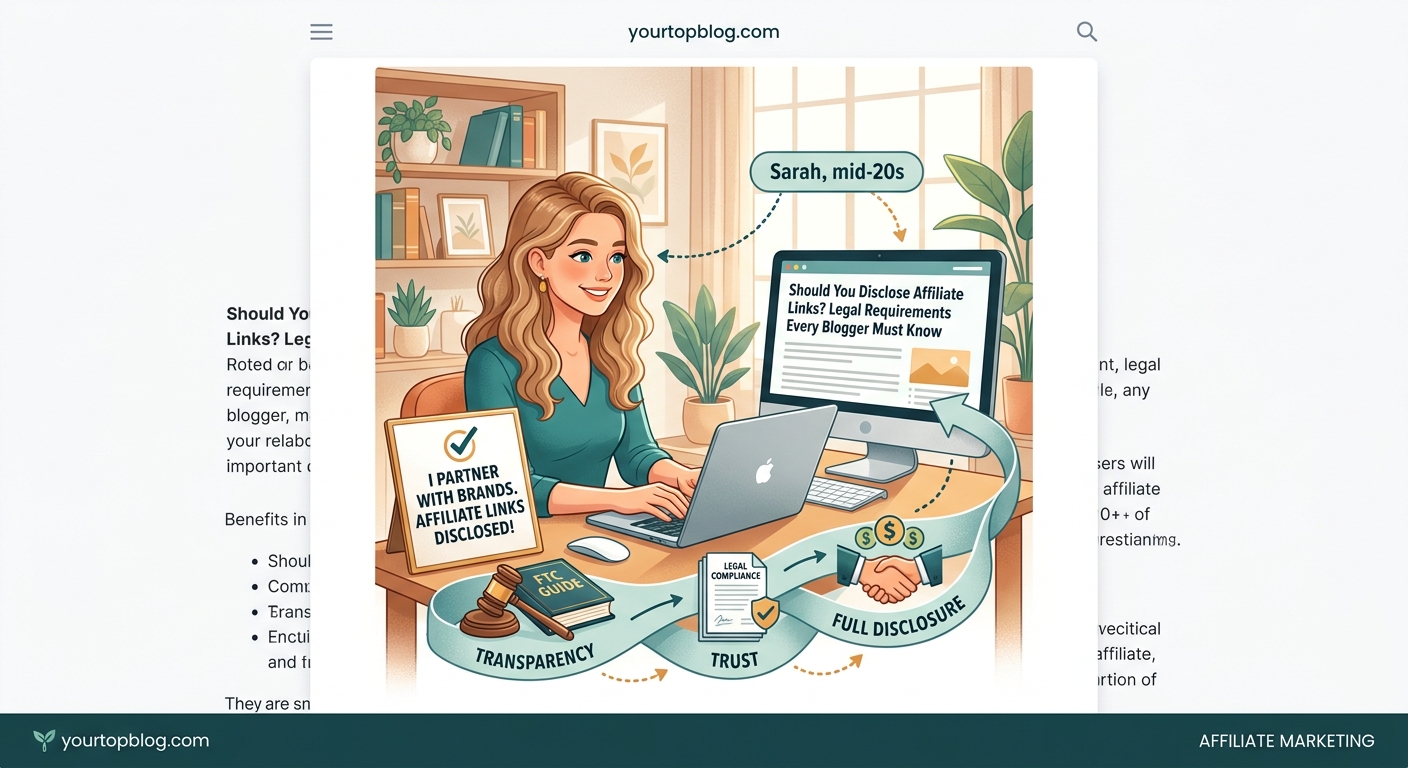
The FTC uses the term “material connection” to describe any relationship that could affect how someone evaluates your recommendation.
Affiliate commissions are the most common example. But material connections also include:
- Free products sent for review
- Sponsored content payments
- Brand partnerships or ambassador programs
- Equity or ownership in a company you promote
- Family or personal relationships with product creators
Even if you genuinely love a product, getting paid to recommend it creates a material connection. Your disclosure needs to make that relationship clear.
Where to Place Your Disclosure
Placement matters as much as the words you use.
The FTC is explicit: disclosures must appear before someone clicks a link or makes a decision. Hiding a disclaimer at the bottom of a page doesn’t count.
Here are the placement rules that keep you compliant:
On blog posts: Add a disclosure at the top of the article, before the first affiliate link appears. You can also add inline disclosures near each link.
On social media: Place disclosure at the beginning of the post, not hidden behind a “more” button. Use #ad or #affiliate in the first line.
In videos: Mention your affiliate relationship verbally at the start. Also include a text disclosure in the first few lines of your description.
In emails: Disclose at the top of the message, before any affiliate links.
The goal is simple: your audience should see the disclosure before they see your recommendation.
How to Write a Clear Disclosure
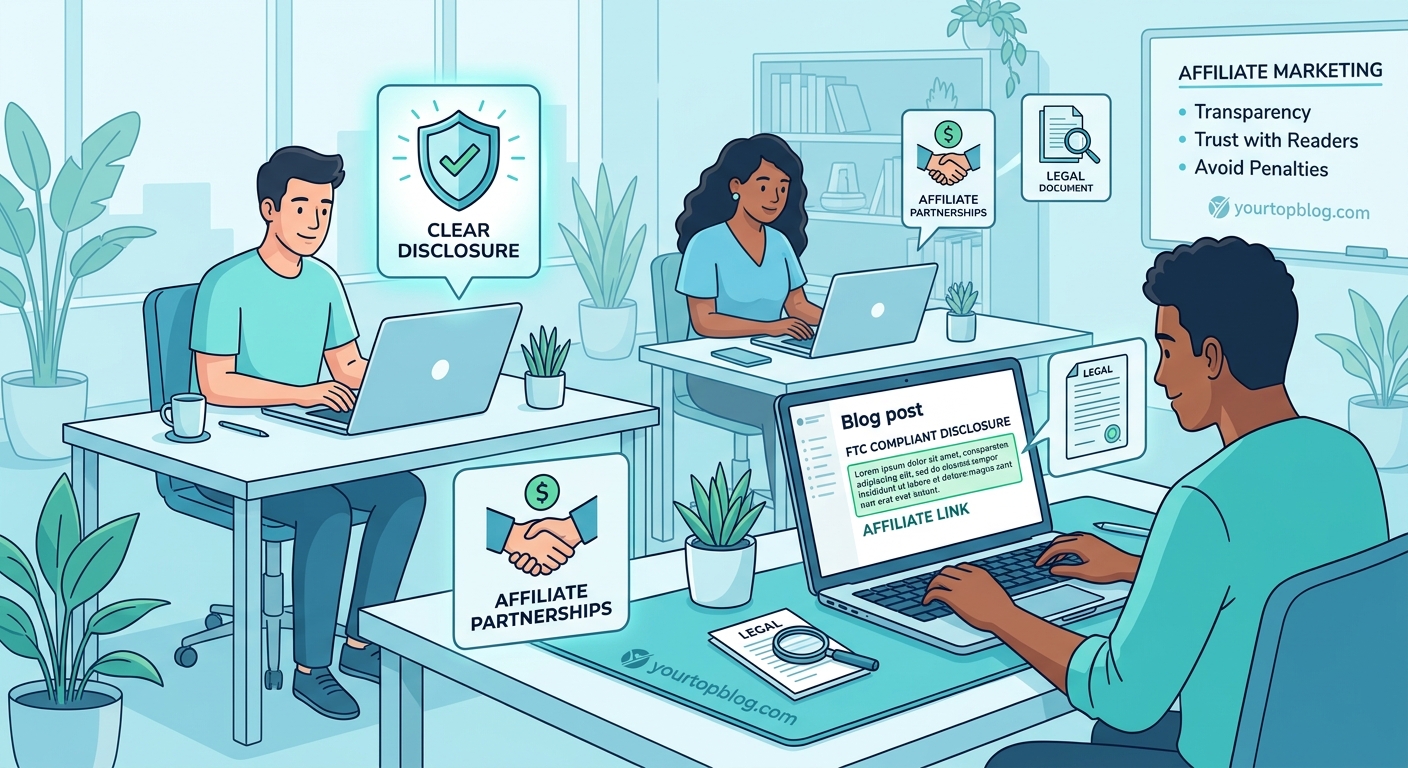
Your disclosure needs to be obvious and understandable. Legal jargon doesn’t work. Neither does tiny text or confusing language.
Here are disclosure formats that meet FTC standards:
Simple and direct:
“This post contains affiliate links. If you buy through these links, I may earn a commission at no extra cost to you.”
Conversational:
“I earn a small commission if you purchase through my links. This helps me keep this blog running, and I only recommend products I actually use.”
Specific:
“I’m an Amazon Associate and earn from qualifying purchases made through links on this page.”
All three examples work because they’re clear, prominent, and easy to understand.
What doesn’t work:
- “Some links may be affiliate links” (too vague)
- Tiny text that blends into the background
- Disclosures hidden in footers or legal pages
- Abbreviations like “aff link” without explanation
Your disclosure should be written at a level that a teenager could understand. No exceptions.
Common Disclosure Mistakes That Risk Penalties
Many creators think they’re compliant when they’re actually breaking the rules. These mistakes happen constantly:
| Mistake | Why It Fails | Compliant Alternative |
|---|---|---|
| Disclosure only in footer | Readers don’t see it before clicking | Place at top of each post |
| Using unclear terms like “partner” | Doesn’t explain financial relationship | Say “affiliate” or “I earn a commission” |
| Disclosure after multiple paragraphs | Readers already made decisions | Disclose before first link |
| Assuming hashtags are enough | #partner isn’t clear on all platforms | Use #ad or #affiliate explicitly |
| One disclosure for entire site | Must appear on each piece of content | Add to every post with affiliate links |
The FTC has issued warning letters to major influencers for these exact mistakes. Don’t assume your small audience makes you exempt.
Platform-Specific Disclosure Requirements
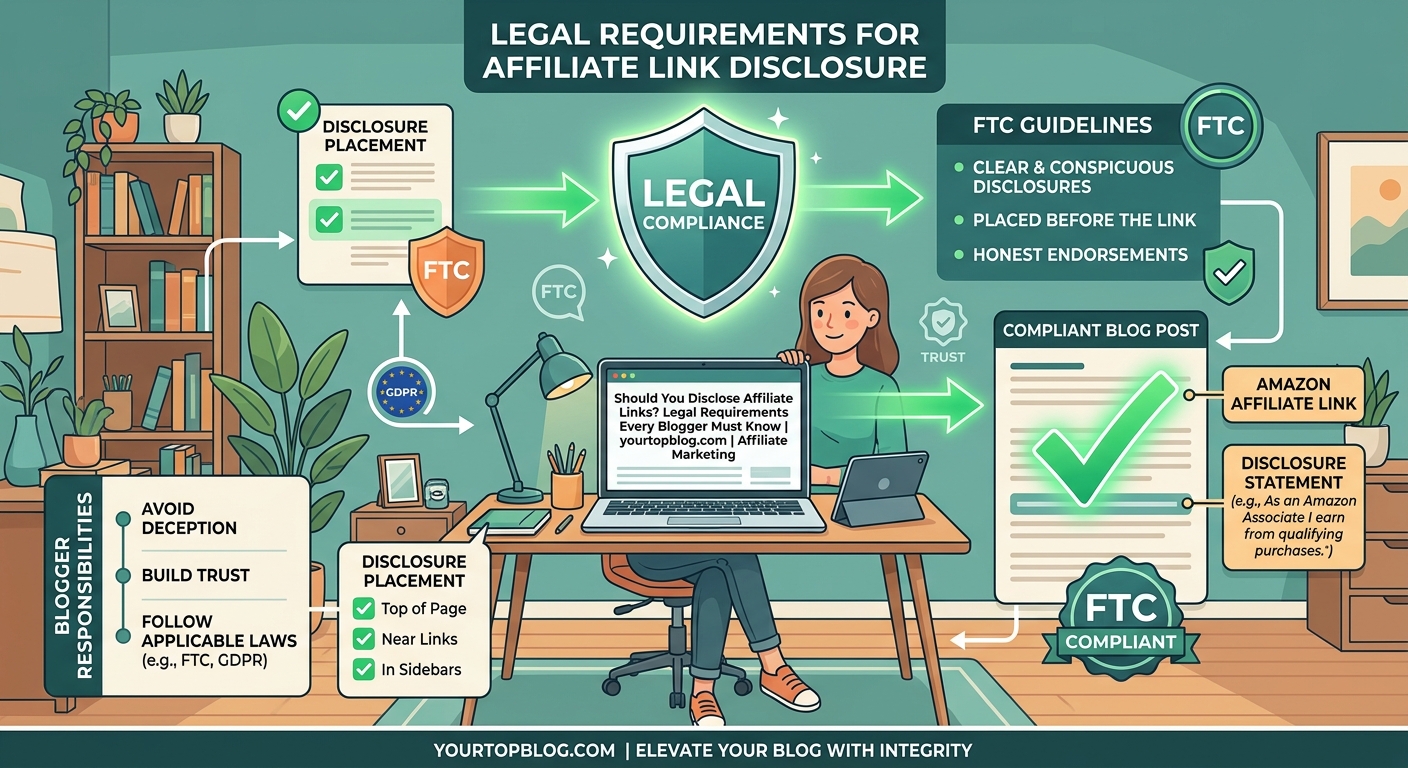
Each platform has unique constraints that affect how you disclose.
Instagram posts: Put #ad or #affiliate in the first line of your caption. Don’t rely on the end of a long caption that requires clicking “more.”
Instagram Stories: Add text overlay stating “paid partnership” or “affiliate link” on the story slide containing the link.
YouTube: Say it out loud in your intro. Add disclosure in the first two lines of your description. YouTube’s built-in disclosure tools don’t replace your own statement.
TikTok: Use the branded content toggle when available. Also mention your relationship verbally or with text overlay.
Pinterest: Add disclosure directly on the pin image or in the first line of the pin description.
Twitter/X: Character limits are tight, but #ad or #affiliate still need to appear before your link.
If you’re building passive income streams across multiple platforms, you need disclosure strategies for each one.
What Happens If You Don’t Disclose
The consequences of skipping disclosure range from warnings to serious legal action.
The FTC can issue warning letters requiring immediate compliance. If you ignore those warnings, fines can reach thousands of dollars per violation.
In 2017, the FTC settled with several influencers who failed to disclose sponsored posts. Some paid five-figure penalties.
Beyond legal risks, non-disclosure damages your reputation. When readers discover undisclosed affiliate relationships, they lose trust. That trust is nearly impossible to rebuild.
Platforms also enforce their own rules. Instagram, YouTube, and TikTok can remove content, suspend monetization, or ban accounts that violate disclosure policies.
If you’re just starting with high-converting affiliate programs, proper disclosure protects both your income and your credibility.
Step-by-Step Disclosure Implementation
Here’s how to add compliant disclosures to your content right now:
-
Audit your existing content. Find every post, video, or social update containing affiliate links.
-
Add disclosures to the top of each piece. Use clear language that explains your financial relationship.
-
Create a disclosure template. Save it in a document so you can copy and paste it into new content.
-
Update your about page. Add a general statement explaining that your site contains affiliate links and how you use them.
-
Set a reminder to review disclosure practices quarterly. Rules and platform policies change.
-
Train anyone who creates content for you. Virtual assistants, guest writers, and social media managers need to understand disclosure requirements.
This process takes a few hours upfront but becomes automatic once you build the habit.
Balancing Transparency and User Experience
Some creators worry that disclosures hurt conversions. The opposite is usually true.
Transparency builds trust. Readers appreciate honesty. When you’re upfront about earning commissions, people respect your business model.
Your audience understands that content creation costs time and money. Most readers are happy to support you through affiliate purchases if you’re honest about it.
“I’ve tested posts with and without prominent disclosures. The posts with clear affiliate statements at the top actually convert better. Readers trust my recommendations more because I’m transparent.” — Anonymous blogger earning $12K monthly from affiliates
You can make disclosures feel natural by framing them positively. Instead of treating disclosure as a legal obligation, position it as part of your commitment to honesty.
Special Cases and Edge Scenarios
Some situations create confusion about disclosure requirements.
Product reviews using free samples: You must disclose that you received the product for free, even if there’s no affiliate link.
Links to products you no longer use: If you recommend something you’ve stopped using, say so. Honesty matters more than the disclosure itself.
Comparing products where you’re only affiliated with some: Disclose which products earn you commissions and which don’t.
Linking to your own products: This isn’t technically an affiliate relationship, but transparency still helps. Mention that you created or own the product.
Using link shorteners or cloaking: These tools are fine, but they don’t eliminate disclosure requirements. The disclosure must still appear before the link.
Creating a Disclosure Policy Page
Beyond individual post disclosures, create a dedicated disclosure policy page on your site.
This page should explain:
- That your site contains affiliate links
- Which affiliate networks and programs you participate in
- How you choose products to recommend
- That readers pay the same price whether they use your links or not
- Your commitment to honest recommendations
Link to this page from your main navigation or footer. While this page doesn’t replace individual post disclosures, it provides additional transparency and legal protection.
Many successful bloggers who grew their traffic significantly include disclosure policies as part of building reader trust from day one.
Tools and Plugins That Help
Several tools make disclosure easier:
WordPress plugins: Pretty Links, ThirstyAffiliates, and Lasso all include disclosure features. Some automatically add disclaimers to posts containing affiliate links.
Disclosure generators: Free online tools create compliant disclosure text you can customize.
Social media scheduling tools: Buffer and Later let you save disclosure templates for reuse.
Browser extensions: Some extensions highlight affiliate links on your site so you can verify disclosure placement.
These tools help, but they don’t replace your responsibility to ensure compliance. Always review what gets published.
Teaching Your Team About Compliance
If you work with writers, editors, or social media managers, everyone needs training on disclosure requirements.
Create a simple guide that includes:
- Your standard disclosure text
- Where to place disclosures on different platforms
- Examples of compliant and non-compliant posts
- A checklist to review before publishing
Make compliance part of your content approval process. No post goes live without verified disclosure.
This becomes especially important as you scale. One team member’s mistake can create legal liability for your entire business.
Staying Updated on Regulation Changes
FTC guidelines evolve as new platforms and monetization methods emerge.
Check the FTC’s website annually for updated guidance. The Endorsement Guides section specifically addresses influencer marketing and affiliate relationships.
Join blogger communities where members share updates about policy changes. Facebook groups, Reddit communities, and industry newsletters often discuss new requirements before they become widely known.
If you earn significant income from affiliates, consider consulting with a lawyer who specializes in digital media. A one-time consultation can prevent expensive mistakes.
Building Trust Through Transparency
Disclosure isn’t just about avoiding fines. It’s about respecting your audience.
People follow you because they value your opinion. Being honest about how you earn money strengthens that relationship rather than weakening it.
Many creators find that adding clear disclosures actually improves their results. Readers engage more, trust recommendations more, and convert better when they understand your business model.
Think of disclosure as a competitive advantage. In a space where many creators hide their financial relationships, transparency makes you stand out.
Your Disclosure Checklist
Here’s everything you need to verify before publishing content with affiliate links:
- Disclosure appears at the top of the post or in the first few seconds of video
- Language is clear and specific about earning commissions
- Disclosure is visible on mobile devices
- Text is large enough to read easily
- Disclosure appears on every piece of content with affiliate links, not just once per site
- Social media posts include #ad or #affiliate in the first line
- Video descriptions include written disclosure in addition to verbal mention
- You’ve saved your disclosure template for future use
Run through this checklist every time you publish. It takes 30 seconds and protects your business.
Making Disclosure Part of Your Workflow
The easiest way to stay compliant is to make disclosure automatic.
Create content templates that include disclosure sections. When you start a new blog post, the disclosure placeholder is already there.
Set up social media templates with disclosure text pre-written. You just need to add your specific content.
Add a disclosure reminder to your publishing checklist. Before hitting publish, verify that disclosure is present and properly placed.
After a few weeks, this becomes second nature. You won’t even think about it.
Protecting Your Income While Staying Compliant
Some creators avoid affiliate marketing entirely because they’re worried about legal complexity. That’s unnecessary.
Proper disclosure is straightforward. Once you understand the rules and build them into your workflow, compliance takes minimal effort.
The real risk isn’t in following disclosure rules. It’s in ignoring them and hoping no one notices.
Your affiliate income depends on maintaining trust with your audience and staying in good standing with platforms and regulators. Disclosure protects both.
Whether you’re earning your first affiliate commission or managing multiple revenue streams, compliance is non-negotiable.
Turning Legal Requirements Into Competitive Advantage
Most creators treat disclosure as a burden. You can flip that perspective.
Frame your disclosure positively. Tell readers you’re able to create free content because affiliate commissions support your work. Thank them for using your links.
Share how you test products before recommending them. Explain your selection criteria. Make transparency part of your brand identity.
Readers respond to this honesty. They’re more likely to trust your recommendations, engage with your content, and become loyal followers.
The creators who thrive long-term aren’t the ones who hide their monetization. They’re the ones who are proudly transparent about their business model.
Disclosure isn’t just a legal requirement. It’s a trust-building tool that separates professional creators from amateurs trying to game the system.
Start adding proper disclosures today. Your audience will respect you for it, and you’ll sleep better knowing your business is protected.