
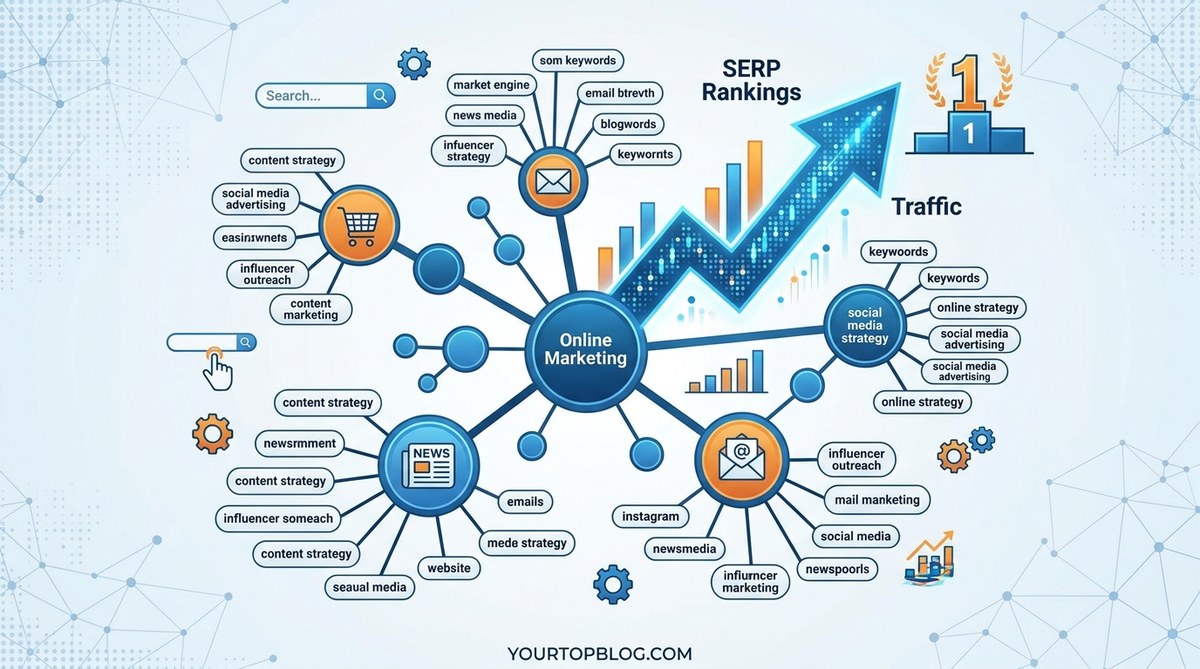
Building a website that ranks well on search engines is more challenging than ever. With millions of sites competing for attention, simply stuffing keywords into your content no longer cuts it. Instead, advanced strategies like SEO keyword clustering can give you a real edge. This guide will walk you through the process of organizing keywords into meaningful groups, making your SEO efforts smarter and more focused. When done right, keyword clustering helps your content address user intent better, boosts your topical authority, and improves your overall search visibility.
Effective SEO keyword clustering organizes related keywords into logical groups, helping search engines understand your content’s relevance, improving rankings, and guiding content creation for maximum impact.
Why keyword clustering is a game-changer in SEO
When you think about boosting your website’s rankings, creating targeted content for each keyword is essential. But without proper organization, your efforts can become scattered, wasting time and resources. Keyword clustering provides a way to group related keywords based on their search intent, semantic similarity, or competitive landscape. This method aligns your content strategy with how search engines interpret relevance, making your pages more authoritative for specific topics.
By clustering keywords, you can identify gaps in your existing content, focus on high-potential phrases, and avoid keyword cannibalization. It also simplifies content planning, ensuring each page targets a well-defined cluster of related keywords. As a result, your site becomes a stronger topical authority, which search engines tend to favor.
“Keyword clustering is like creating a map for your content, showing search engines the territory you dominate and guiding users through a cohesive journey.” — SEO expert Jane Doe
How to build your SEO keyword clusters step by step
Implementing a keyword clustering guide starts with understanding your target audience, your niche, and your existing content. Follow these practical steps to set up your clusters effectively:
1. Gather your seed keywords and expand your list
Begin with a core set of keywords relevant to your niche or business. Use tools like Ahrefs, SEMrush, or free options like Google Keyword Planner to find related search terms. Look for long-tail phrases and variations that reflect different search intents.
For example, if you run a fitness blog, your seed keyword might be “home workouts.” Related keywords could include “bodyweight exercises,” “HIIT routines,” and “kettlebell workouts.” Collect all these into a master list.
2. Categorize keywords based on intent and topic
Next, classify your keywords into broad categories. These could be informational, transactional, or navigational. For SEO purposes, focus on the informational and topical intent keywords. Group keywords that share similar themes or user goals.
Continuing the fitness example, your categories might be “weight loss workouts,” “muscle building routines,” and “postpartum fitness.” Each group contains related keywords that can form a content cluster.
3. Use tools for automated clustering
Manual grouping works well for small lists, but larger sets benefit from automation. Many SEO tools offer clustering functionalities. For instance, Keyword Insights or SEMRush’s Keyword Magic Tool can help identify natural groupings based on search results and semantic analysis.
Upload your keyword list and let the tool analyze and suggest clusters. Review these to ensure they align with your content strategy.
4. Identify content gaps and refine your clusters
Once your clusters are set, audit your existing content to see which topics are well covered and where gaps exist. If a cluster lacks dedicated content, plan new articles targeting the primary keywords within that group.
Avoid overlapping content by clearly defining each cluster’s focus. This prevents keyword cannibalization, where multiple pages compete for the same keywords, diluting your SEO power.
5. Develop content strategies around clusters
Each cluster becomes a blueprint for content creation. Develop pillar pages or comprehensive guides that cover the main keyword of a cluster. Supporting articles can target related sub-keywords.
For example, a pillar page on “home workouts” can link to detailed posts on “bodyweight exercises,” “kettlebell routines,” and “HIIT workouts.” This internal linking structure reinforces topical authority and helps search engines understand your site’s content hierarchy.
Techniques for effective keyword clustering and common pitfalls
Here’s a quick table to clarify techniques and mistakes to avoid:
| Technique | Mistake to Avoid |
|---|---|
| Use semantic analysis tools | Relying solely on keyword similarity without considering search intent |
| Create clear, distinct clusters | Overlapping topics that cause cannibalization |
| Regularly audit and refine your clusters | Neglecting to update clusters based on new trends or data |
| Build pillar content for main clusters | Ignoring internal linking opportunities |
| Incorporate user intent in grouping | Focusing only on search volume without understanding what users want |
Practical tips for maintaining your clusters
- Keep an eye on search trends and update clusters accordingly.
- Use internal links to connect cluster pages, enhancing topical relevance.
- Track performance metrics to see which clusters drive traffic and conversions.
- Avoid creating too many small clusters; aim for manageable, well-defined groups.
- Remember that clusters should evolve as your site grows and as search behaviors change.
Common mistakes that can derail your efforts
- Ignoring search intent and mixing informational with transactional keywords.
- Creating content for keywords that have low relevance or low search volume.
- Overlapping clusters that cause confusion for search engines and users.
- Not updating clusters over time, leaving outdated or irrelevant content.
- Skipping internal linking, which diminishes the authority flow within your site.
FAQs about SEO keyword clustering
How does keyword clustering improve my search rankings?
Grouping related keywords helps search engines understand your site’s topical authority. When you create content tailored to each cluster, your pages become more relevant for those search terms. Internal linking between cluster pages further boosts authority and helps search engines crawl your site more effectively.
Can I automate the clustering process?
Yes. Several SEO tools offer clustering features that analyze your keywords and suggest logical groups. These tools use semantic analysis and search result data to identify natural groupings, saving time and improving accuracy.
How often should I update my keyword clusters?
Review your clusters at least quarterly. Monitor search trends, keyword performance, and your content’s performance. Updating ensures your clusters stay relevant and competitive.
What’s the difference between topical authority and keyword density?
Topical authority refers to how well your site covers a subject comprehensively. Keyword density focuses on how often a keyword appears. Clustering supports topical authority by organizing related content into a cohesive structure, which search engines interpret as expertise.
Keep your content organized with smart clustering
Mastering SEO keyword clustering is a strategic move toward better rankings and more targeted traffic. By systematically grouping related keywords, you create a solid foundation for content planning, site architecture, and internal linking. This approach not only helps search engines understand your site better but also guides your audience through a seamless journey of relevant information.
Start by gathering your keywords, categorizing them thoughtfully, leveraging automation tools, and regularly refining your clusters. As your site grows, these organized groups will serve as a blueprint for scalable, effective SEO. Remember, the key is to think of your website as a well-organized library where each topic is clearly labeled and interconnected.
Applying these principles takes effort but pays off in higher visibility, increased authority, and ultimately, more traffic. Take the time to map out your keyword clusters today. Your rankings will thank you.