

You started a blog about something you love. Maybe it’s woodworking, vintage cameras, or your sourdough experiments. Right now, it’s costing you money instead of making it.
That can change.
Thousands of bloggers have turned their passion projects into real income streams. Some make a few hundred dollars per month. Others pull in six figures annually. The difference isn’t luck or secret formulas. It’s knowing which monetization methods work and how to implement them properly.
Making money from a hobby blog requires three core elements: consistent [traffic growth through SEO](https://en.wikipedia.org/wiki/Search_engine_optimization) and content strategy, multiple revenue streams including display ads and [affiliate marketing](https://en.wikipedia.org/wiki/Affiliate_marketing), and audience trust built through authentic expertise. Most successful hobby bloggers earn between $2,000 and $15,000 monthly by combining these approaches rather than relying on a single income source.
Building the Foundation Before Monetization
You can’t monetize an empty room.
Traffic comes first. Revenue follows.
Most hobby bloggers make a critical mistake. They add ads and affiliate links before they have enough visitors to make it worthwhile. A blog with 500 monthly visitors might earn $5 from display ads. That same blog with 50,000 visitors could earn $2,000 from the exact same ad placements.
The math matters here.
Start by finding low competition keywords that actually drive traffic in your niche. Your hobby gives you an advantage because you already know what questions people ask. You’ve been that beginner. You know the problems.
Write content that solves specific problems. Not general overviews. Not broad introductions. Specific solutions to specific issues.
A gardening blog shouldn’t write “How to Grow Tomatoes.” That’s too broad. Instead, target “Why Are My Cherokee Purple Tomatoes Splitting Before Harvest” or “Best Determinate Tomato Varieties for 5-Gallon Containers.”
Narrow topics rank faster. They also convert better because they match exactly what someone needs right now.
Your goal for the first six months should be reaching 10,000 monthly visitors. That’s enough traffic to start seeing meaningful revenue from multiple sources. Before that threshold, focus on content quality and consistency rather than monetization tactics.
Display Advertising Revenue Models
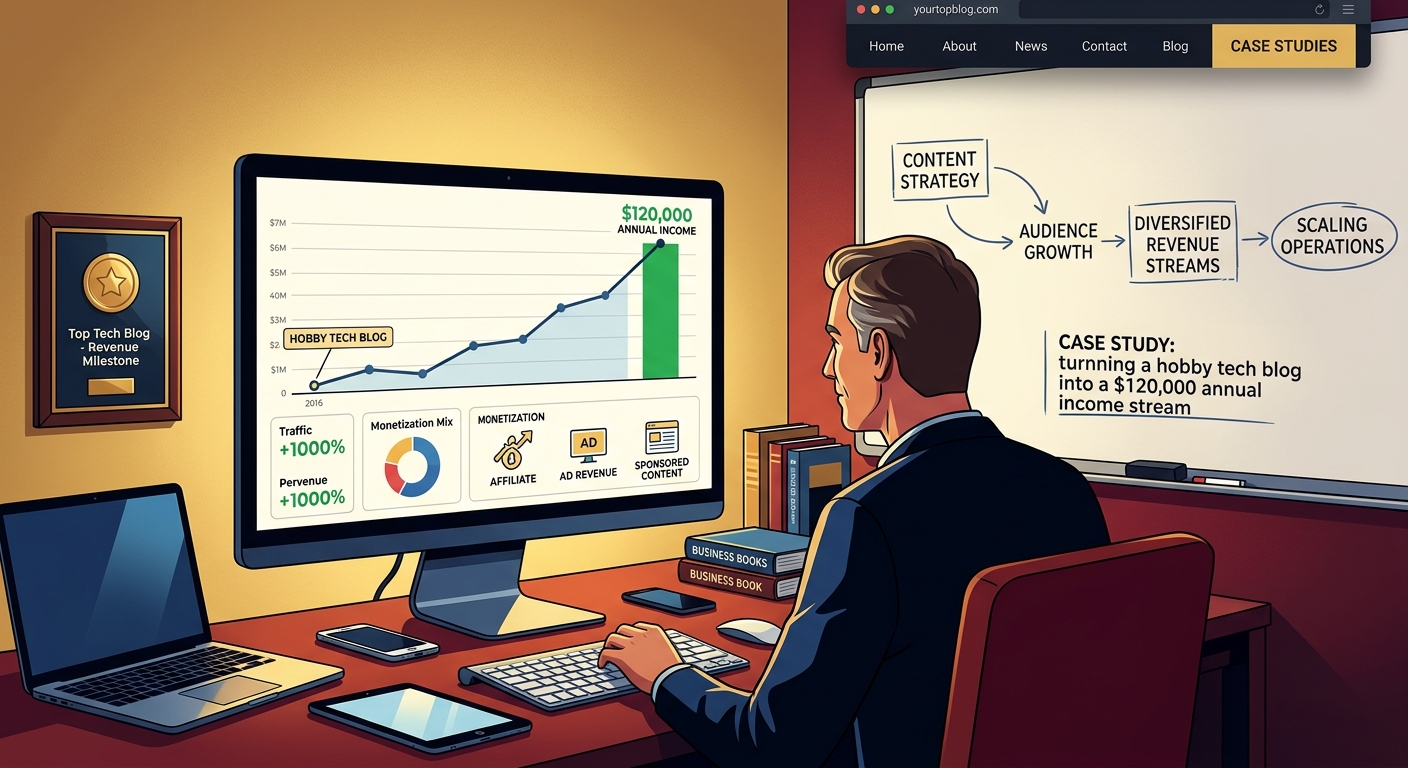
Display ads are the simplest way to start earning.
You add code to your site. Ads appear. You get paid when people see them or click them.
Google AdSense is where most bloggers start. The approval process is straightforward if you have original content and decent traffic. Expect to earn between $5 and $30 per 1,000 page views depending on your niche.
Finance and insurance blogs earn more. Crafts and recipes earn less. Your hobby determines your rates.
But AdSense isn’t the end goal. It’s the starting point.
Once you hit 50,000 monthly sessions, apply to premium ad networks like Mediavine or AdThrive. These networks pay 2 to 4 times more than AdSense for the same traffic. A blog earning $500 monthly from AdSense might jump to $1,500 or $2,000 with a premium network.
Common mistakes kill your ad revenue before it starts. Poor ad placement, slow site speed, and mobile optimization issues all reduce earnings. Learn about common AdSense mistakes that are costing you thousands every month before you implement any advertising strategy.
Here’s what realistic ad revenue looks like at different traffic levels:
| Monthly Page Views | AdSense Earnings | Premium Network Earnings |
|---|---|---|
| 10,000 | $50 – $150 | Not eligible |
| 25,000 | $125 – $375 | Not eligible |
| 50,000 | $250 – $750 | $500 – $1,500 |
| 100,000 | $500 – $1,500 | $1,500 – $4,000 |
| 250,000 | $1,250 – $3,750 | $5,000 – $12,000 |
These numbers assume average RPM (revenue per thousand impressions) rates. Your actual earnings will vary based on niche, seasonality, and user engagement.
Affiliate Marketing for Hobby Bloggers
Affiliate marketing works better than ads for most hobby blogs.
Here’s why. When you write about your hobby, you naturally mention products you use. Camera bloggers talk about lenses. Woodworkers discuss router bits. Gardeners recommend seed varieties.
Those product mentions can become affiliate links.
You earn a commission when readers buy through your links. Commissions range from 1% to 50% depending on the program and product category. Amazon Associates pays 1% to 10%. Specialized hobby retailers often pay 10% to 20%. Digital products and courses can pay 30% to 50%.
The strategy isn’t complicated. It just requires honesty and relevance.
Write helpful content first. Add affiliate links second.
A detailed tutorial on building a raised garden bed naturally includes links to lumber, screws, and soil. A camera review includes links to the camera body, recommended lenses, and memory cards. A recipe post links to specialty ingredients or kitchen tools.
Never recommend products you haven’t used or wouldn’t buy yourself. Your readers trust you because you’re genuinely passionate about the topic. Break that trust with bad recommendations and your income disappears.
Focus on high converting affiliate programs that actually pay bloggers rather than chasing every possible partnership. Three to five solid affiliate relationships generate more income than twenty mediocre ones.
Track which content drives affiliate sales. Double down on those topics. A single well-optimized product review or comparison post can generate hundreds or thousands in monthly commissions.
Creating and Selling Digital Products

Your expertise has value beyond page views and affiliate commissions.
Digital products let you capture that value directly.
The beauty of digital products is the margin. Create once, sell repeatedly. No inventory. No shipping. No customer service headaches beyond email support.
Common digital products for hobby bloggers include:
- Ebooks and guides
- Video courses
- Templates and worksheets
- Photography presets or editing tools
- Printable planners or trackers
- Membership communities
- Email courses
Start small. Don’t try to create a $500 course before you’ve sold a $15 ebook.
Test the market with a simple PDF guide. Pick your most popular blog post. Expand it into a comprehensive resource with additional examples, worksheets, or templates. Price it between $10 and $30.
Promote it through your email list and relevant blog posts.
If it sells, you’ve validated the concept. Create something bigger. If it doesn’t sell, you’ve learned what your audience doesn’t want without investing months in development.
A photography blogger might sell Lightroom presets for $25. A meal planning blogger could offer weekly meal plan templates for $15 monthly. A productivity blogger might create a course on building morning routines for $99.
The key is solving a specific problem your audience already has. Your blog content reveals those problems through comments, emails, and search queries that bring people to your site.
Building an Email List That Converts
Every successful hobby blogger has an email list.
It’s not optional.
Your email list is the only audience you truly own. Social media platforms change algorithms. Search engines update rankings. But your email list stays with you.
Start building it from day one.
Offer something valuable in exchange for email addresses. A free checklist, template, mini course, or resource library works well. Make it relevant to your blog’s main topic and genuinely useful.
A hiking blog might offer a trail preparation checklist. A knitting blog could provide a yarn weight conversion chart. A personal finance blog might share a budget template.
Place signup forms in multiple locations. After your introduction paragraph, in your sidebar, at the end of posts, and as an exit intent popup.
Send regular emails. Weekly is ideal. Biweekly works. Monthly is the minimum frequency to stay relevant.
Your emails should provide value, not just promote products. Share your best new content, answer common questions, and offer exclusive tips. When you do promote affiliate products or your own offerings, your audience will be receptive because you’ve built trust.
Email subscribers convert at much higher rates than regular blog visitors. A typical blog visitor might have a 1% to 3% conversion rate for affiliate products. An engaged email subscriber might convert at 10% to 20%.
That difference compounds over time.
Sponsored Content and Brand Partnerships
Brands pay bloggers to create content featuring their products.
These partnerships can be incredibly lucrative once you have established traffic and authority.
A sponsored post typically pays between $200 and $2,000 depending on your traffic, niche, and engagement rates. Some bloggers with highly engaged audiences charge $5,000 or more per sponsored post.
Brands want authentic content that resonates with your audience. They’re not looking for obvious advertisements. They want your genuine perspective on how their product fits into your hobby.
Wait until you have at least 25,000 monthly visitors before actively pursuing sponsorships. Brands want proof that your content reaches people.
Create a simple media kit showing your traffic stats, audience demographics, social media following, and previous collaboration examples. Include your rates and contact information.
Pitch brands you genuinely use and recommend. Your outreach will be more authentic and your content will be better.
Always disclose sponsored content clearly. It’s legally required and maintains trust with your audience.
The best sponsored partnerships become ongoing relationships. A camping blogger might partner with an outdoor gear company for quarterly reviews. A food blogger could work with a kitchen appliance brand on a monthly recipe series.
These recurring partnerships provide predictable income and reduce the time spent on outreach.
Diversifying Your Revenue Streams
The most successful hobby bloggers don’t rely on a single income source.
They stack multiple revenue streams.
Here’s a realistic breakdown of how a hobby blog earning $5,000 monthly might structure income:
- Display ads: $1,800 (36%)
- Affiliate commissions: $1,500 (30%)
- Digital products: $1,000 (20%)
- Sponsored posts: $500 (10%)
- Coaching or consulting: $200 (4%)
This diversification protects you when one stream underperforms. Holiday seasons might reduce ad rates. Affiliate programs might change commission structures. Having multiple income sources provides stability.
Consider passive income streams every blogger should add beyond AdSense to maximize your earning potential without proportionally increasing your workload.
The goal is building a business that generates income even when you’re not actively working. Display ads and affiliate links on existing content do this. Evergreen digital products do this. Automated email sequences promoting your offerings do this.
“The bloggers who treat their hobby blogs like actual businesses are the ones who build sustainable income. That means diversification, systems, and long-term thinking instead of chasing trends.” – Anonymous successful blogger
Common Mistakes That Kill Monetization
Most hobby bloggers sabotage their own income potential.
Here are the mistakes to avoid.
Monetizing too early. Adding ads to a blog with 1,000 monthly visitors creates a terrible user experience for minimal revenue. Build traffic first. Monetize second.
Ignoring SEO fundamentals. Your hobby expertise means nothing if people can’t find your content. Learn why your blog posts aren’t ranking and how to fix it before publishing dozens more articles.
Promoting too many affiliate products. Recommending everything dilutes trust. Be selective. Only promote products you genuinely use and believe in.
Neglecting mobile optimization. More than 60% of blog traffic comes from mobile devices. If your site loads slowly or looks broken on phones, you’re losing money.
Inconsistent publishing. Posting three times one week and nothing for a month kills momentum. Pick a sustainable schedule and stick to it.
Copying other bloggers’ strategies without testing. What works for a food blogger won’t necessarily work for a tech blogger. Test strategies in your niche with your audience.
Giving up too soon. Most hobby blogs take 12 to 18 months to generate meaningful income. The bloggers who succeed are simply the ones who don’t quit.
Scaling From Side Income to Full-Time Revenue
Turning a hobby blog into full-time income requires strategic growth.
The path from $500 monthly to $5,000 monthly isn’t just doing more of the same. It requires optimization and expansion.
First, analyze what’s working. Which content drives the most traffic? Which affiliate products convert best? Which topics generate the most engagement?
Double down on winners. Cut or improve losers.
If tutorial content drives 70% of your traffic, create more tutorials. If product reviews generate most of your affiliate income, write more reviews. If video content gets shared more than written posts, invest in video production.
Outsource or automate repetitive tasks. Hire a virtual assistant for social media scheduling. Use tools for SEO research and competitor analysis. Buy quality stock photos instead of spending hours searching for free ones.
Your time becomes more valuable as your income grows. Spending four hours to save $50 makes sense when you earn $500 monthly. It doesn’t make sense when you earn $5,000 monthly.
Consider whether you want to charge for premium content using a data-driven decision framework as your audience grows and your expertise deepens.
Study successful bloggers in your niche, but don’t copy them exactly. Learn from their strategies, then adapt those strategies to your unique strengths and audience.
Real Numbers From Real Hobby Bloggers
Theory is helpful. Real examples are better.
A food blogger went from $0 to $8,000 monthly AdSense revenue in 18 months by focusing on seasonal recipes and SEO optimization. Her traffic grew from zero to 400,000 monthly page views.
Another example shows a travel blogger earning $15,000 per month with only 50,000 visitors by focusing on high-value affiliate partnerships and sponsored content rather than maximizing traffic.
These cases prove that multiple paths exist to the same destination.
Some bloggers prioritize traffic volume and rely heavily on display ads. Others build smaller, highly engaged audiences and monetize through premium products and services.
Your hobby, personality, and goals determine which path makes sense for you.
A photography blogger might prefer selling presets and courses over writing sponsored posts. A gardening blogger might love partnering with seed companies. A personal finance blogger might focus on high-commission affiliate programs.
There’s no single right answer. There’s only what works for your situation.
Your Next Steps Start Today
Making money from a hobby blog isn’t a fantasy.
It’s a process.
Start by choosing one monetization method to implement this month. Not five. One.
If you have less than 10,000 monthly visitors, focus entirely on growing your blog from 0 to 50,000 monthly visitors before worrying about advanced monetization.
If you already have decent traffic, pick the revenue stream that aligns best with your content and audience. Add display ads, join an affiliate program, or create a simple digital product.
Implement it properly. Track the results. Optimize based on data.
Then add a second revenue stream. Then a third.
The bloggers earning serious income from their hobbies didn’t get there overnight. They got there by taking consistent action, learning from mistakes, and refusing to quit when progress felt slow.
Your hobby blog can become a real income source. The question isn’t whether it’s possible. The question is whether you’ll put in the work to make it happen.