

You’ve published 20, 30, maybe 50 blog posts. You’ve spent hours writing, editing, and hitting publish. But when you check your analytics, the numbers barely move. Single-digit daily visitors. Zero comments. No email signups.
It stings.
You’re not alone, and more importantly, this problem has a solution. Most bloggers make the same handful of mistakes that kill traffic before it even has a chance to grow. The good news? Once you identify these issues, you can fix them systematically and watch your numbers climb.
Most blogs fail to attract traffic because they target competitive keywords, lack proper SEO optimization, publish inconsistently, or ignore promotion entirely. By fixing keyword targeting, optimizing on-page SEO, building backlinks, and leveraging multiple traffic channels, you can transform a stagnant blog into one that attracts thousands of monthly visitors within months.
You’re Targeting the Wrong Keywords
This is the number one reason blogs stay invisible.
You write about “how to lose weight” or “best travel destinations” and wonder why Google ignores you. These topics have been covered by major publications with massive authority. You’re competing against WebMD, Condé Nast, and brands with budgets in the millions.
New blogs need to start with low competition keywords. These are specific, long-tail phrases that bigger sites ignore because the search volume looks too small. But here’s the thing: ten articles ranking for keywords with 100 monthly searches each will bring you 1,000 visitors. That’s real traffic you can build on.
Instead of “how to lose weight,” try “how to lose weight after thyroid surgery for women over 40.” Instead of “best travel destinations,” write “best budget weekend trips from Austin for families with toddlers.”
The how to find low competition keywords that actually drive traffic guide walks through the exact process I use to identify these opportunities.
Here’s how to fix your keyword strategy:
- Open a free keyword research tool like Ubersuggest or AnswerThePublic.
- Enter your broad topic and look for questions or phrases with under 500 monthly searches.
- Check the top 10 results in Google for each keyword. If you see mostly forums, small blogs, or weak content, that’s your opportunity.
- Write a comprehensive article targeting that exact phrase in your title, first paragraph, and headings.
- Repeat this process for every new post you publish.
“The biggest mistake I see new bloggers make is trying to compete for keywords they have no chance of ranking for. Start small, build authority, then go after bigger targets.” – Neil Patel
Your On-Page SEO is Broken
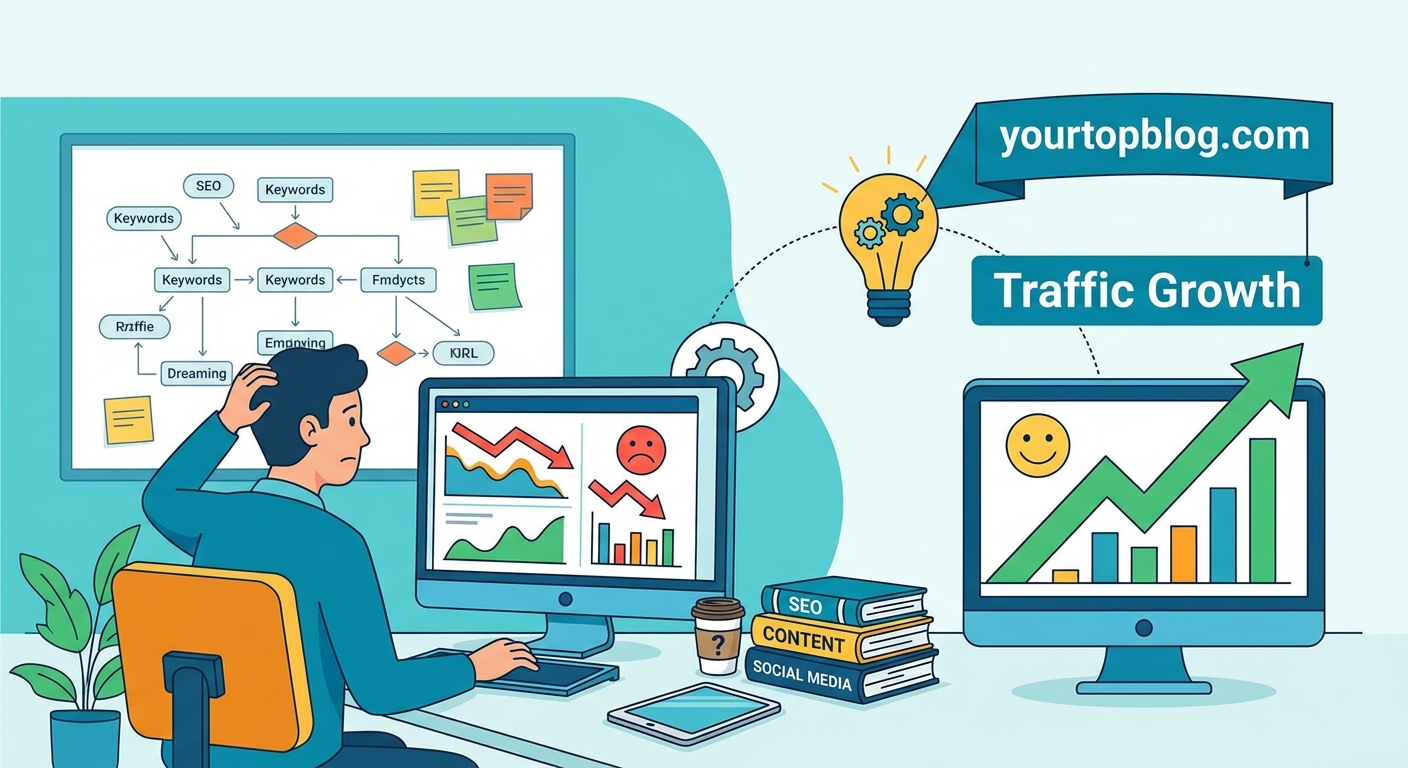
Even if you target the right keywords, poor on-page SEO will keep you buried.
Search engines need clear signals about what your content covers. If your title doesn’t match your content, your headings are vague, or you’re missing basic optimization, Google won’t rank you.
Here are the most common on-page SEO mistakes:
- No keyword in the title tag or meta description
- Headings that don’t include related terms or questions
- Missing alt text on images
- No internal links to other relevant posts
- Slow page load times that frustrate visitors
- Mobile unfriendly layouts that make reading difficult
Let me show you a comparison:
| Weak SEO | Strong SEO |
|---|---|
| Title: “My Favorite Recipes” | Title: “15 Easy Weeknight Dinners for Busy Parents Under 30 Minutes” |
| No headings or only generic ones | Clear H2s answering specific questions |
| Images named “IMG_1234.jpg” | Images named “chicken-stir-fry-recipe.jpg” with descriptive alt text |
| Zero links to other posts | 3-5 contextual internal links per article |
| 8-second load time | Under 3-second load time |
The difference is dramatic. The strong SEO example tells Google exactly what the page offers, helps readers scan the content, and keeps visitors on your site longer.
If you’re struggling with rankings despite publishing regularly, read why your blog posts aren’t ranking and how to fix it for a complete diagnostic checklist.
You’re Not Building Any Backlinks
Backlinks are votes of confidence from other websites. They tell Google your content is worth reading and sharing.
Without backlinks, even perfectly optimized content struggles to rank. This is especially true for new blogs with low domain authority.
You don’t need thousands of links. You need a few high-quality ones from relevant sites in your niche.
Here’s how to start building backlinks this week:
- Find blogs in your niche that accept guest posts by searching “your niche + write for us” in Google.
- Pitch a unique article idea that would genuinely help their audience, not just promote your site.
- Write an exceptional guest post with one natural link back to a relevant article on your blog.
- Comment thoughtfully on popular blogs in your space, adding value to the conversation without spamming.
- Create a free resource (checklist, template, calculator) and reach out to bloggers who might find it useful for their readers.
I’ve seen blogs double their traffic in 60 days by adding just five quality backlinks. It works.
Your Content Isn’t Better Than What Already Ranks
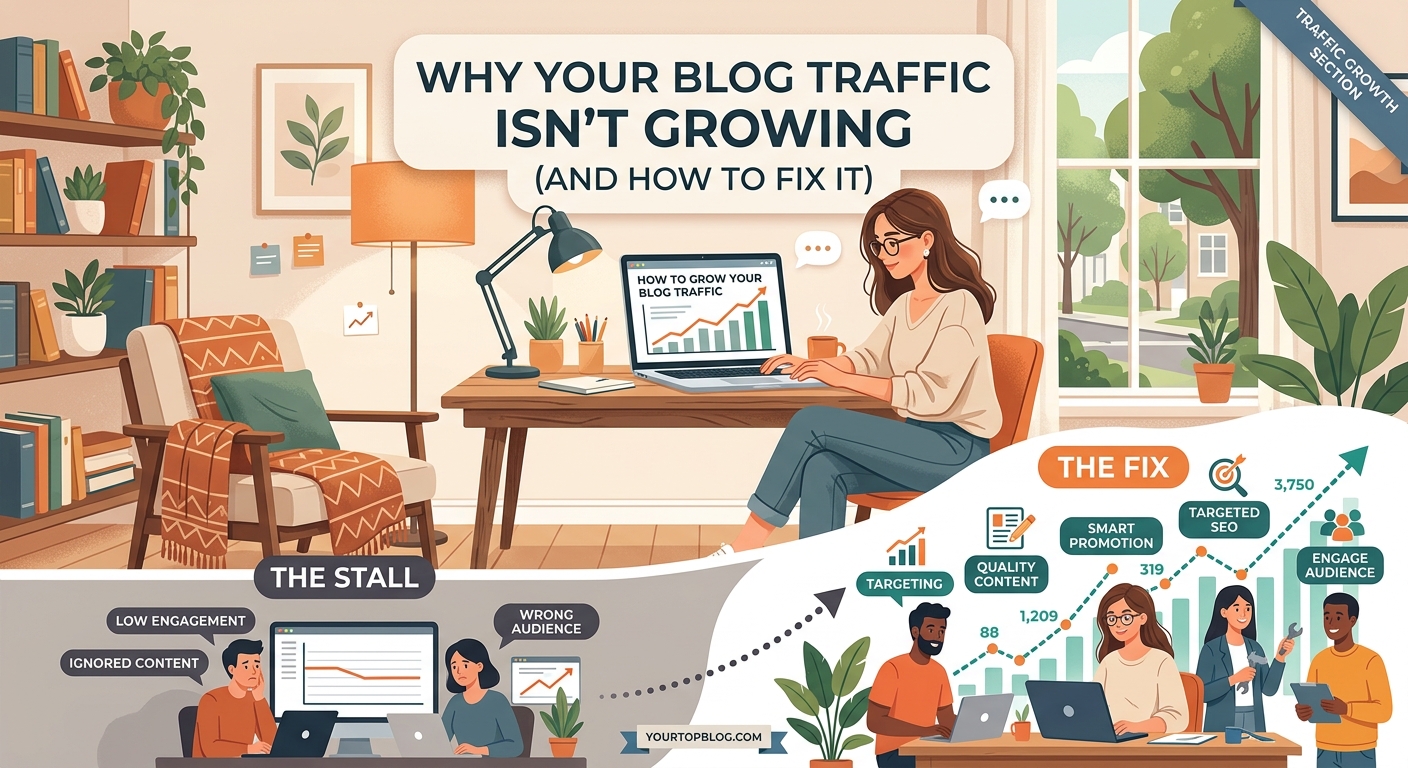
Google ranks the best answer to a search query. If your post doesn’t improve on what’s already ranking, you won’t displace it.
Open an incognito window and search for your target keyword. Read the top three results. Now ask yourself honestly: is your post more helpful, more detailed, more actionable, or more engaging than those?
If not, you have work to do.
Better content means:
- More comprehensive coverage of the topic
- Original examples, case studies, or data
- Clearer explanations that a beginner can follow
- Visuals like screenshots, charts, or diagrams
- Updated information reflecting current best practices
- A unique angle or perspective the other posts miss
Don’t just rehash what everyone else says. Add your experience. Test things yourself. Interview experts. Show real results.
The how I grew my blog from 0 to 50,000 monthly visitors in 6 months case study demonstrates exactly how superior content quality accelerates growth.
You’re Relying Only on Google
SEO is powerful, but it’s slow. You need traffic now while you wait for Google to notice you.
Most successful bloggers use multiple traffic sources:
- Pinterest for visual niches like food, home decor, fashion, and parenting
- Reddit for answering questions in niche subreddits (without spamming)
- Facebook groups where your target audience hangs out
- Email newsletters that bring readers back for every new post
- YouTube videos that link to detailed blog tutorials
- Twitter threads that tease your best insights
The strategy is simple: meet your audience where they already spend time. Share genuinely helpful content. Build relationships. Provide value first.
I’ve watched bloggers get 10,000 visitors from a single Pinterest pin or 5,000 from one well-placed Reddit comment. These channels work if you use them correctly.
Check out 15 free traffic sources every blogger should use in 2024 for a complete breakdown of each platform and how to leverage it.
Your Publishing Schedule is Inconsistent
Publishing one post in January, another in March, and three in June won’t build momentum.
Google rewards sites that publish consistently. Fresh content signals that your site is active and maintained. It also gives you more opportunities to rank for different keywords and attract backlinks.
You don’t need to publish daily. But you do need a schedule you can maintain.
Here’s what works for different commitment levels:
- Minimum viable: One detailed post every two weeks (26 posts per year)
- Growth mode: One post per week (52 posts per year)
- Aggressive: Two to three posts per week (100+ posts per year)
Pick a frequency you can sustain for at least six months. Block time in your calendar. Batch your writing. Build a content pipeline so you’re never scrambling at the last minute.
Consistency beats intensity. A blog with 50 solid posts published steadily will outperform one with 50 posts dumped in two months and then abandoned.
Your Site Speed is Killing Your Rankings
Page speed directly impacts both user experience and SEO. Google has confirmed that site speed is a ranking factor. Slow sites frustrate visitors, who bounce back to search results before your page even loads.
If your blog takes more than three seconds to load, you’re losing traffic and rankings.
Common speed killers include:
- Uncompressed images that are 5MB each
- Too many plugins running simultaneously
- Cheap hosting that can’t handle traffic spikes
- No caching enabled
- Bloated themes with unnecessary features
Test your site with Google PageSpeed Insights or GTmetrix. These free tools identify exactly what’s slowing you down and how to fix it.
For most bloggers, switching to better hosting makes the biggest difference. The complete website hosting guide for bloggers who want maximum uptime and speed covers the best options at every budget level.
You’re Not Tracking the Right Metrics
You can’t improve what you don’t measure.
Many bloggers obsess over total pageviews but ignore the metrics that actually predict growth. Pageviews matter, but they don’t tell you which content works or where your traffic comes from.
Track these metrics instead:
- Organic search traffic (shows SEO progress)
- Top landing pages (reveals what content ranks)
- Average time on page (indicates content quality)
- Bounce rate by page (shows which posts need improvement)
- Traffic sources (tells you where to focus promotion)
- Conversion rate for email signups (measures audience building)
Set up Google Analytics and Google Search Console if you haven’t already. Check them weekly. Look for patterns. Double down on what works.
When you see a post getting traction, update it with fresh information, add more internal links to it, and build backlinks to it. Amplify your winners.
Your Headlines Don’t Make People Click
Your headline is the first and often only impression you make. If it doesn’t grab attention in search results or social media, your content never gets read.
Weak headlines are vague, boring, or fail to communicate value.
Compare these:
- Weak: “Blogging Tips”
-
Strong: “7 Blogging Mistakes That Keep You Stuck at 100 Visitors Per Month”
-
Weak: “How to Use Pinterest”
- Strong: “How I Drive 50,000 Monthly Visitors From Pinterest in Just 30 Minutes Per Week”
Strong headlines include numbers, specificity, and a clear benefit. They promise a transformation or solution. They make the reader curious.
Spend as much time crafting your headline as you do writing your introduction. Test different versions. Use headline analyzer tools like CoSchedule or Sharethrough to score your options.
You Haven’t Built an Email List
Traffic from Google or social media is rented. Those platforms control who sees your content. Algorithm changes can cut your traffic in half overnight.
Email is the only traffic channel you own.
An email list lets you notify subscribers about new posts, send them directly to your best content, and build a relationship that turns casual readers into loyal fans. Those fans buy your products, join your courses, and share your work.
Start building your list today:
- Choose an email service provider like ConvertKit, MailerLite, or Mailchimp.
- Create a simple opt-in incentive: a checklist, template, or mini-guide related to your niche.
- Add an opt-in form to your sidebar, end of posts, and a dedicated landing page.
- Send a weekly email sharing your newest post plus one helpful tip or resource.
- Track your open rates and click rates to see what resonates.
Even a small list of 100 engaged subscribers can drive meaningful traffic to every post you publish. Over time, this becomes your most valuable asset.
Your Niche is Too Broad or Oversaturated
Trying to be everything to everyone means you’re nothing to anyone.
A blog about “lifestyle” competes with millions of other lifestyle blogs. A blog about “budgeting for single parents raising kids with special needs” has a clear, understandable focus.
Narrow niches have three advantages:
- Less competition for keywords
- More targeted audience that’s easier to reach
- Stronger authority and trust with readers
You can always expand later once you’ve established yourself. But starting narrow gives you a fighting chance.
If your current niche isn’t working, it’s okay to pivot. Choose a specific subset of your current topic and commit to it for six months. Publish 25 posts in that focused area and see what happens.
You’re Not Promoting Your Content
Publishing is not promoting. Hitting the publish button and hoping people find your post is like opening a store in the middle of a forest and wondering why no customers show up.
Every post you publish deserves at least three hours of promotion:
- Share it on all your social media profiles
- Post it in relevant Facebook groups or subreddits (where allowed and appropriate)
- Send it to your email list
- Pin it to Pinterest with multiple eye-catching graphics
- Reach out to bloggers or influencers who might find it useful
- Repurpose key points into Twitter threads or LinkedIn posts
- Add internal links from older posts to drive traffic to the new one
Promotion is not optional. It’s the difference between 10 visitors and 1,000.
The most successful bloggers spend as much time promoting content as they do creating it. Follow their lead.
Your Technical Setup is Holding You Back
Sometimes the problem isn’t your content. It’s your technical foundation.
If your site isn’t indexed by Google, has broken links, uses the wrong permalink structure, or blocks search engines with your robots.txt file, no amount of great content will help.
Run these technical checks:
- Search “site:yourdomain.com” in Google to confirm your posts are indexed
- Use Google Search Console to check for crawl errors and indexing issues
- Verify your sitemap is submitted and accessible
- Check that your robots.txt file isn’t blocking important pages
- Ensure you’re using HTTPS, not HTTP
- Confirm your site is mobile-friendly using Google’s Mobile-Friendly Test
These issues are fixable, but you need to know they exist first. Run the diagnostics and address anything that’s broken.
If you’re unsure about your technical setup, should you build your site on WordPress, Wix, or custom code helps you understand the pros and cons of each platform.
You’re Giving Up Too Soon
Most bloggers quit right before they would have succeeded.
SEO takes time. Google needs months to evaluate your content, especially if you’re a new site. The traffic you’re working for today won’t show up for three to six months.
This delay discourages people. They publish for two months, see no results, and assume it’s not working.
But here’s what’s actually happening behind the scenes:
- Google is crawling and indexing your content
- Your domain authority is slowly increasing
- Backlinks are being discovered and counted
- Your posts are gradually climbing from position 80 to 50 to 30
- Your site is building trust signals that compound over time
Traffic growth is exponential, not linear. You might see barely any movement for four months, then suddenly triple your traffic in month five.
The bloggers who succeed are the ones who keep publishing, keep optimizing, and keep promoting even when the numbers look discouraging.
Commit to one year of consistent effort before you evaluate whether your blog is working. That’s the minimum timeline for SEO to mature.
Turning Your Blog Into a Traffic Magnet
You now know exactly why your blog isn’t getting traffic and what to do about it.
Pick the three issues that resonate most with your situation. Fix those first. Don’t try to tackle everything at once.
Start with keyword research. Make sure every new post targets a specific, low-competition phrase. Then optimize your on-page SEO. Then start building a few backlinks. Then diversify your traffic sources.
Each fix compounds. Better keywords get you initial rankings. Better SEO improves those rankings. Backlinks push you higher. Multiple traffic sources bring visitors while SEO builds. Consistency amplifies all of it.
Your blog can grow. The path is clear. Now it’s time to take action.