

Choosing between long tail and short tail keywords feels like standing at a fork in the road when you’re just starting your blog. One path promises massive search volume. The other offers easier wins and faster results. Most new bloggers pick the wrong one and waste months creating content that never ranks.
Long tail keywords contain three or more words with lower search volume but higher conversion rates and easier ranking potential. Short tail keywords are one to two words with massive search volume but intense competition. New bloggers should prioritize long tail keywords for the first six to twelve months to build authority before targeting competitive short tail terms.
What makes a keyword long tail or short tail
The difference isn’t just about word count.
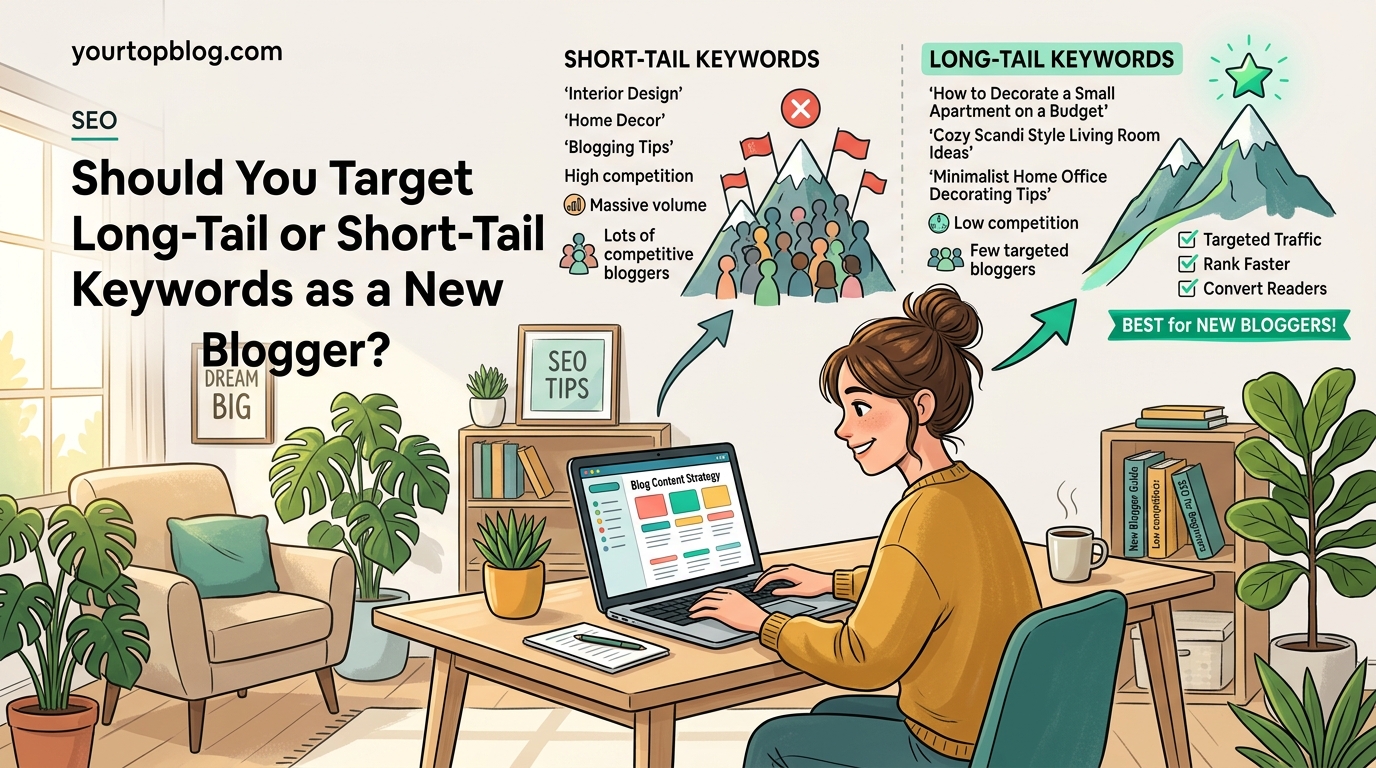
Short tail keywords are broad search terms with one or two words. Think “running shoes” or “coffee maker.” They attract huge monthly search volumes, sometimes reaching hundreds of thousands of searches. But they also attract every major brand, established blog, and e-commerce giant fighting for the top spots.
Long tail keywords expand on those basic terms with specific details. “Best running shoes for flat feet women” or “coffee maker under 50 dollars for small kitchen.” These phrases get fewer searches per month, but they tell you exactly what the searcher wants.
The search volume drops significantly as keywords get longer. A short tail keyword might pull 100,000 monthly searches. The long tail version might only get 500. But those 500 people are much closer to making a decision.
Here’s what separates them in practice:
- Short tail keywords have high competition and vague intent
- Long tail keywords show specific problems and clearer buying signals
- Short tail terms need massive domain authority to rank
- Long tail phrases let new sites compete immediately
Why new bloggers struggle with short tail keywords
I learned this lesson the hard way in my first year of blogging.
I spent three months writing what I thought was amazing content targeting “affiliate marketing.” The post had 3,000 words, solid examples, and helpful screenshots. It never cracked the top 100 results on Google.
The problem wasn’t my content quality. The problem was competing against sites with thousands of backlinks, years of domain history, and entire teams creating content.
Short tail keywords require resources most new bloggers don’t have. You need:
- A domain with established authority and trust signals
- Dozens or hundreds of high quality backlinks
- Multiple supporting articles to show topical depth
- Months or years of consistent publishing history
Without these elements, Google won’t even consider ranking your post on page one. The algorithm sees your brand new domain and assumes the established sites offer more value.
Even if you somehow rank for a short tail keyword early on, the traffic rarely converts well. Someone searching “cameras” could want to buy one, repair one, learn photography, or just browse. You can’t optimize content for such vague intent.
How long tail keywords change the game for beginners
Long tail keywords level the playing field.
When I switched my strategy to target phrases like “how to promote affiliate links without a website,” my content started ranking within weeks instead of months. The search volume was lower, but the visitors who found my posts were exactly the people I wanted to reach.
These specific phrases work better for new bloggers because:
- Competition drops dramatically as keywords get more specific
- You can rank with fewer backlinks and less domain authority
- The content practically writes itself based on the keyword
- Visitors arrive ready to take action instead of just browsing
A food blogger targeting “pasta recipes” faces millions of competing pages. That same blogger targeting “one pot pasta recipes for college students without oven” competes with maybe a few hundred pages. The second keyword also tells you exactly what to include in the post.
The conversion rates tell the whole story. In my experience, long tail keyword traffic converts at 3x to 5x higher rates than short tail traffic. Someone searching for a specific solution is much closer to clicking your affiliate link, signing up for your email list, or buying your product.
Building your keyword strategy from the ground up
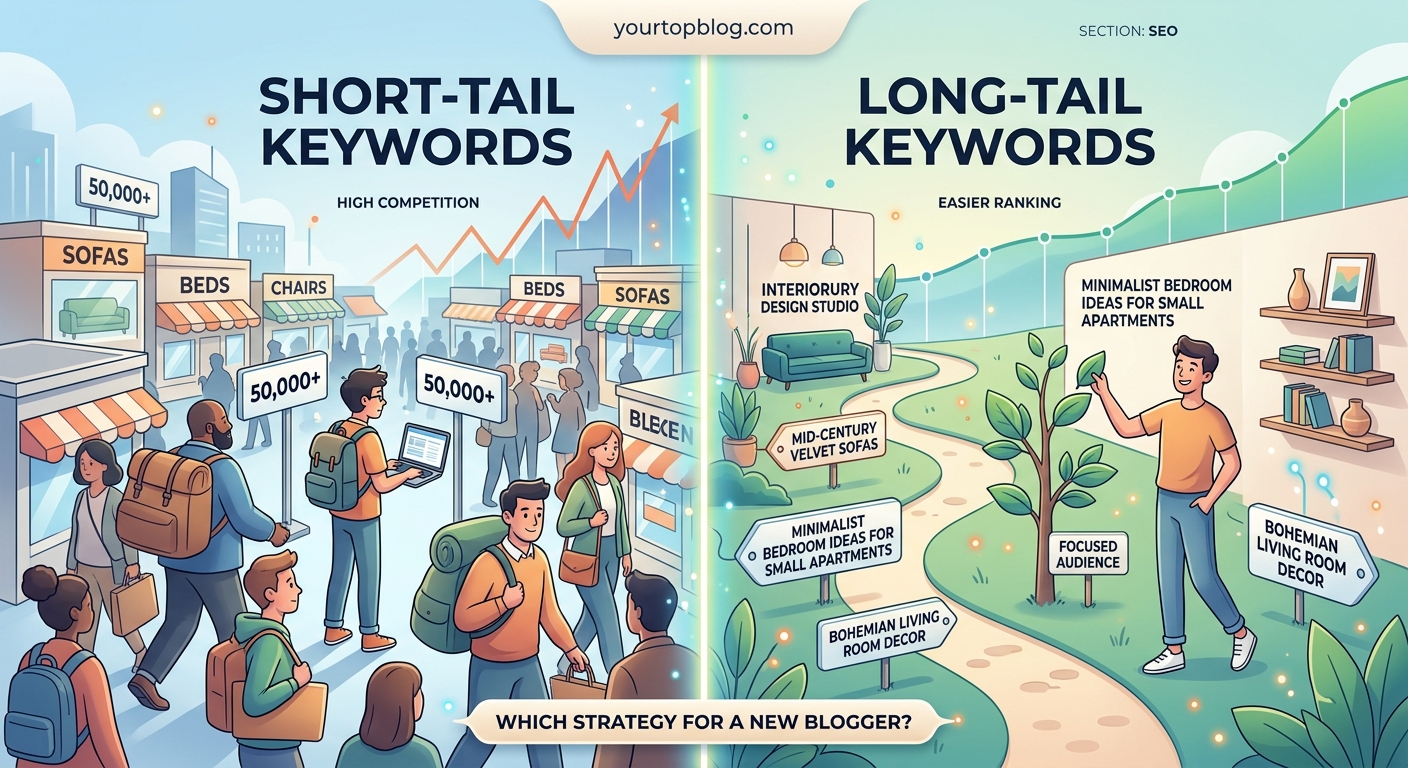
Start with long tail keywords for your first 20 to 30 posts.
This approach builds topical authority in your niche while actually bringing in traffic. Each post targets a specific reader question, ranks faster, and starts generating visitors within weeks.
Here’s the step by step process I use:
- Pick a broad topic in your niche (like “email marketing” for a blogging site)
- Use a keyword tool to find long tail variations with 100 to 1,000 monthly searches
- Filter for keywords with low competition scores or difficulty ratings under 30
- Look for phrases with clear intent that match your monetization strategy
- Create comprehensive content that fully answers the specific question
The how to find low competition keywords that actually drive traffic guide walks through the exact tools and filters I use for this research.
After you’ve published 20 to 30 long tail posts and they’re ranking, you can start mixing in medium competition keywords. These bridge the gap between pure long tail and ultra competitive short tail terms.
The search volume trap most beginners fall into
Higher search volume doesn’t automatically mean more traffic.
A keyword with 50,000 monthly searches sounds amazing until you realize you’re ranking on page 47. A keyword with 300 monthly searches that puts you in position 3 will send more actual visitors to your site.
I track this data across multiple blogs. Here’s what the numbers typically look like:
| Keyword Type | Monthly Searches | Ranking Position | Actual Monthly Clicks |
|---|---|---|---|
| Short tail | 45,000 | 67 | 12 |
| Medium tail | 3,200 | 18 | 89 |
| Long tail | 280 | 4 | 67 |
The long tail keyword with the smallest search volume delivers more traffic than the short tail keyword with 160x more searches. Position matters more than volume when you’re starting out.
This is why why your blog posts aren’t ranking and how to fix it focuses heavily on choosing keywords you can actually rank for instead of chasing impressive search numbers.
When to start targeting short tail keywords
You’re ready for short tail keywords when you have proof of concept.
That means:
- At least 50 published posts on your blog
- Consistent rankings in positions 1 to 10 for long tail keywords
- A growing backlink profile from natural links and outreach
- Six months to one year of publishing history
- Steady organic traffic growth month over month
Even then, don’t abandon long tail keywords completely. The best strategy mixes both types based on your current authority level.
I still target long tail keywords on established blogs because they convert so well. A post ranking for “best budget microphone for podcast beginners under 100” might only get 200 visitors per month, but 15% of them click my affiliate links. That’s 30 potential commissions from a single post.
Short tail keywords work better for building brand awareness and capturing top of funnel traffic. Once you have the authority to rank for them, they bring in browsers who might not convert immediately but could return later.
Matching keywords to your monetization model
Different keyword types support different revenue streams.
If you’re building an AdSense site, you want maximum pageviews. Long tail keywords still work better initially, but you’ll eventually want to rank for short tail terms that bring in thousands of daily visitors. The how to get approved for Google AdSense in 2024 even as a new blogger process becomes much easier when you have traffic from rankable keywords.
For affiliate marketing, long tail keywords with buying intent crush short tail informational terms. Someone searching “best standing desk for home office under 500” is ready to buy. Someone searching “standing desk” is probably just learning about them.
The 7 high-converting affiliate programs that actually pay bloggers in 2024 article shows how to match product types with keyword intent for maximum commissions.
Email list building works well with both types. Long tail keywords bring fewer but more engaged subscribers. Short tail keywords fill your list faster but with less targeted readers.
Common mistakes that kill keyword strategies
Mixing up keyword difficulty with keyword length causes the most problems.
Some long tail keywords are brutally competitive. “Best credit cards for travel rewards” has six words but every major financial site targets it. Some short tail keywords have low competition because nobody searches for them.
Always check the actual competition metrics, not just the word count.
Other mistakes I see constantly:
- Targeting keywords with zero search volume hoping to rank easily
- Ignoring search intent and creating the wrong content type
- Stuffing exact match keywords into every paragraph
- Choosing keywords that don’t match your monetization strategy
- Giving up on posts after two weeks when they haven’t ranked yet
The complete on-page SEO checklist for bloggers in 2024 helps avoid technical mistakes that prevent even easy keywords from ranking.
Tracking what actually works for your blog
Set up proper tracking before you publish your first post.
Google Search Console shows exactly which keywords bring traffic to each URL. This data reveals patterns you can’t see any other way. Maybe your long tail keywords about “budget” items convert better than “premium” keywords. Maybe how-to content ranks faster than comparison posts.
I check Search Console every Monday morning. The report shows:
- Which keywords moved up in rankings
- New keywords that started sending traffic
- Posts that dropped and need updates
- Opportunities to target related keywords
After three months of data, you’ll see clear patterns about which keyword types work best for your specific niche and writing style. Double down on what’s working instead of following generic advice.
Creating content that ranks for both keyword types
The content format matters as much as the keyword choice.
Long tail keywords usually need focused, specific posts. A 1,200 word guide answering one exact question works perfectly. You don’t need to cover every possible angle. Just solve the specific problem the keyword describes.
Short tail keywords need comprehensive pillar content. These posts run 3,000 to 5,000 words and cover the entire topic from multiple angles. They link out to your long tail posts for specific details.
The best SEO strategy isn’t choosing between long tail and short tail keywords. It’s building a content ecosystem where long tail posts support short tail pillars, and everything links together to show topical authority.
This structure is exactly how how I grew my blog from 0 to 50,000 monthly visitors in 6 months worked. Start with specific long tail posts, then create comprehensive guides that tie them together.
Your keyword roadmap for the first year
Month 1 to 3: Target only long tail keywords with under 500 monthly searches and low competition. Publish 2 to 3 posts per week. Focus on getting your first rankings and traffic.
Month 4 to 6: Mix in medium tail keywords with 500 to 2,000 monthly searches. Keep publishing long tail content but add some slightly more competitive terms. Start building backlinks through outreach.
Month 7 to 9: Create your first pillar posts targeting medium competition short tail keywords. Support them with internal links from your long tail posts. Increase content quality and depth.
Month 10 to 12: Evaluate what’s working and scale up. If long tail keywords are crushing it, create more. If you’re ranking for medium terms, push into more competitive short tail space.
This timeline assumes consistent publishing and solid content quality. Your results will vary based on niche competition, content quality, and how well you match search intent.
Making the strategy work with limited time
You don’t need to publish daily to make this work.
Two well-researched long tail posts per week beats seven rushed short tail posts. Quality and keyword targeting matter more than publishing frequency.
I’ve seen blogs succeed publishing just once per week when every post:
- Targets a winnable long tail keyword
- Fully answers the searcher’s question
- Includes examples and actionable steps
- Gets promoted to relevant audiences
The 15 free traffic sources every blogger should use in 2024 list shows how to amplify each post beyond just SEO traffic.
Batch your keyword research once per month. Spend three hours finding 20 to 30 long tail keywords, then write posts targeting them throughout the month. This approach is more efficient than researching keywords one at a time.
Turning keyword rankings into actual income
Rankings mean nothing without monetization.
Every keyword you target should connect to a revenue stream. Long tail keywords work perfectly for affiliate content because the specific intent matches specific products. Someone searching “quiet blender for early morning smoothies” is ready to buy a quiet blender.
Layer multiple monetization methods as your traffic grows. Start with affiliate links in your long tail posts. Add display ads once you hit the minimum traffic requirements. Build an email list to promote your own products later.
The 7 passive income streams every blogger should add beyond AdSense guide shows how to stack revenue without overwhelming readers.
Match your keyword strategy to your income timeline. Need money in 60 days? Target long tail buyer keywords for affiliate products. Building for long term passive income? Mix in informational content that ranks and compounds over time.
Why this approach builds sustainable traffic
Long tail keywords create a foundation that lasts for years.
Those specific posts keep ranking and sending traffic long after you publish them. I have posts from three years ago still bringing in 50 to 100 visitors per month from long tail keywords. That’s 600 to 1,200 annual visitors from a single post I wrote once.
Multiply that across 50 or 100 long tail posts and you have serious traffic volume. Each post is a small stream. Together they become a river.
Short tail keywords are more volatile. Algorithm updates shuffle rankings constantly. Competitors launch aggressive link building campaigns. Your position 3 ranking might drop to position 12 next month.
Long tail keywords are more stable because fewer people compete for them. Once you rank, you tend to stay ranked with minimal maintenance.
Your next steps for keyword success
Open a spreadsheet right now.
Create columns for keyword, search volume, difficulty, and search intent. Spend the next hour finding 10 long tail keywords you can target in your niche. Look for phrases between 100 and 500 monthly searches with clear intent.
Pick the easiest one and write a post this week. Don’t overthink it. Just create helpful content that answers the question in the keyword. Publish it, submit the URL to Google Search Console, and move on to the next keyword.
Repeat this process for three months. You’ll have 12 to 36 posts targeting winnable keywords. Some will rank in weeks. Others might take months. But you’ll start seeing real organic traffic instead of just hoping your short tail posts eventually rank.
The difference between bloggers who succeed and those who quit is usually just keyword selection. Choose keywords you can actually rank for, create content that deserves to rank, and give Google time to recognize your value. That’s the entire game.