

Growing your website traffic feels impossible when every SEO guide tells you to build backlinks. But what if you don’t have the budget for outreach campaigns or the time to chase guest posting opportunities?
The truth is, you can grow organic traffic dramatically without a single backlink. I’ve seen bloggers double their visitors in months using on-page optimization, strategic content, and smart keyword targeting. The strategies below work because they focus on what search engines actually reward: helpful content that answers real questions.
Organic traffic growth doesn’t require expensive backlink campaigns. By targeting low competition keywords, optimizing on-page SEO elements, creating comprehensive content that matches search intent, and improving site speed and user experience, small business owners and bloggers can achieve significant traffic increases using free or affordable tools and consistent content publishing schedules.
Target Keywords Your Competition Ignores
Most websites chase the same high-volume keywords. That’s why they struggle.
The smarter approach targets long-tail keywords with lower competition. These phrases might bring fewer searches individually, but they convert better and rank faster.
Start by identifying questions your audience actually asks. Use Google’s autocomplete feature. Type your main topic and watch what suggestions appear. Those are real searches from real people.
Check the “People also ask” boxes on search results pages. Each question represents a content opportunity. Screenshot these sections and build a spreadsheet of potential topics.
Finding low competition keywords becomes easier when you focus on specific problems rather than broad topics. Instead of targeting “weight loss,” aim for “how to lose weight after pregnancy without gym membership.”
Free tools like Google Search Console show which queries already bring visitors to your site. Sort by impressions and look for terms where you rank between positions 8 and 20. These represent low-hanging fruit. A few optimizations can push them to page one.
Optimize Every Page Like Your Traffic Depends on It
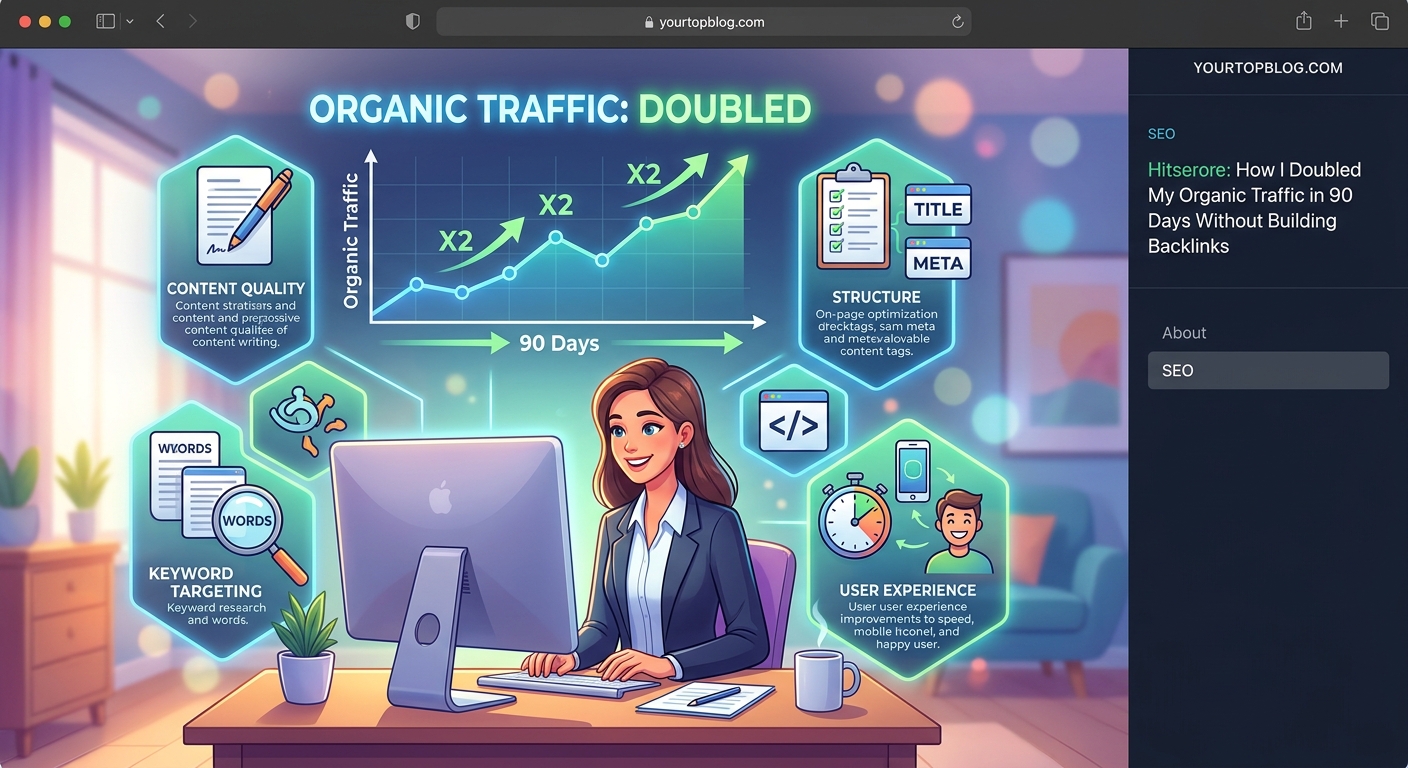
Because it does.
Search engines read your content differently than humans do. They look for specific signals that indicate relevance and quality.
Your title tag matters more than almost anything else. Include your target keyword near the beginning. Keep it under 60 characters so it doesn’t get cut off in search results.
Meta descriptions don’t directly impact rankings, but they affect click-through rates. Write them like ad copy. Tell searchers exactly what they’ll learn and why they should click your result instead of the nine others.
Header tags create structure. Use H2s for main sections and H3s for subsections. Include variations of your target keyword naturally. Don’t force it.
Image optimization gets overlooked constantly. Compress files before uploading. A 2MB image slows your page load by seconds. Use descriptive file names like “keyword-research-spreadsheet.png” instead of “IMG_1234.png.”
Alt text serves two purposes. It helps visually impaired users understand images and gives search engines context. Describe what the image shows in one sentence.
Internal linking distributes authority across your site. When you publish new content, link to it from relevant older posts. This helps search engines discover new pages faster and keeps visitors on your site longer.
Your on-page SEO checklist should become automatic. Run through these elements before hitting publish on any post.
Create Content That Actually Answers Questions
Thin content doesn’t rank anymore.
Search engines prioritize comprehensive resources that fully address a topic. That doesn’t mean writing 3,000 words of fluff. It means covering every angle of a question.
Before writing, analyze the top 10 results for your target keyword. What topics do they all cover? What questions do they answer? Your content needs to match or exceed that depth.
Use the “inverted pyramid” structure. Put the most important information first. Many readers skim, so front-load your value.
Break up text with formatting:
- Short paragraphs of 2-3 sentences
- Bullet points for scannable lists
- Numbered steps for processes
- Bold text for key concepts
- Blockquotes for important takeaways
The best content doesn’t just answer the question asked. It anticipates and answers the follow-up questions readers haven’t thought to ask yet.
Tables work brilliantly for comparisons. Here’s how different content types perform for traffic growth:
| Content Type | Time to Rank | Traffic Potential | Difficulty |
|---|---|---|---|
| How-to guides | 2-4 months | High | Medium |
| Listicles | 1-3 months | Medium | Low |
| Case studies | 3-6 months | Medium | Low |
| Tool comparisons | 2-5 months | High | Medium |
| Beginner tutorials | 1-4 months | High | Low |
Update older posts regularly. Search engines favor fresh content. Add new sections, update statistics, and improve examples every 6-12 months.
Understanding why posts don’t rank helps you avoid common content mistakes that kill organic growth.
Speed Up Your Site Before You Publish Another Word
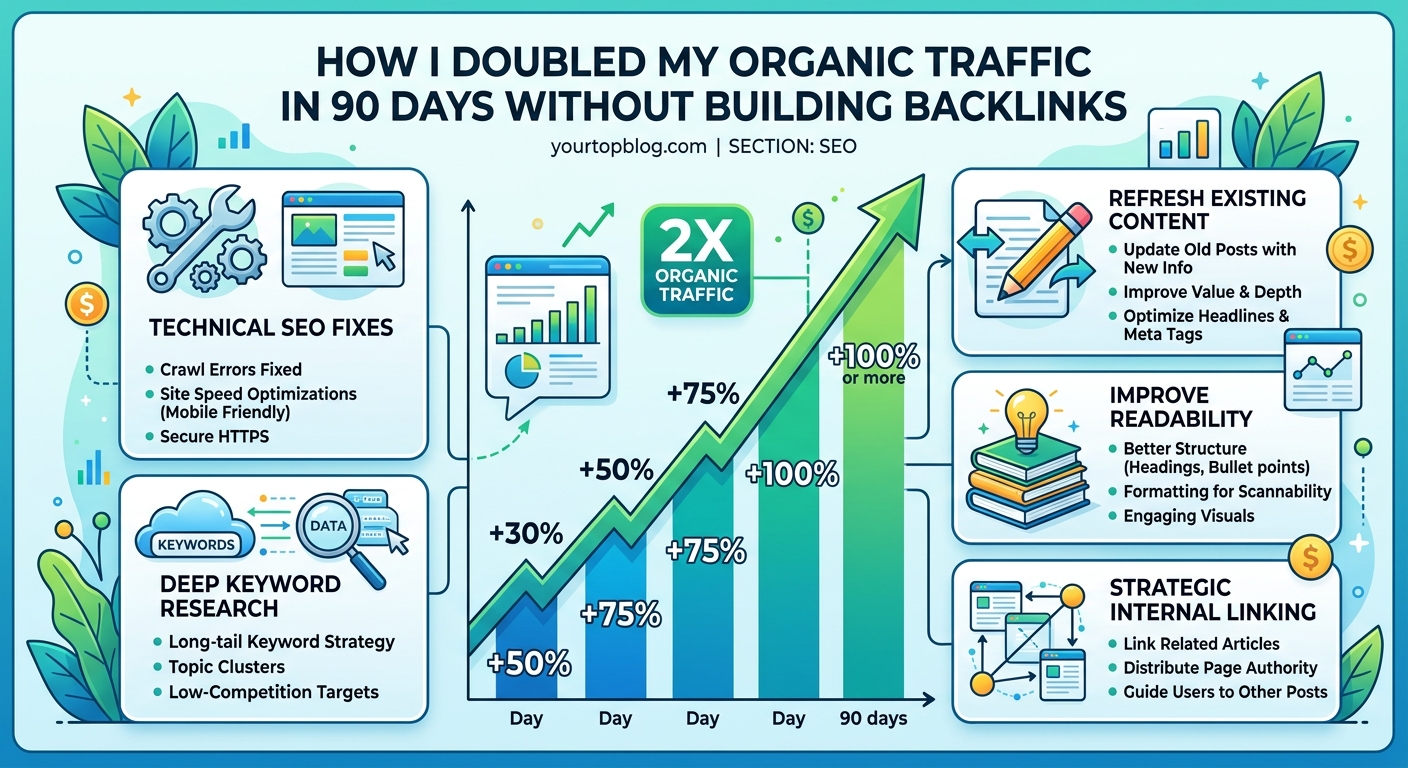
Page speed directly impacts rankings now.
Google’s Core Web Vitals measure loading performance, interactivity, and visual stability. Sites that score poorly get penalized in search results.
Start with image compression. Use tools like TinyPNG or ShortPixel to reduce file sizes by 70% without visible quality loss. This single change can cut page load times in half.
Enable caching. When visitors return to your site, cached versions load instantly instead of rebuilding the entire page. Most hosting providers offer caching plugins or built-in solutions.
Minimize HTTP requests. Every element on your page requires a separate request: images, scripts, stylesheets. Combine files where possible and eliminate unnecessary elements.
Choose fast hosting. Shared hosting costs less but shares server resources with hundreds of other sites. When your site grows past 10,000 monthly visitors, upgrade to managed WordPress hosting or a VPS.
Lazy loading defers image loading until users scroll to them. This speeds up initial page load dramatically, especially on long-form content with multiple images.
Remove unused plugins. Each active plugin adds code that must load. Audit your plugin list quarterly and delete anything you’re not actively using.
Use a content delivery network (CDN). CDNs store copies of your site on servers worldwide. Visitors load content from the nearest server, reducing latency.
Publish Consistently on a Realistic Schedule
Sporadic publishing kills momentum.
Search engines reward sites that publish regularly. Consistency signals that your site is active and maintained.
Choose a publishing frequency you can sustain. One high-quality post per week beats three rushed posts one month and nothing the next.
Create a content calendar 90 days out. Plan topics based on keyword research, seasonal trends, and audience questions. This removes the “what should I write about” paralysis.
Batch your work. Dedicate specific days to specific tasks:
- Monday: Research and outline three posts
- Tuesday: Write first drafts
- Wednesday: Edit and optimize for SEO
- Thursday: Create images and format posts
- Friday: Schedule publications and promote
Repurpose content across formats. Turn a blog post into a YouTube video, podcast episode, or social media carousel. This extends your reach without creating entirely new content.
Build a backlog. Write ahead during productive periods. When life gets busy, you’ll have posts ready to publish on schedule.
Growing from zero to 50,000 visitors requires this kind of systematic approach to content production.
Fix Technical Issues Hiding in Plain Sight
Technical problems silently sabotage your rankings.
Broken links frustrate users and waste crawl budget. Run a site audit monthly using free tools like Screaming Frog or the built-in checker in Google Search Console.
Duplicate content confuses search engines. They don’t know which version to rank. Use canonical tags to specify the preferred version of similar pages.
XML sitemaps tell search engines which pages to crawl. Generate one automatically through your SEO plugin and submit it to Google Search Console.
Robots.txt files control crawler access. Make sure you’re not accidentally blocking important pages. One misplaced line can hide your entire site from search engines.
HTTPS encryption is now mandatory. Sites without SSL certificates get flagged as “not secure” in browsers. This tanks trust and rankings.
Mobile responsiveness matters more than desktop optimization now. Over 60% of searches happen on phones. Test your site on multiple devices and fix layout issues.
Structured data helps search engines understand your content. Add schema markup for articles, recipes, products, or reviews. This can earn rich snippets in search results.
404 errors happen when pages get deleted or URLs change. Set up 301 redirects to send visitors and search engines to relevant replacement content.
Understand Search Intent Behind Every Keyword
Keywords mean nothing without context.
Someone searching “best running shoes” has different intent than someone searching “how to tie running shoes” or “running shoes near me.”
Four main types of search intent exist:
- Informational: Users want to learn something
- Navigational: Users want to find a specific site
- Transactional: Users want to buy something
- Commercial investigation: Users are researching before buying
Match your content format to the intent. Informational queries need tutorials and guides. Commercial queries need comparisons and reviews.
Check the current top results. If they’re all listicles, Google thinks that format best serves the query. Don’t publish a how-to guide for that keyword.
Analyze the SERP features. If Google shows a featured snippet, structure your content to target it. If there’s a “People also ask” section, answer those questions in your post.
Look at the related searches at the bottom of results pages. These reveal what else users want to know about the topic.
Choosing between long-tail and short-tail keywords depends heavily on understanding what searchers actually want to accomplish.
Build Topic Clusters Instead of Random Posts
Scattered content confuses both readers and search engines.
Topic clusters organize content around core themes. You create a comprehensive pillar page covering a broad topic, then link to cluster content covering specific subtopics.
For example, a pillar page about “email marketing” might link to cluster posts about:
- Subject line formulas
- Segmentation strategies
- Automation workflows
- Design best practices
- Deliverability tips
This structure establishes topical authority. Search engines recognize your site as a comprehensive resource on the subject.
Internal linking between related posts keeps visitors engaged longer. Higher time on site and lower bounce rates send positive signals to search engines.
Start with your best-performing content. Identify your top 5 posts by traffic. Build clusters around those topics by creating supporting content that goes deeper into specific aspects.
Use a consistent URL structure. Group related posts in subdirectories: yoursite.com/email-marketing/subject-lines, yoursite.com/email-marketing/segmentation.
Update pillar pages regularly as you add new cluster content. This keeps them fresh and comprehensive.
Leverage Free Traffic Sources Beyond Search
Organic traffic isn’t limited to Google.
Pinterest drives massive traffic for certain niches: food, DIY, fashion, home decor, parenting. Create vertical pins with text overlays and link them to your posts.
Pinterest strategies that work can send thousands of visitors monthly without spending a dollar on ads.
YouTube ranks as the second-largest search engine. Create simple screen-recording tutorials or talking-head videos. Optimize titles and descriptions with keywords. Link to your blog in video descriptions.
Reddit communities offer targeted traffic when you participate authentically. Don’t spam links. Answer questions helpfully and mention your content only when genuinely relevant.
Quora lets you answer questions in your niche. Include links to your detailed blog posts as resources. Choose questions with high view counts for maximum exposure.
Email marketing brings visitors back repeatedly. Building an email list creates a traffic source you control completely.
Medium can amplify your reach. Republish blog posts there using the canonical link feature to avoid duplicate content issues.
Track the Metrics That Actually Matter
Vanity metrics feel good but don’t drive decisions.
Total traffic sounds impressive but means nothing if visitors bounce immediately. Focus on metrics that indicate real engagement and progress.
Organic traffic growth shows whether your SEO efforts work. Filter out referral and direct traffic in Google Analytics to see pure search results.
Average session duration reveals content quality. If visitors leave after 10 seconds, your content doesn’t match their expectations or your headline oversold it.
Pages per session indicates how well your internal linking works. Higher numbers mean visitors find your other content valuable enough to keep clicking.
Conversion rate matters most. Whether you’re building an email list, selling products, or earning ad revenue, track how many visitors take your desired action.
Keyword rankings show progress for target terms. Track your top 20 keywords weekly. Celebrate movement from page 2 to page 1.
Click-through rate in Search Console reveals how compelling your titles and descriptions are. Low CTR with high impressions means your listings aren’t enticing enough.
Core Web Vitals scores affect rankings directly. Monitor them in Search Console and address issues as they appear.
Setting up Analytics and Search Console properly from day one prevents data gaps and measurement headaches later.
Avoid the Mistakes That Tank Traffic Growth
Common errors sabotage even good content.
Keyword cannibalization happens when multiple posts target the same keyword. Search engines don’t know which to rank, so none perform well. Audit your content and consolidate or differentiate similar posts.
Ignoring search trends wastes effort. Topics lose relevance over time. Check Google Trends before investing hours in content about declining interests.
Poor mobile experience kills rankings now that Google uses mobile-first indexing. Test every page on actual phones, not just desktop browser resize tools.
Neglecting old content leaves traffic on the table. Your post from two years ago might rank on page 2 for a valuable keyword. Update it and it could jump to position 3.
Chasing every algorithm update creates chaos. Focus on fundamentals: helpful content, good user experience, and technical soundness. These withstand algorithm changes.
Copying competitor content word-for-word triggers duplicate content penalties. Study top-ranking posts for structure and topics covered, but write everything in your own words with your own examples.
Stuffing keywords unnaturally makes content unreadable and triggers spam filters. Write for humans first. Include keywords naturally where they fit.
Your Traffic Growth Starts With the Next Post
Everything above works. But only if you actually implement it.
Pick three strategies from this guide. Master them before adding more. Trying everything at once leads to burnout and half-finished execution.
Start with keyword research and on-page optimization. These create the foundation for everything else. Once you’re consistently publishing optimized content, add technical improvements and diversified traffic sources.
Track your progress monthly. Screenshot your analytics dashboard on the first of each month. Watching those numbers climb keeps you motivated during the inevitable plateaus.
Remember that organic traffic growth compounds. The post you publish today might bring 50 visitors next month, 200 the month after, and 500 six months from now. Consistency creates momentum that becomes unstoppable.
Your next post could be the one that changes everything. Make it count.