
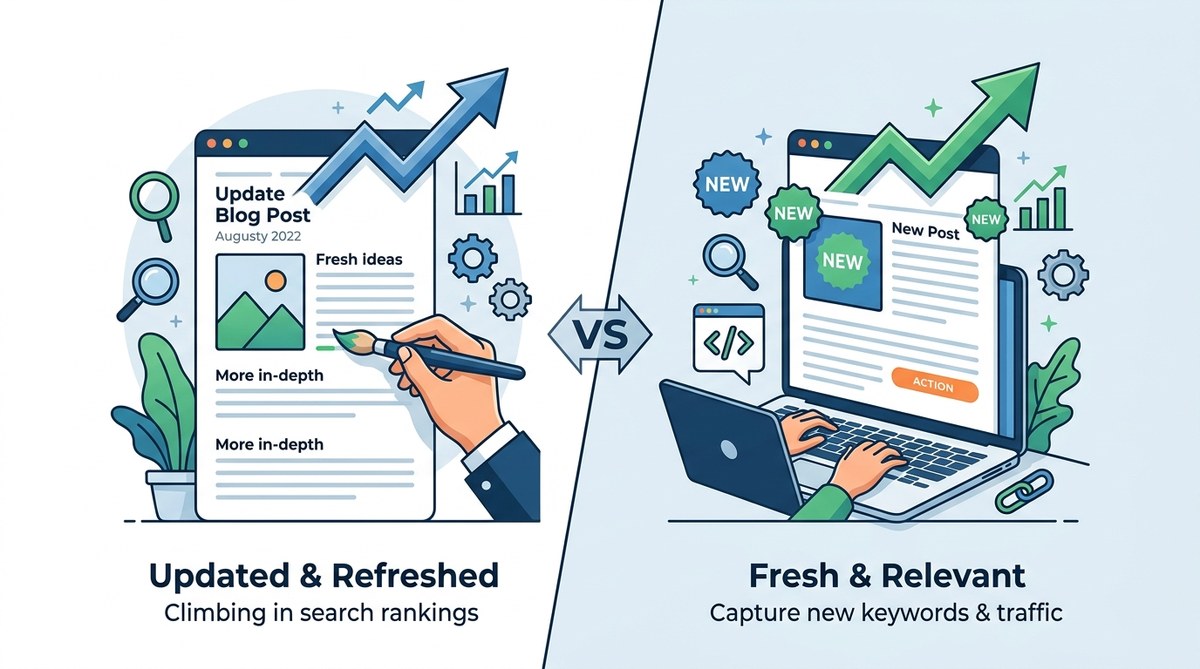
Striking the right balance between updating existing content and creating fresh posts can significantly impact your website’s search rankings and user engagement. Knowing when to breathe new life into old articles versus when to publish entirely new content is a skill that separates good content strategies from great ones. It’s about making smart decisions based on your data, industry trends, and audience needs. This guide will help you master the art of timing your updates and new posts for maximum SEO impact.
Choosing between updating old content and publishing new posts depends on content performance, industry shifts, and your overall goals. Regular audits and data analysis are essential for making informed decisions that boost your SEO and keep your site fresh and authoritative.
Understanding the value of old content in your SEO strategy
Old content often remains a valuable asset. Well-optimized articles that rank well can continue to generate traffic and leads for years. Updating these posts ensures they stay relevant, accurate, and aligned with current SEO best practices. Refreshing existing content can also be faster and more cost-effective than creating new material, especially when the core topic still resonates with your audience.
However, not all old content warrants a refresh. Some articles become outdated or lose relevance over time. Knowing which pieces to update and when to do so is crucial. Let’s look at the key factors that influence this decision.
When to consider updating old content
1. Traffic decline or keyword rankings dropping
If a post was ranking high but now sees a significant dip in traffic or rankings for target keywords, it might be time for a refresh. Search engines prioritize fresh, relevant content, so updating can help regain lost visibility.
2. Outdated information or industry changes
Industries evolve. If your content references statistics, tools, or practices that are no longer valid, updating the information ensures your site remains a trusted resource. For example, a guide on MMO game strategies from five years ago might need a complete overhaul to stay relevant.
3. Better user experience and engagement
Old content with poor readability, outdated visuals, or lack of internal links can hurt user experience. Improving these aspects can increase dwell time and reduce bounce rates, signaling to search engines that your content is valuable.
4. Content performance metrics
Analyze key indicators like bounce rate, average session duration, or conversion rates. If these metrics decline, it suggests your content may no longer meet user expectations, prompting a refresh.
5. Opportunities for optimization
Sometimes a post is already ranking but could perform better with updated keywords, schema markup, or internal linking. Refreshing allows you to optimize for new search intents and improve overall SEO.
How to determine which content to update
| Technique | Description | Common Mistakes |
|---|---|---|
| Content audit | Review all existing content periodically to identify outdated or underperforming pages | Ignoring content performance data |
| Keyword analysis | Check if target keywords have evolved or new opportunities have emerged | Not updating keyword research regularly |
| User feedback | Gather comments or questions indicating confusion or outdated info | Overlooking user signals as cues for updates |
| Competitor review | See if competitors have improved or expanded similar content | Failing to monitor industry shifts |
“Regular content audits combined with performance metrics provide a clear picture of what needs a refresh and what is better left untouched,” advises SEO expert Jane Doe.
When to publish new posts instead of updating
Sometimes creating new content is the best move. This is especially true when:
- Your existing content has already been optimized and still underperforms despite updates.
- The topic has expanded or shifted significantly.
- You want to target different keywords or audience segments.
- Industry trends have shifted so much that old content no longer aligns with current search intent.
New posts also help diversify your content portfolio, attract fresh backlinks, and establish authority on emerging topics.
Practical process for balancing updates and new posts
- Conduct a content audit regularly. Review your site’s analytics to identify pages with declining traffic, outdated information, or poor engagement.
- Prioritize updates based on data. Focus on high-traffic posts, pages with strategic importance, or those with room for improvement.
- Set a schedule for updates. For example, revisit cornerstone content every six to twelve months. Keep updating as needed.
- Identify gaps for new content. Use keyword research and industry trends to find fresh topics that your audience cares about.
- Combine both strategies. Use updated old content to boost existing authority and new posts to capture new opportunities.
Common pitfalls to avoid when updating or publishing
| Mistake | Explanation | How to avoid |
|---|---|---|
| Over-updating | Changing content too frequently can confuse users and dilute authority | Focus on meaningful updates rather than minor tweaks |
| Neglecting analytics | Ignoring data can lead to unnecessary updates or missed opportunities | Always base decisions on performance metrics |
| Updating outdated content without adding value | Simply refreshing without improving quality can hurt rankings | Add new insights, visuals, or internal links |
| Publishing without promotion | New content needs outreach to reach its potential | Share new posts across channels and update internal links |
Expert advice on timing your content updates
“The best approach is to treat content updates as an ongoing process. Regularly monitor your analytics and industry changes, then act when the data indicates a need. This keeps your site fresh and trusted in the eyes of both users and search engines,” shares SEO strategist John Smith.
Final thoughts on managing old and new content
Balancing updates with fresh posts is a dynamic process. It requires ongoing evaluation of your content’s performance and relevance. By applying data-driven insights and industry awareness, you can ensure your website remains authoritative, user-friendly, and highly visible in search results.
Remember, your content strategy should serve your audience’s evolving needs while supporting your growth goals. Regularly refresh high-performing content to maintain its value and create new material to capture emerging opportunities. With this approach, you’ll keep your site relevant, engaging, and primed for SEO success.
Keep your content strategy flexible and audience-focused
Applying a thoughtful mix of updating old content and publishing new posts keeps your website lively and authoritative. Regular audits and performance reviews are your best tools. Stay attentive to industry shifts, user feedback, and analytics. Over time, this will help you craft a content plan that boosts your rankings and builds trust with your readers. Keep experimenting, and don’t be afraid to try new formats or topics as your niche evolves. Your site will grow stronger with a balanced, data-informed approach.